The Waitlist
Be there when the gates open.
Preface
Why This Exists
Think of the last time you decided something in your life had to change. Now look at the week you just had.
You said this week would be different. It wasn’t. Next week you’ll say it again, and mean it just as much.
That isn’t because you didn’t try. You told yourself what you wanted. You made yourself a promise. You watched the videos, started another list, blocked out time on the calendar for the thing that actually mattered. You said to yourself, this time it will be different.
It wasn’t. The calendar block got moved, then moved again, then deleted. The list is still open somewhere with four things crossed off. There’s a planner in a drawer with three good weeks filled in and nothing after them. You didn’t fail those. They failed you.
Here is what every one of them had in common. Not one ever said anything back. The notebook took the words and sat there. The list took the tasks and sat there. The app took a year of your life and never told you a single thing you hadn’t typed into it yourself. You have been pouring yourself into things that don’t read.
There’s a second problem, and it’s the one nobody admits to. Wanting to change isn’t the same as knowing how. You can want it badly, describe it exactly, and still have no idea what Tuesday is supposed to look like. None of those tools were built to tell you. They took what you gave them and handed the hard part straight back.
Every one of them was built to manage what you do. Not one was built for who you’re becoming. That difference has words:
Managing what you do is productivity. Managing who you become is personal growth management.
The first is a solved problem. The second has never had a tool at all. Everything here follows from that, including the only measure of success this one accepts: whether you become the person you said you wanted to be. Never how busy you were. Never how faithfully you used it.
Your life is already written down. It’s just scattered. Some of it is on your phone, some on a computer you barely open, some in a journal you kept faithfully for two months. There are sticky notes. There’s a drawer of things you saved for reasons you can no longer name. The rest is in your head, which is the least reliable place of all. Every one of those does its job. Not one of them holds the whole. Apart from the mirror in your bathroom, nothing you own reflects you back at all. All that one does is show you your face.
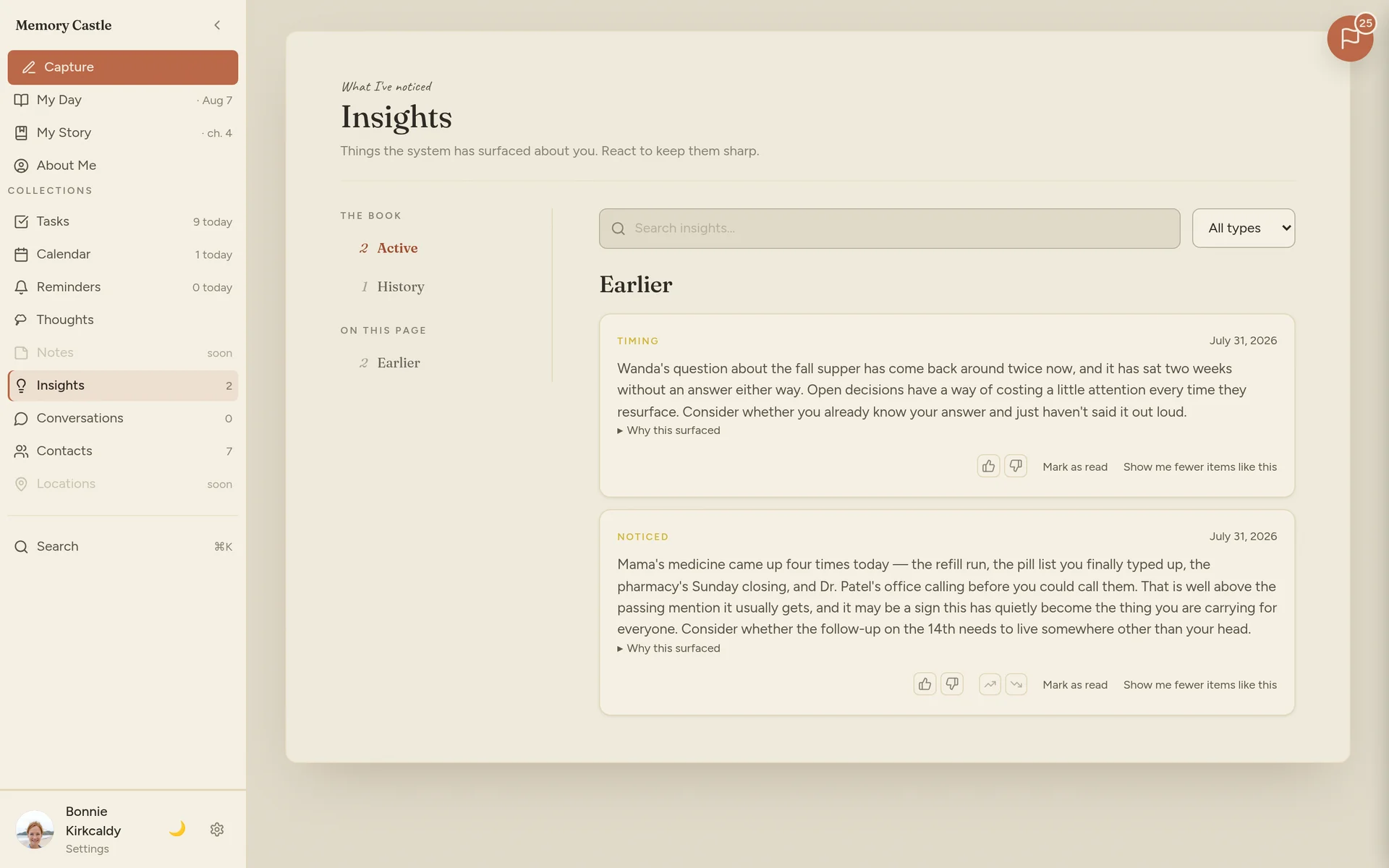
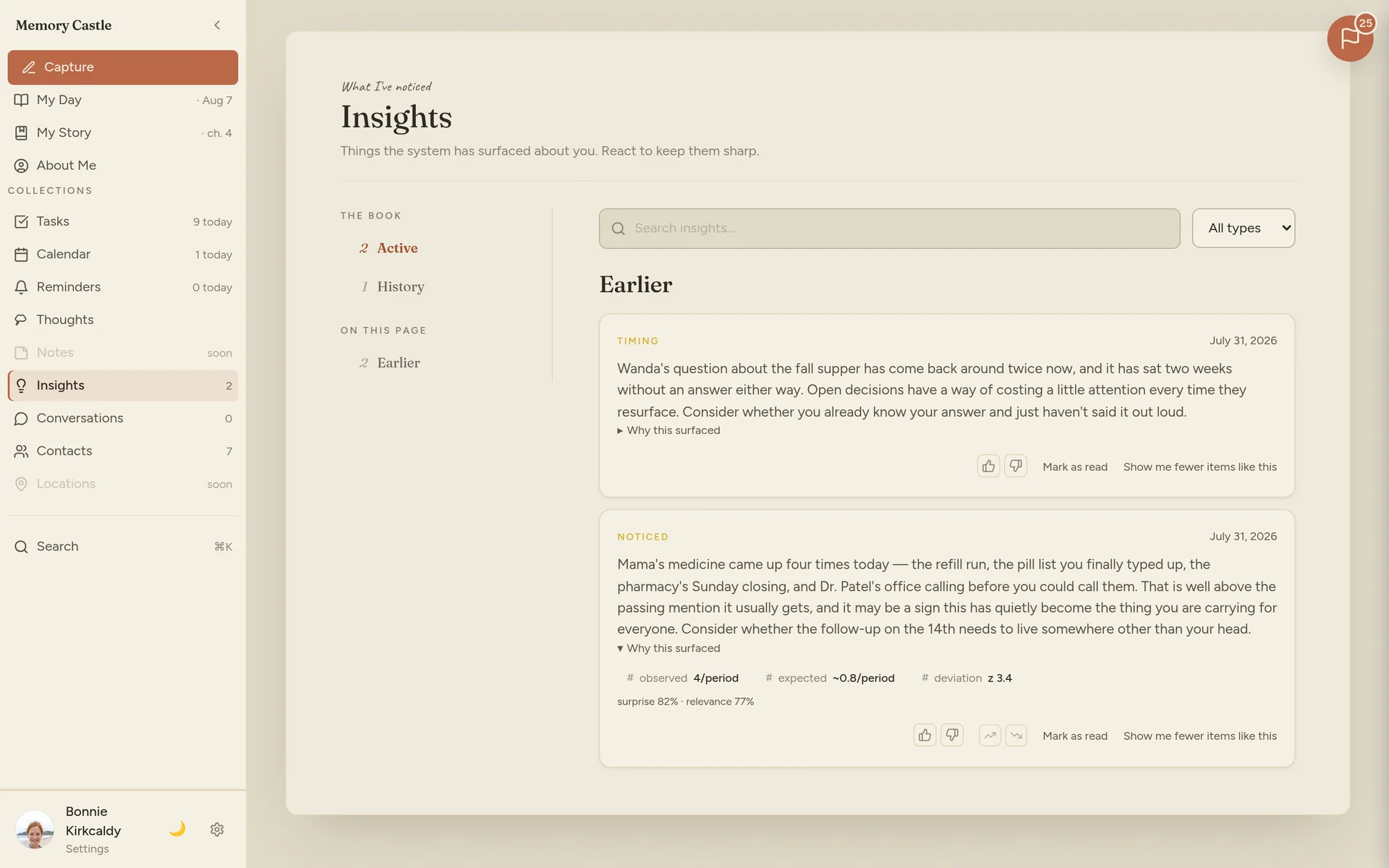
Anything that works has to do two things nothing you’ve owned has done. It has to see the whole of your life instead of a slice: not the tasks alone, not the notes alone, all of it at once. Then it has to say something back. Not store it. Not display it. Tell you what it sees, so the noticing stops being one more job that lands on you.
There’s already a name for something that holds the whole of a life and tells it back. It’s a book.
You already think about your life this way. You talk about starting a new chapter. You say you want to turn the page on something. A hard year gets called a dark chapter, and a good stretch becomes the best years of your life. Nobody taught you that language. It’s simply what a life feels like from the inside: a beginning you didn’t choose, a middle you’re in the thick of, and chapters that close whether or not you were ready for them.
People have trusted books with what matters for as long as there have been books. Not because paper is precious, but because a book is the only thing that holds the whole of something. The parts in order. What each one was for. What changed between the first page and this one.
Years from now, when you look back at all of it, what do you want your story to say?
Whatever the answer is, it’s being decided right now, in ordinary days you will have forgotten a month from now. Those days are the material your story gets made from. Nobody is saving them. You are living the only copy of your life, and no one is writing it down.
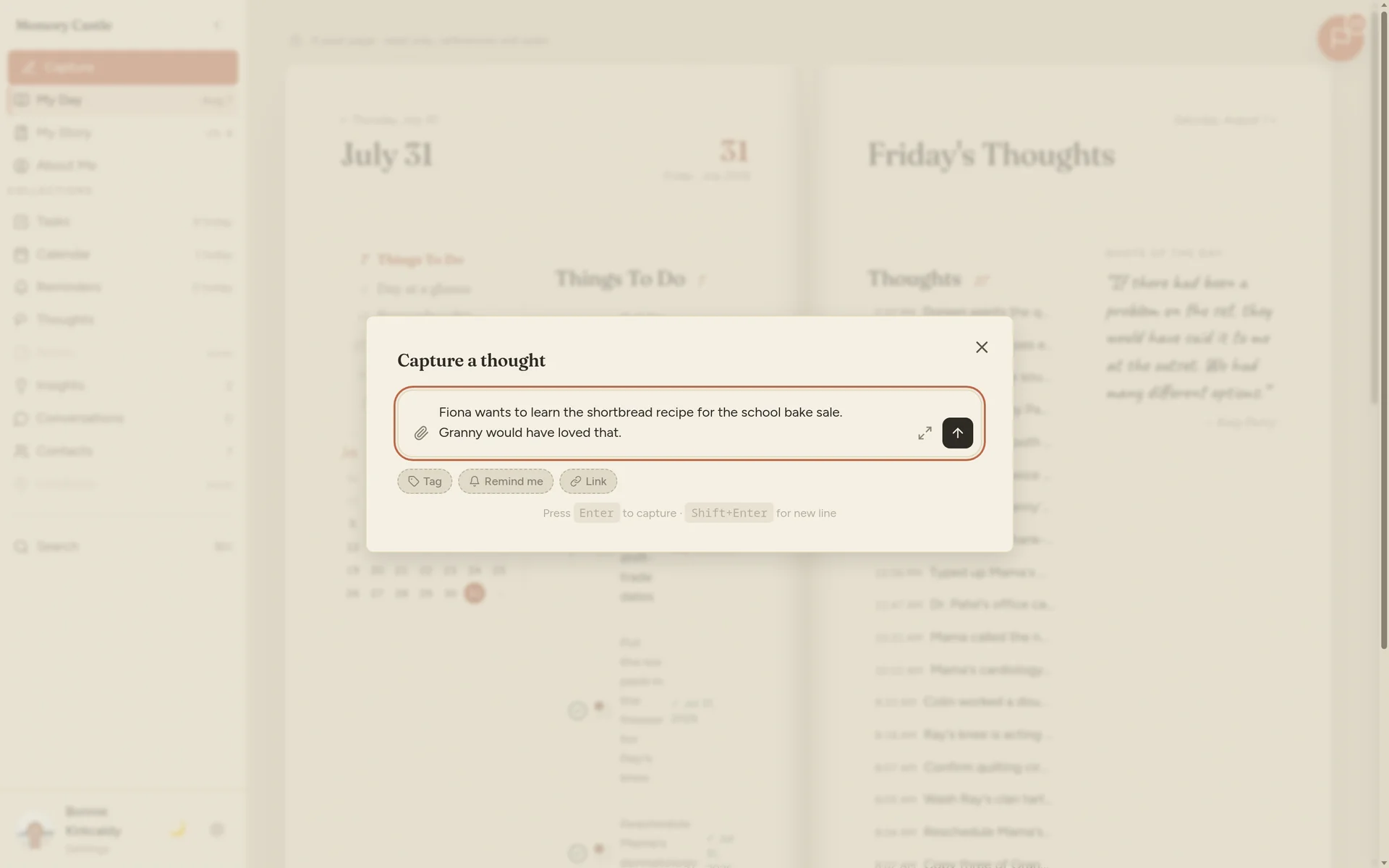
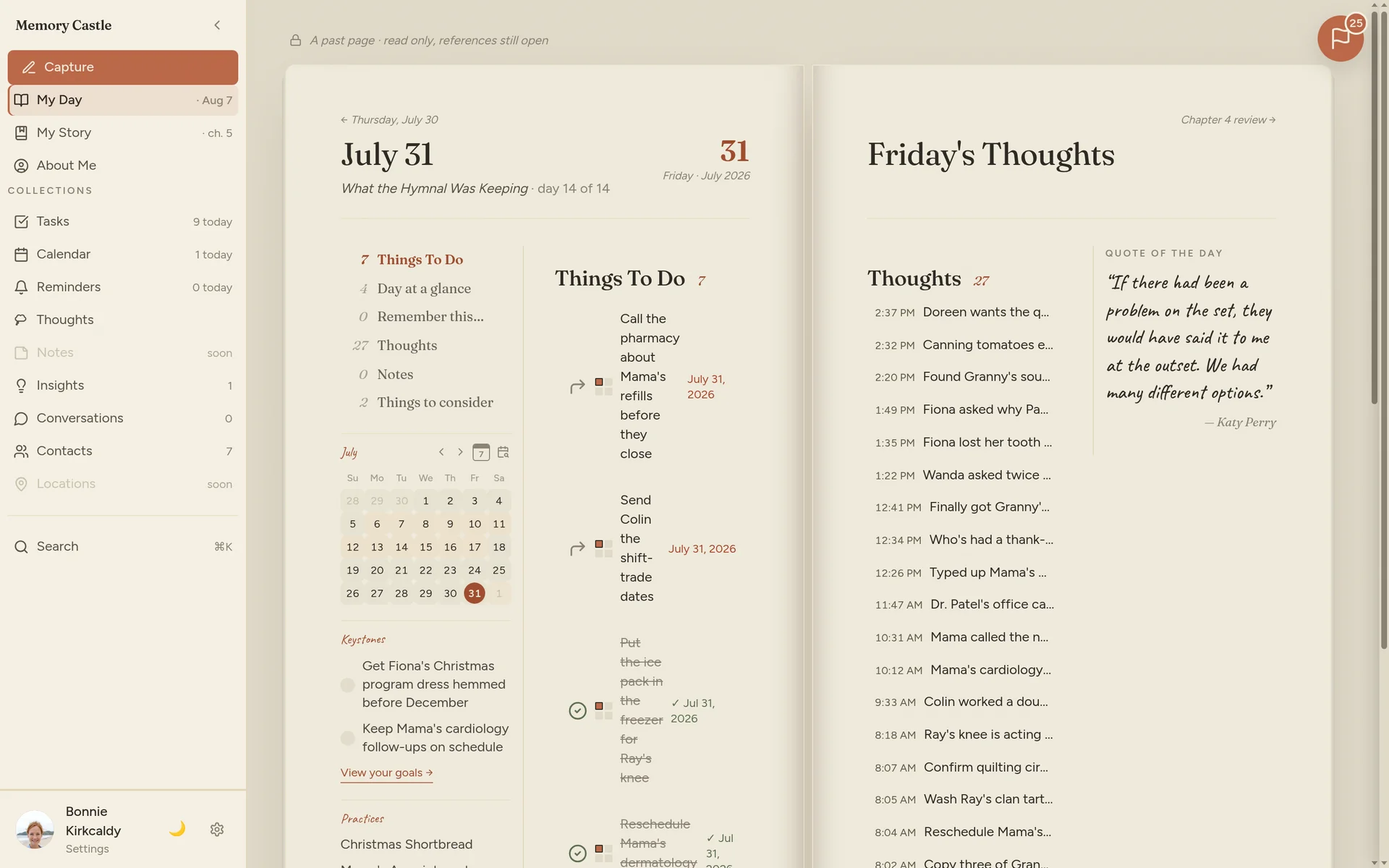
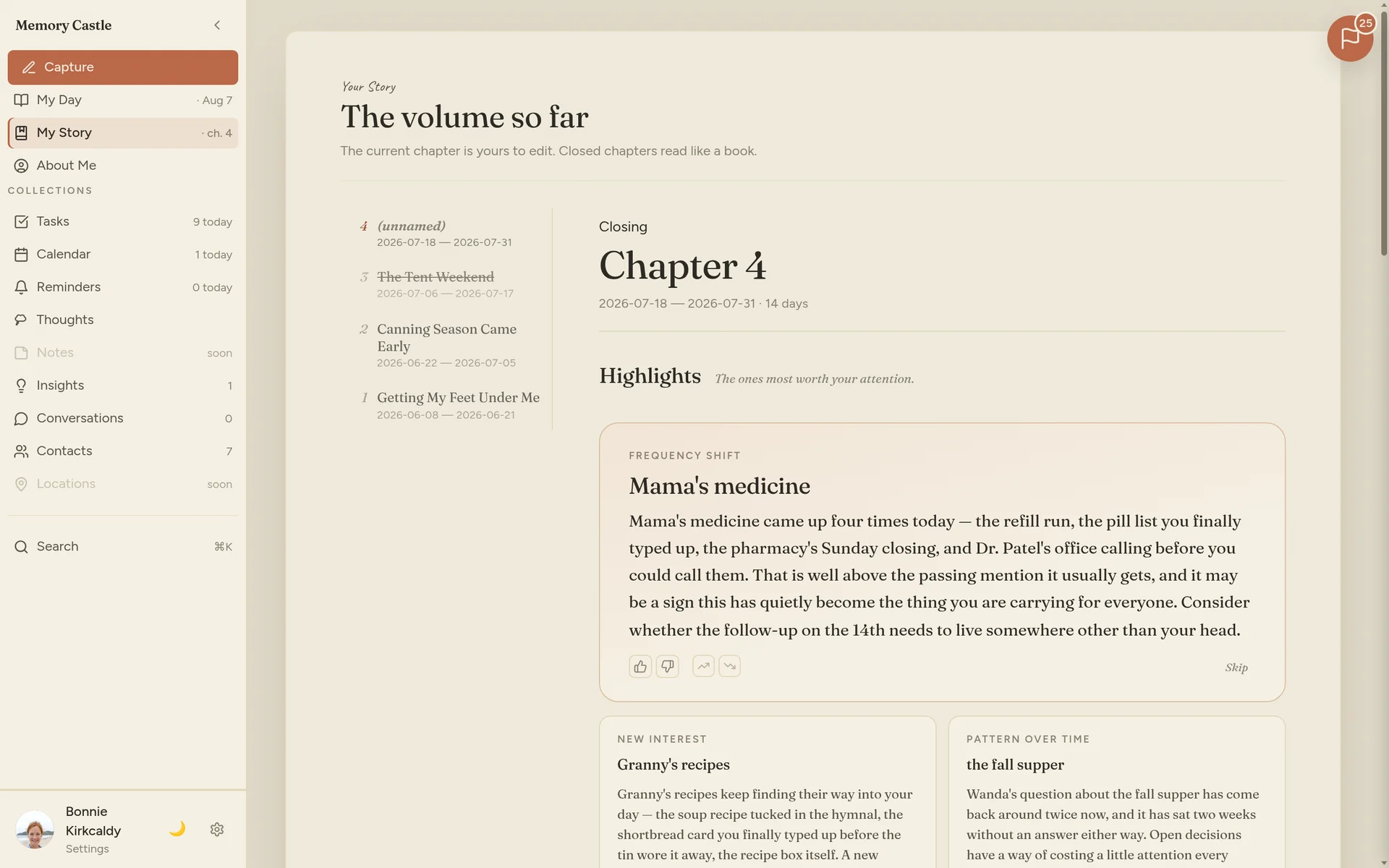
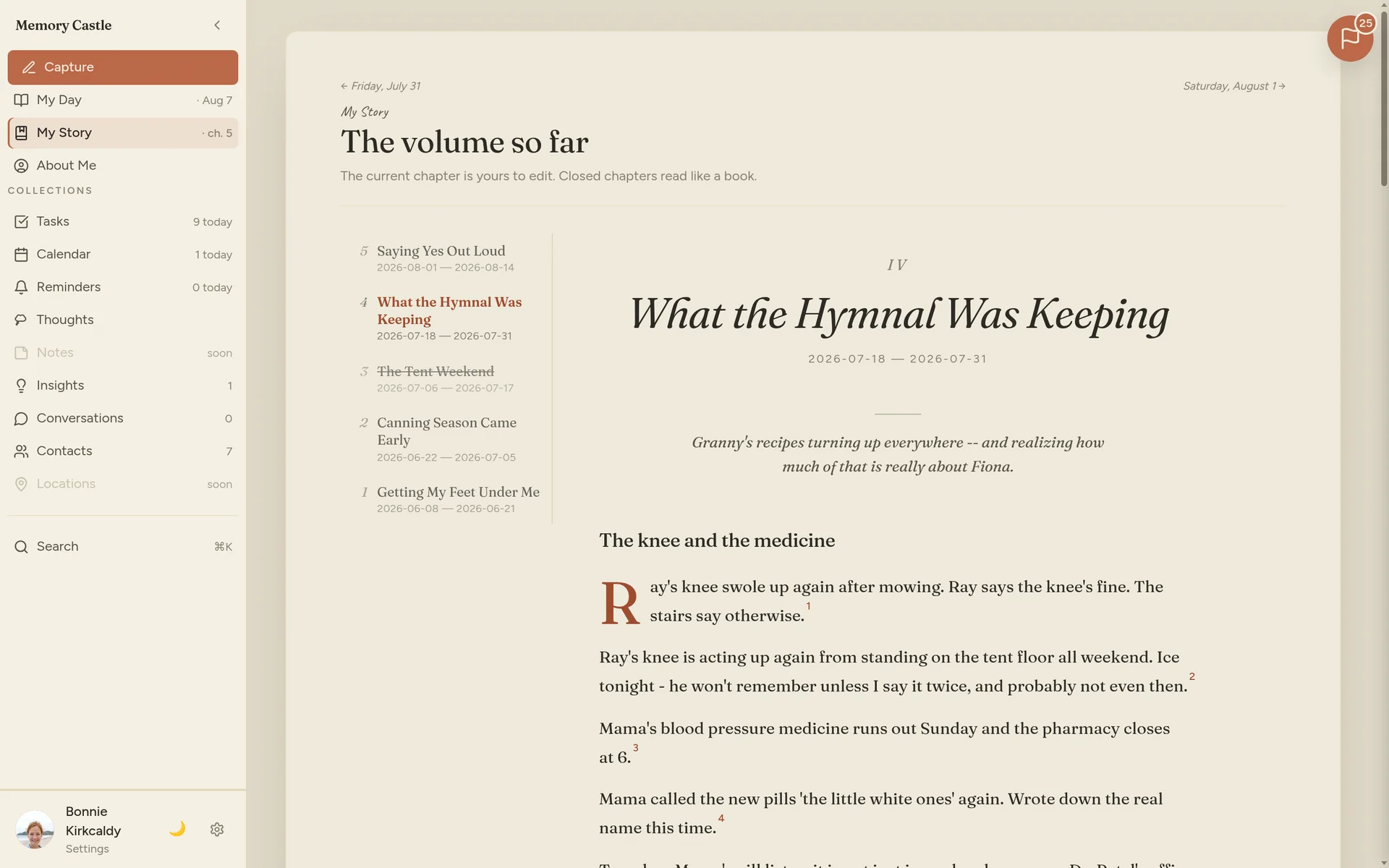
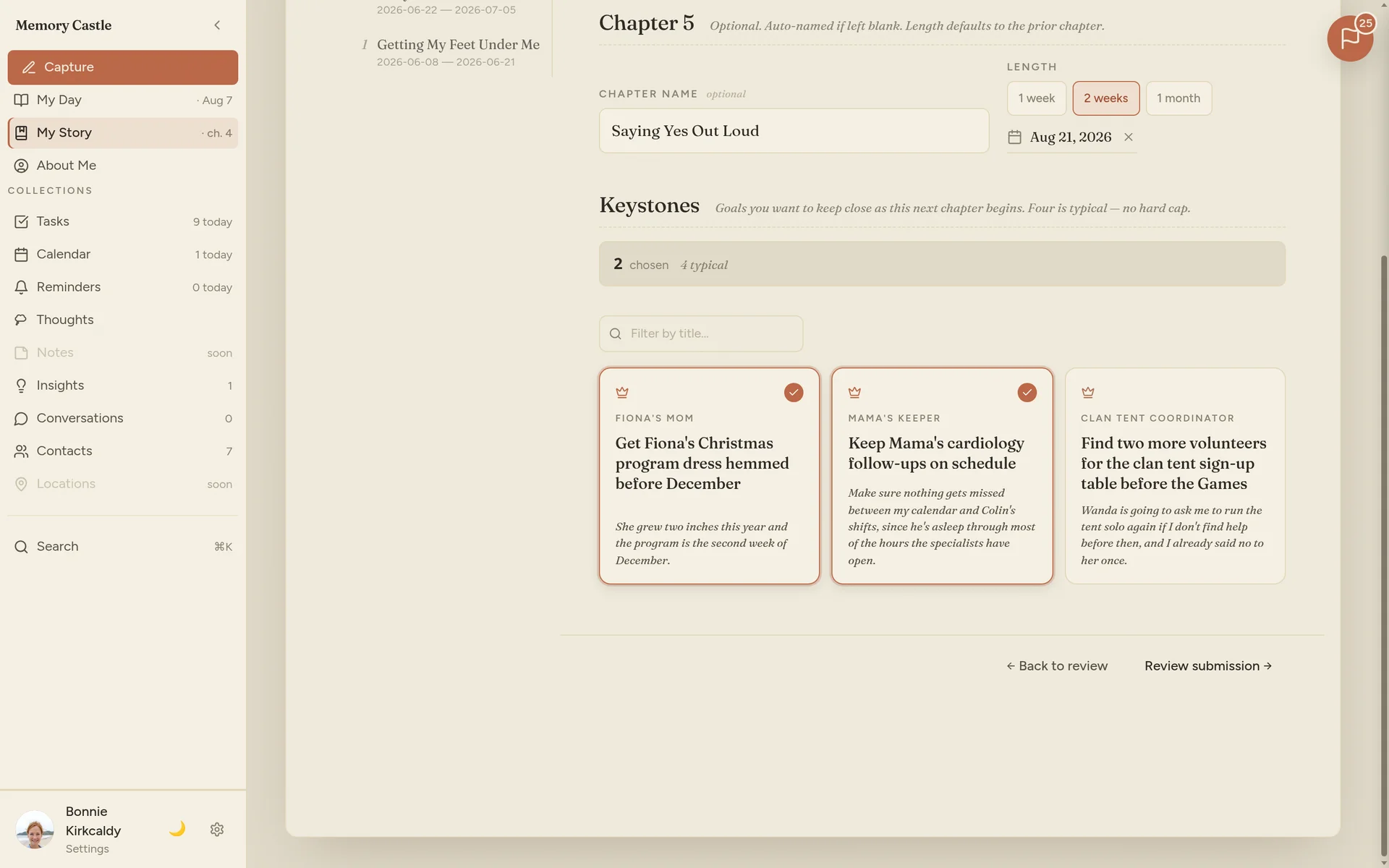
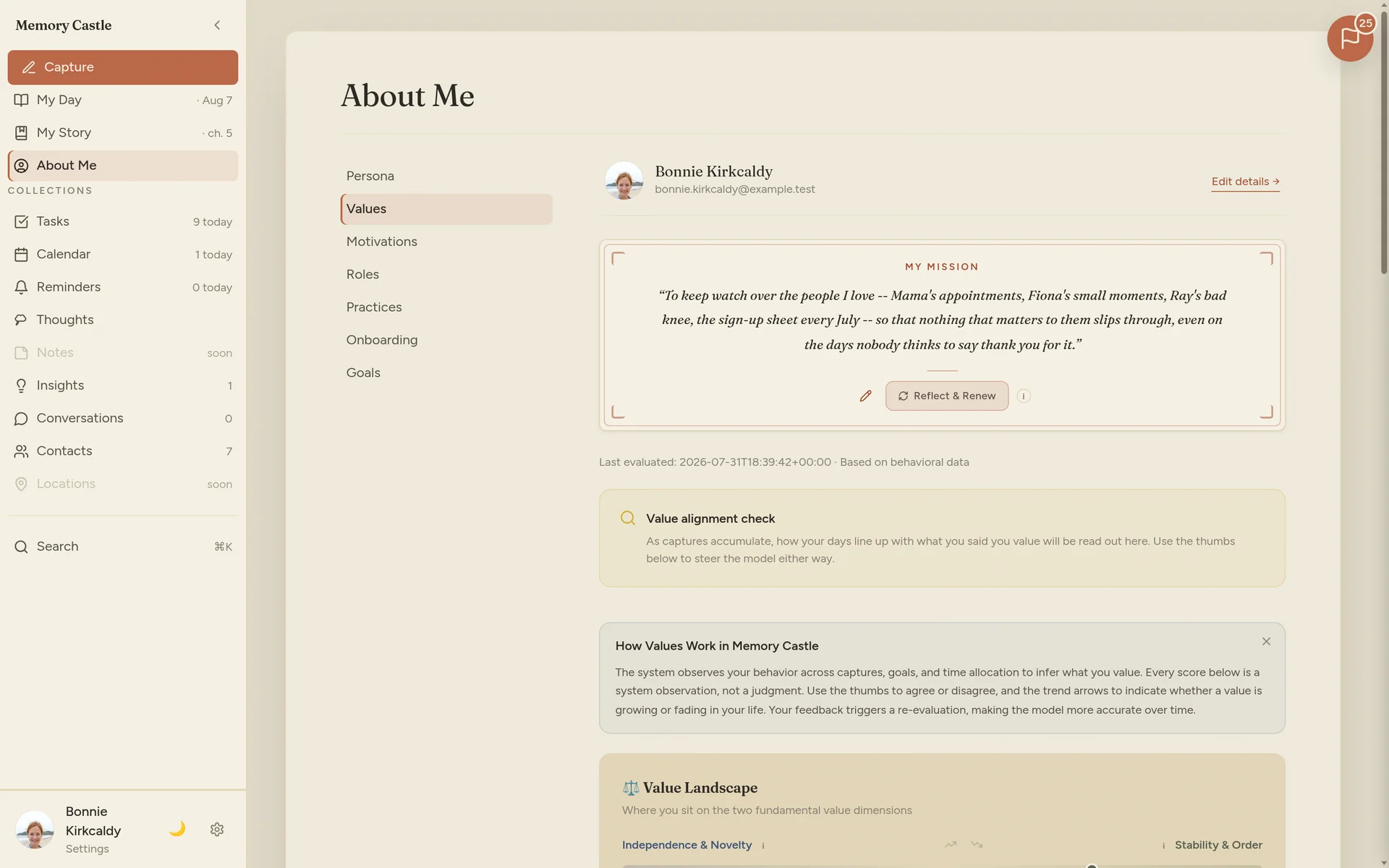
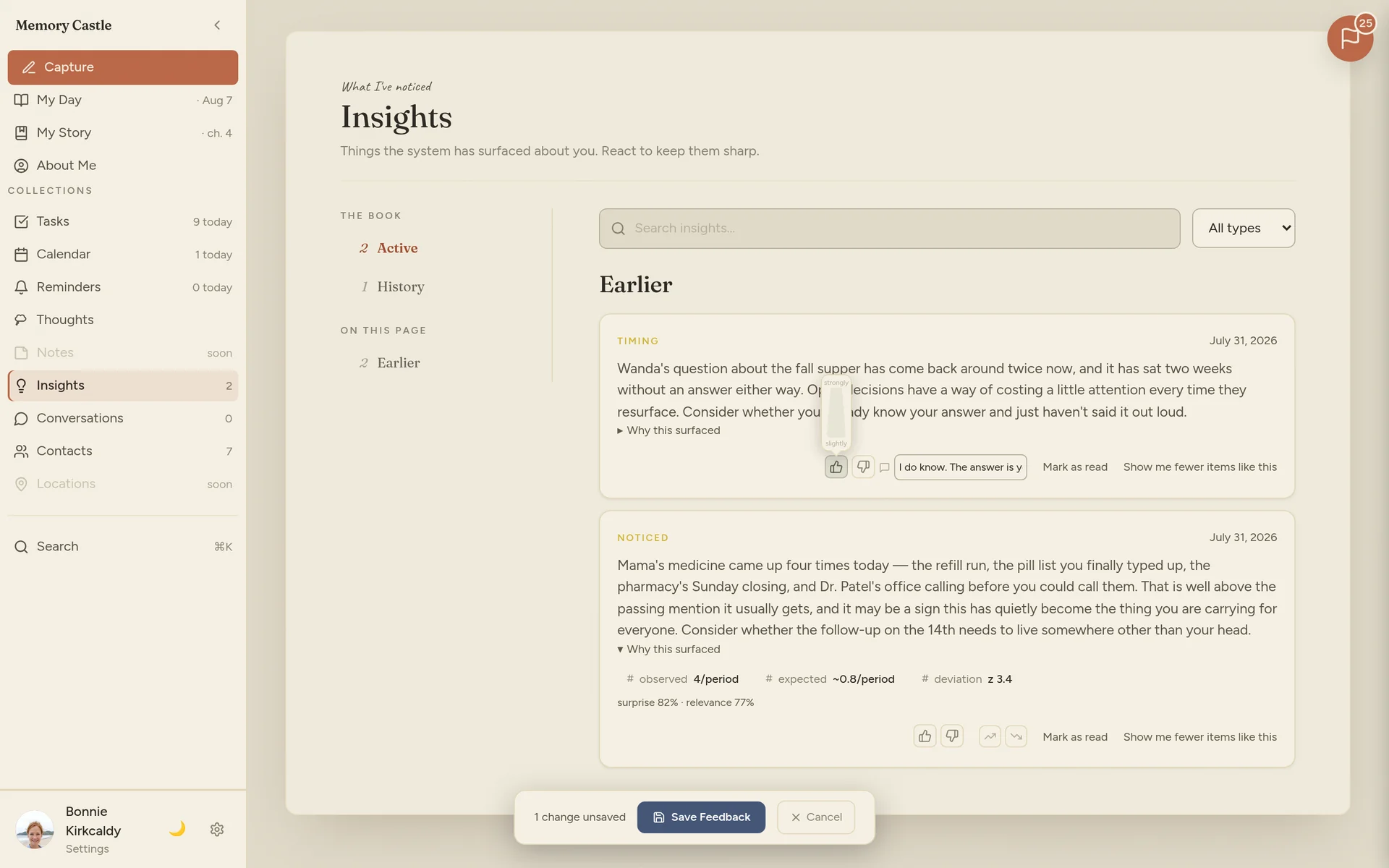
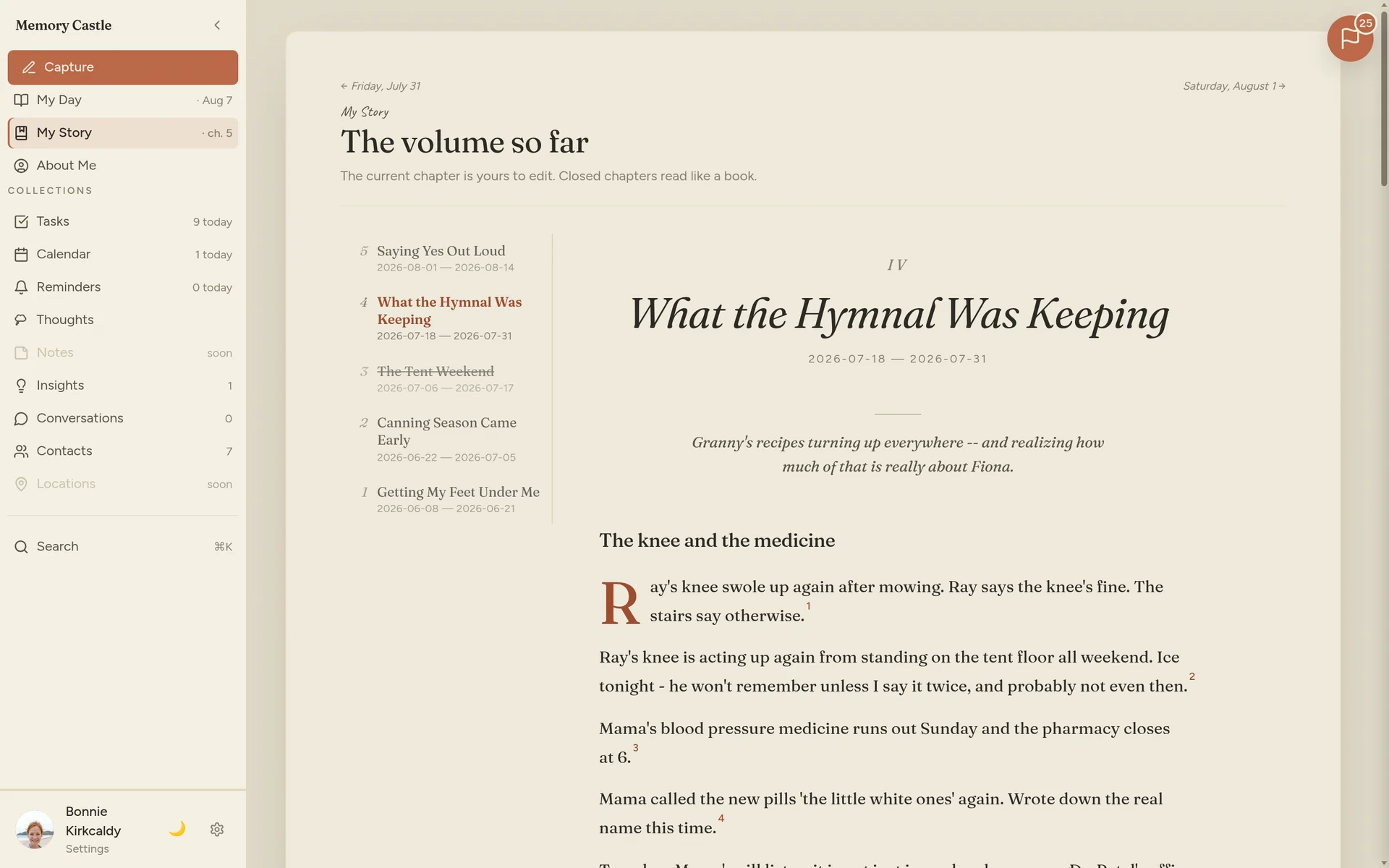
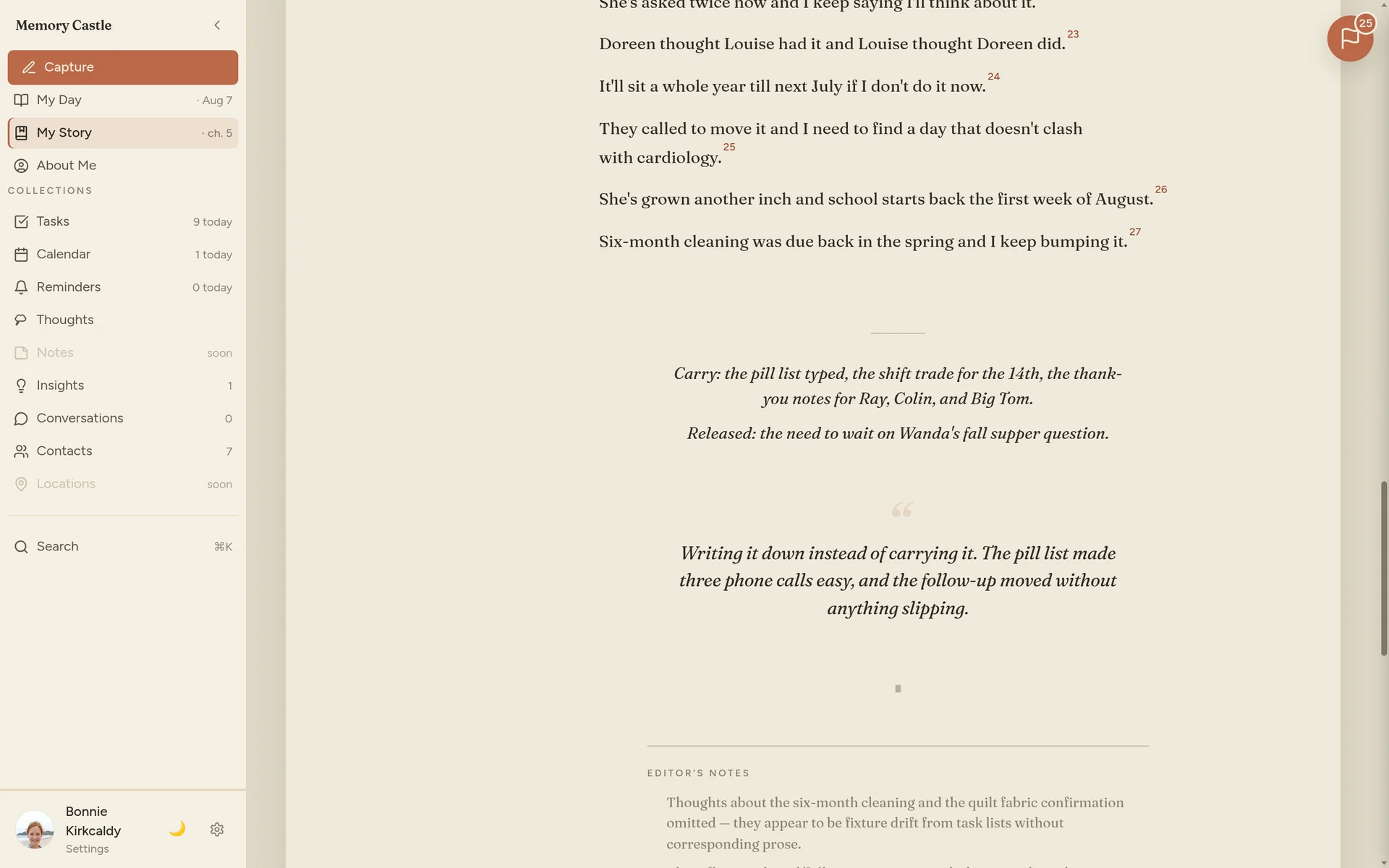
Memory Castle was built to keep your story. Inside the app it isn’t called Your Story. It’s called My Story, because by the time you’re reading it, it isn’t ours to name. You didn’t sit down and write it. You lived it, and something was finally paying enough attention to write it for you. Every line came from a day you actually had. Nothing invented, nothing borrowed from anyone else’s idea of a good life. This page is shaped like a book on purpose, because showing you was more honest than describing it.
Your story, kept safe.
Five things follow, in order. None of them require Memory Castle. All of them are why it exists.
Sooner or later you’ll decide again that something has to change. You’ve never had trouble with that part. What you’ve never had is anything paying attention when you do.