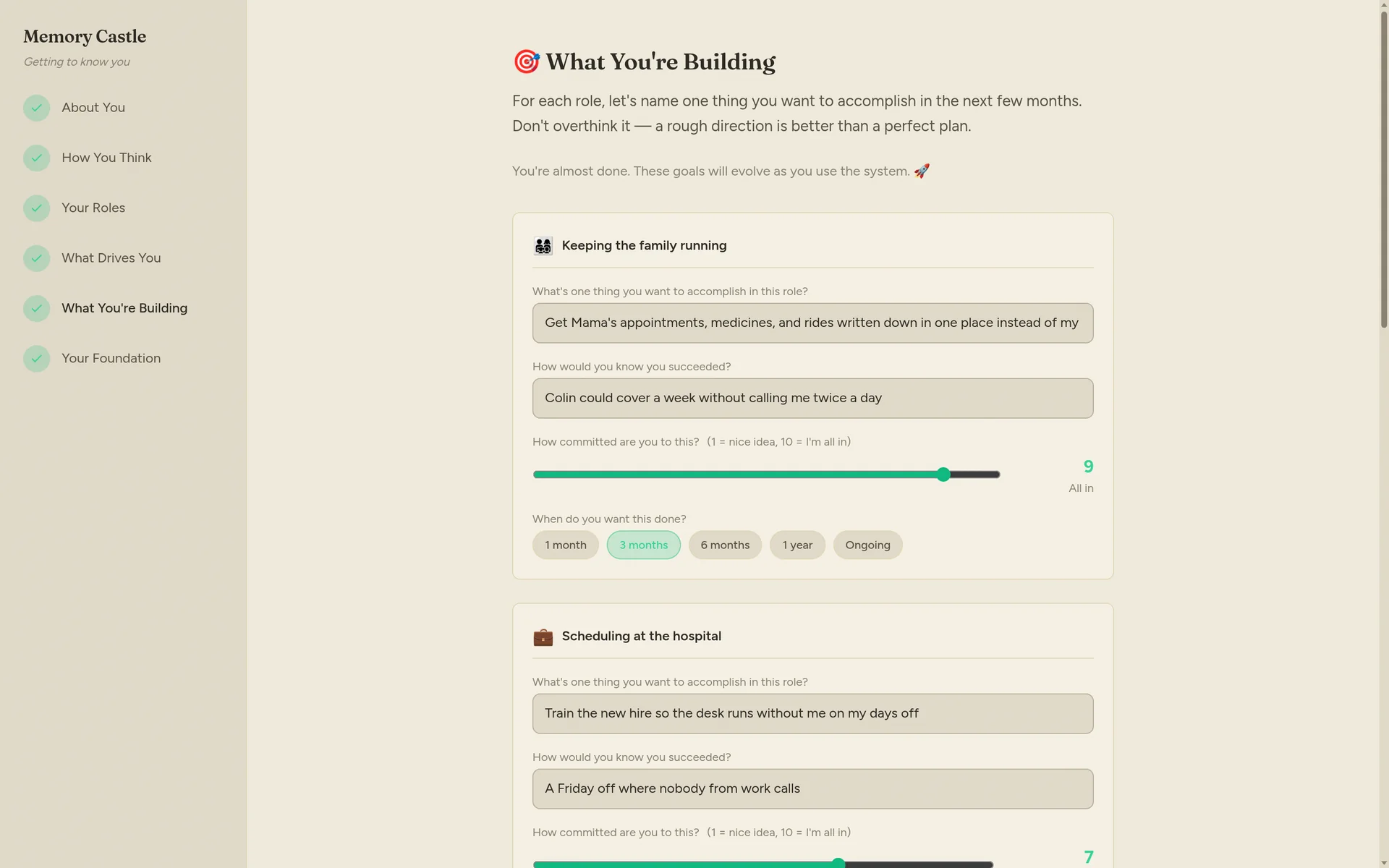
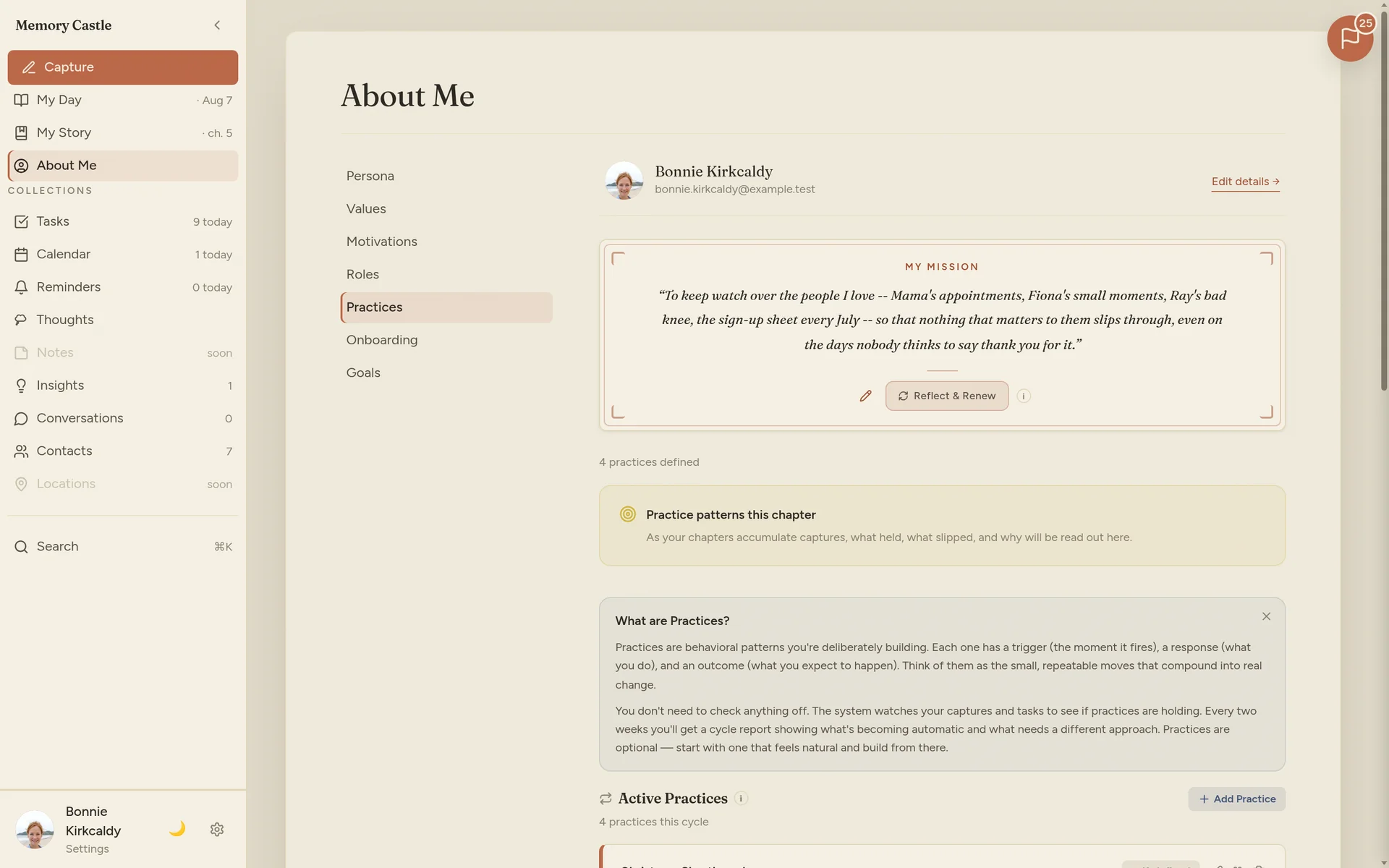
The Waitlist
Be there when the gates open.
Live Out Loud
In this book so far: you've said who you are now and who you're trying to become.
You’re almost asleep when the thought arrives, and it’s a good one. It’s also the worst possible time to have it. The phone is on the nightstand, and reaching for it means light, and unlocking, and finding the app, and typing the thing out with one eye open. Ten minutes of being properly awake, to keep four seconds of thinking.
So you do what everyone does. You decide you’ll remember it in the morning. You don’t.
Thoughts don’t wait for good timing. They come in the shower, on a walk, halfway through a meeting, thirty seconds after you turn out the light. That isn’t a flaw in you, it’s when minds work. The flaw is that every tool you’ve ever used costs more than those moments have to spend.
So here’s the test that decides whether any system survives contact with your actual life. Can you use it with one hand, without thinking, in the four seconds you really have? If not, you’ll use it on the good days and lose everything that arrives on the others. That’s most of your life going unwitnessed, not because you didn’t care, but because caring cost more than the moment had.
Memory Castle is built to pass that test. One box. You type into it, or you press the mic and talk. Enter, and it’s kept.
That’s what zero friction means, and it’s a stricter promise than it sounds. Not a shorter form. No form. Not fewer decisions. None.
Living out loud is the core of personal growth management. You can’t manage what you don’t keep track of. You can’t observe what you never recorded. Every step of the process depends on you living out loud.
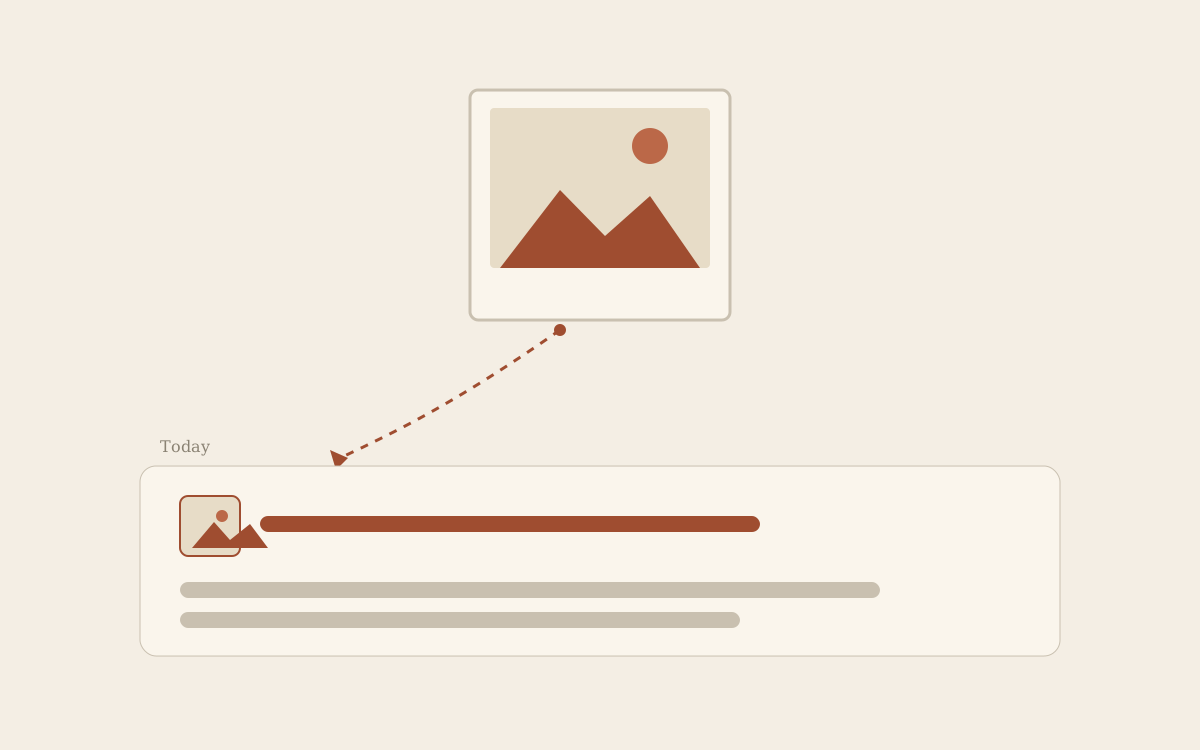
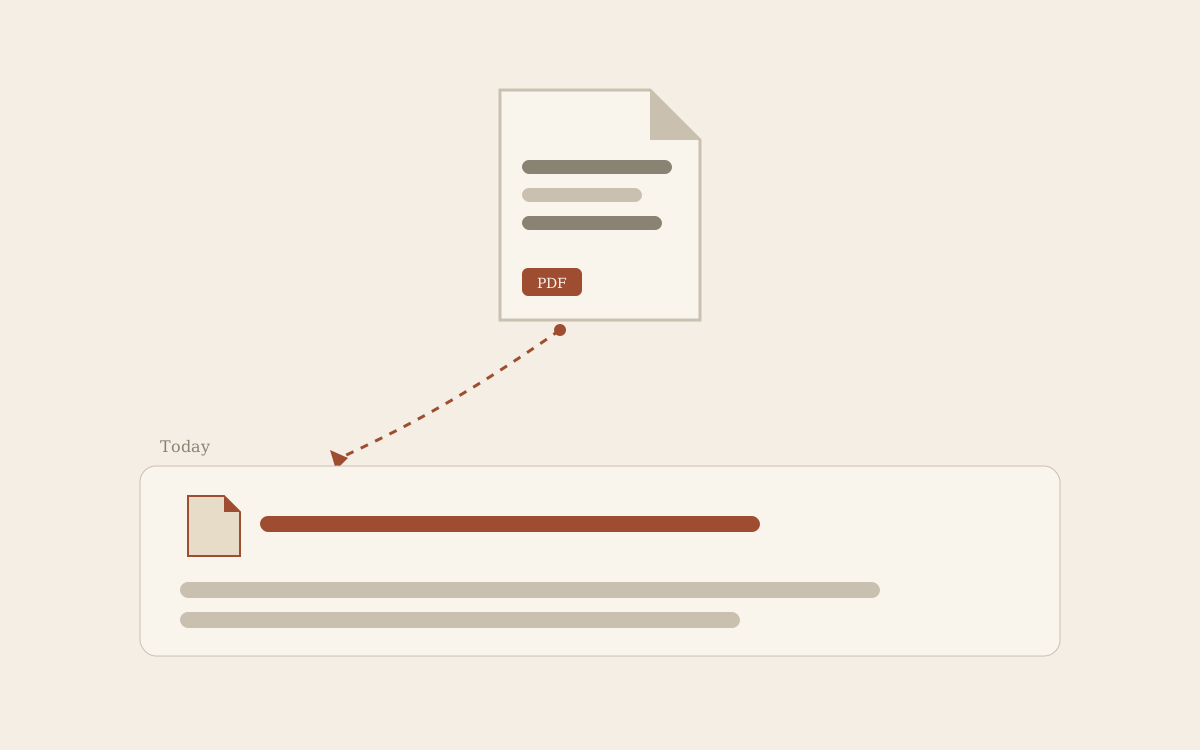
Which means the box has to take whatever you actually have. Talking works the way you’d want it to: press once, speak, stop when you’re done. Files go in the same box, which is exactly where you’d expect the tax to come back, and it doesn’t.
If you like a little structure, you can add a tag, a reminder, a link to something else in your life. All of it optional, all of it after the fact. Nothing you add is ever the price of getting something in.
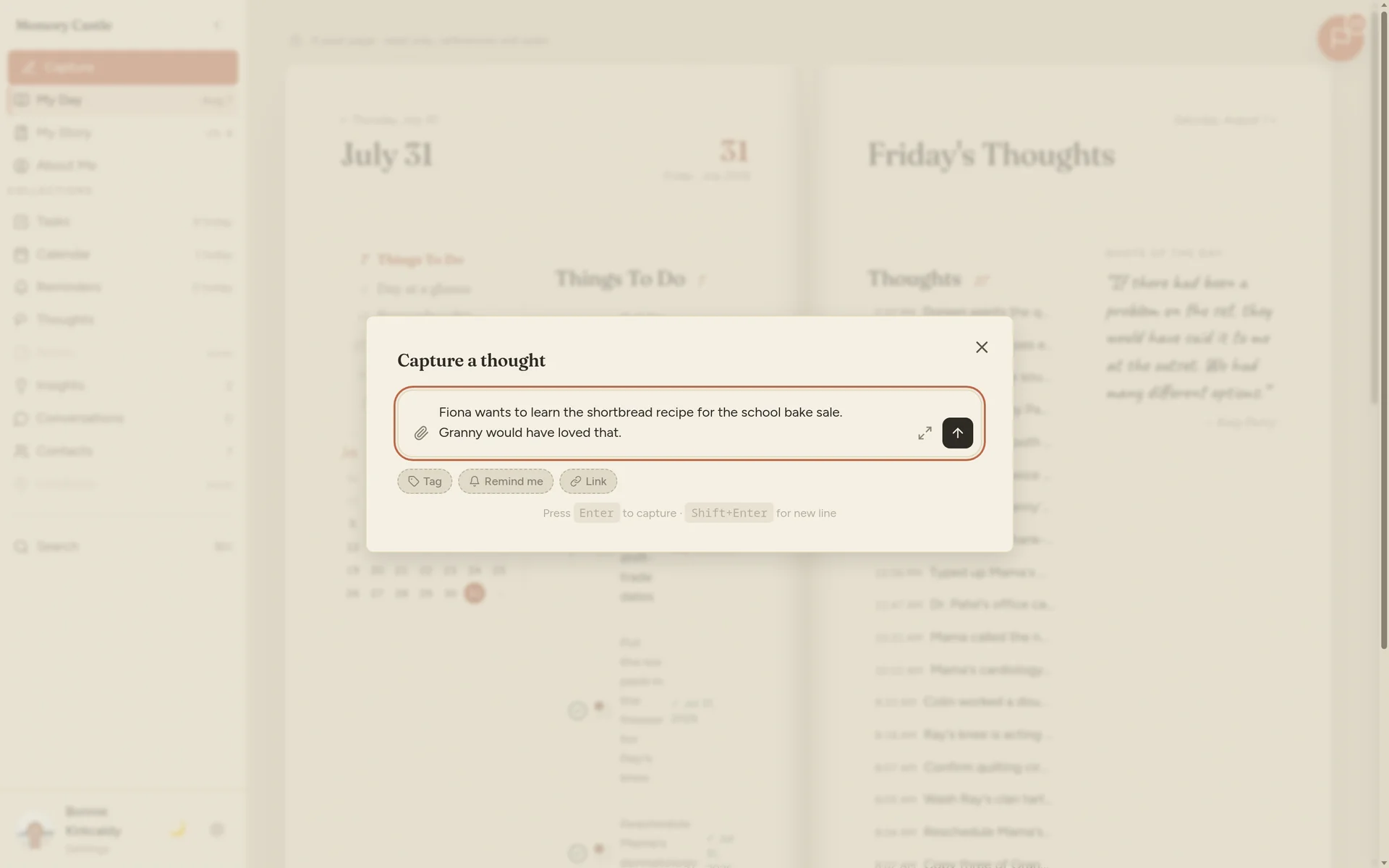
It can afford to be that indifferent because the format was never the point. A sentence, a voice note, a PDF, a picture of your swollen big toe. It’s all just data, and it all goes to the same place.
Where it does not sit still. What you hand over gets read, which is the part nobody expects. You wanted a witness. You got a reader.
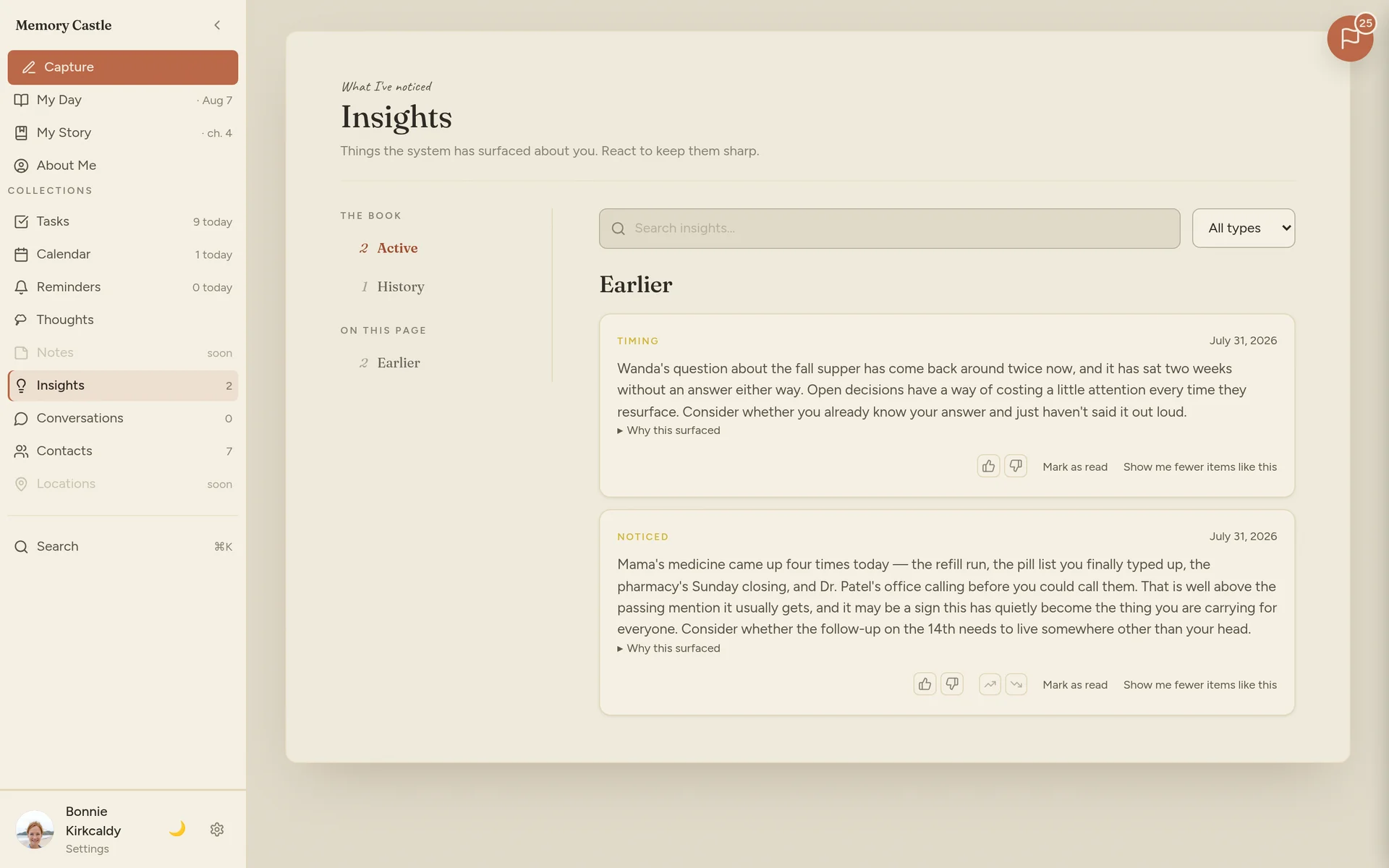
You say one sentence into your phone before you fall asleep. It’s kept, stamped 11:41 PM on today’s page. A minute later it has been read — transcribed, summarized, the thing you have to do lifted out and waiting as a task you can accept with one press, the people you mentioned recognized as people in your life, the subject named without you naming it.
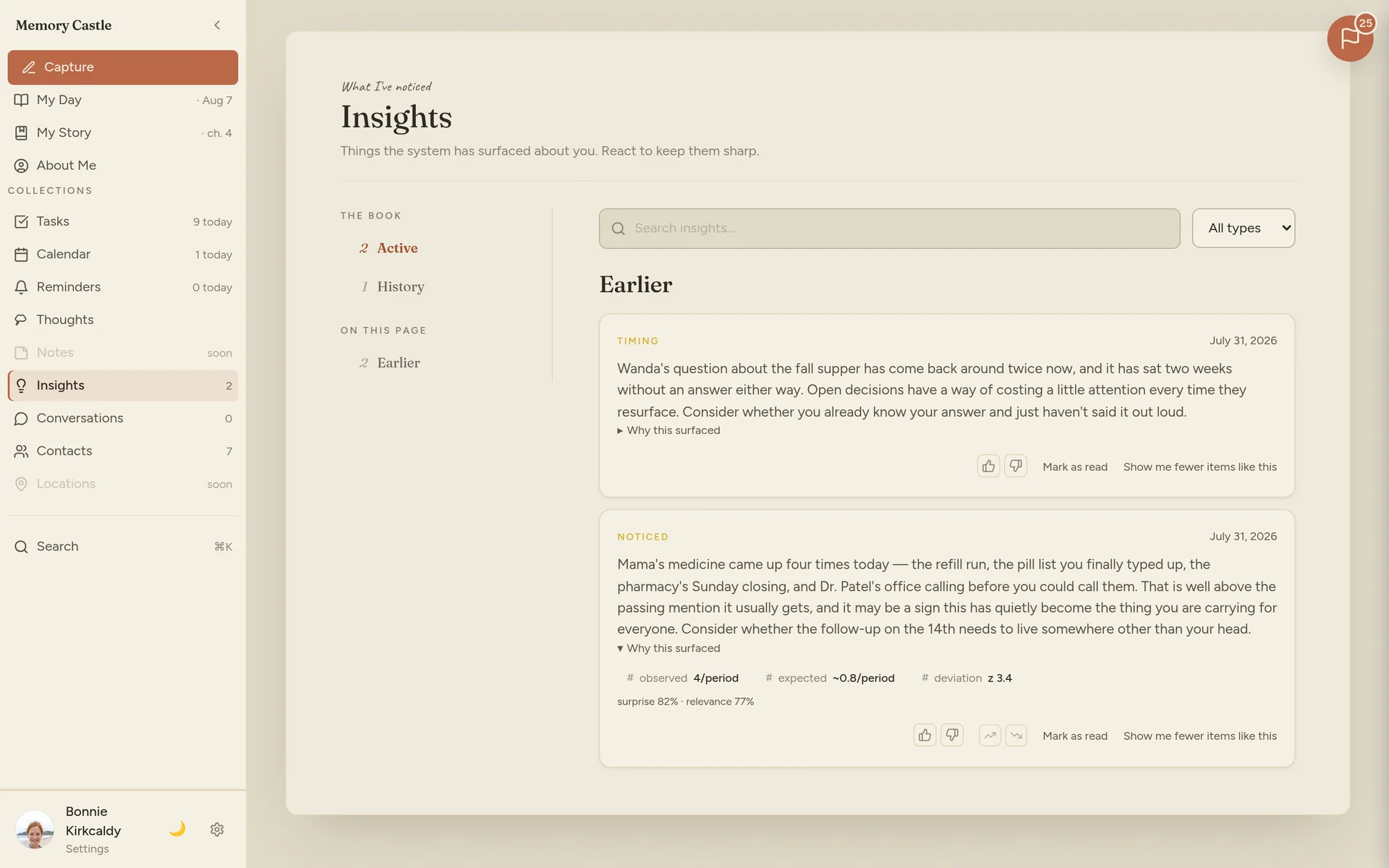
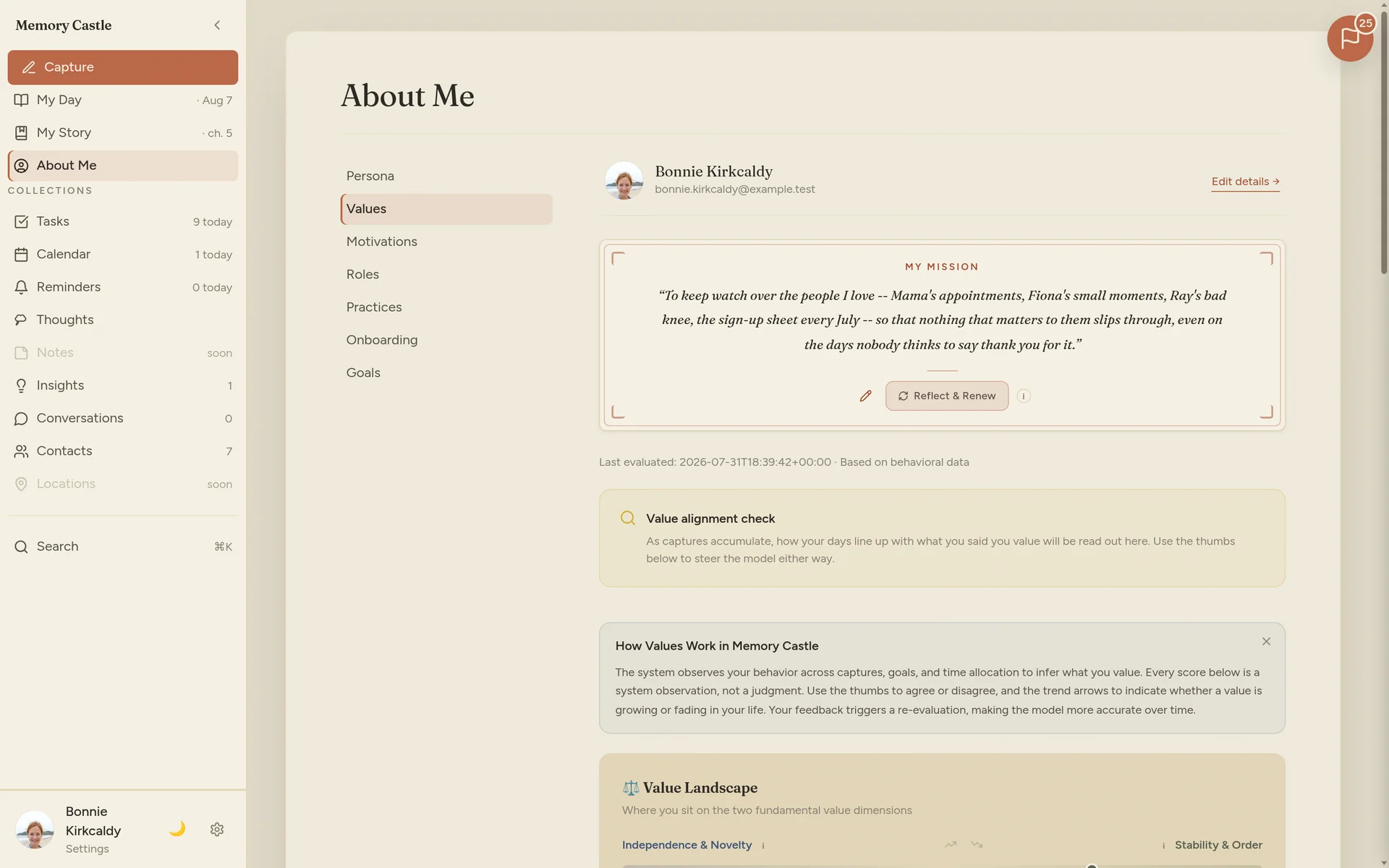
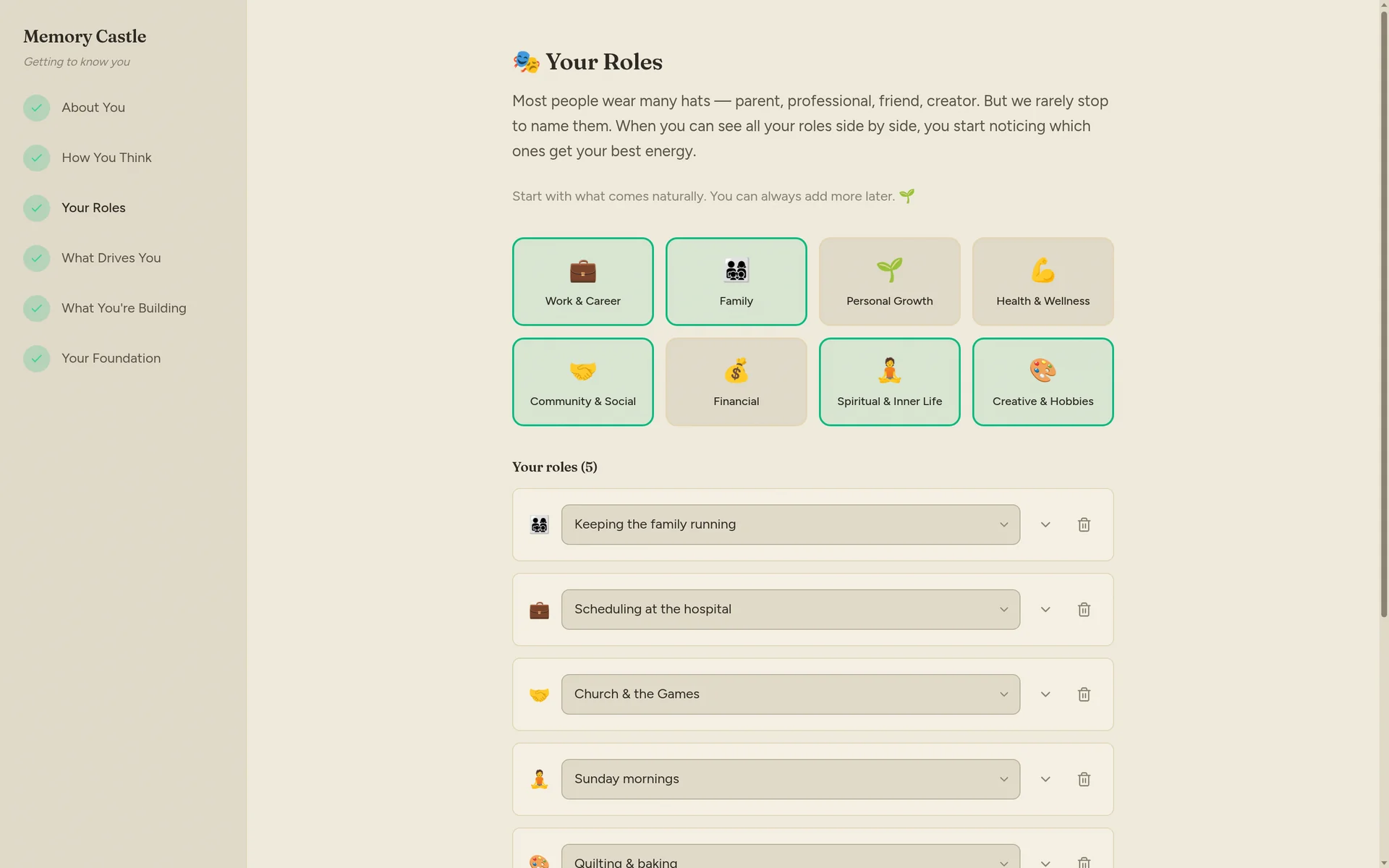
Every tool you own can summarize a note now, so that alone isn’t the difference. The difference is what it reads your life against: the roles you named, the goals you weighted, and every other day you’ve ever handed over. A summary of one thought is worth almost nothing. The same thought, read beside the worry you had in March and the goal you called an eight in January, is worth the whole system.
A system that only stores can never notice anything, because it has no idea what it’s holding. Reading is what turns a pile into something that can eventually speak.
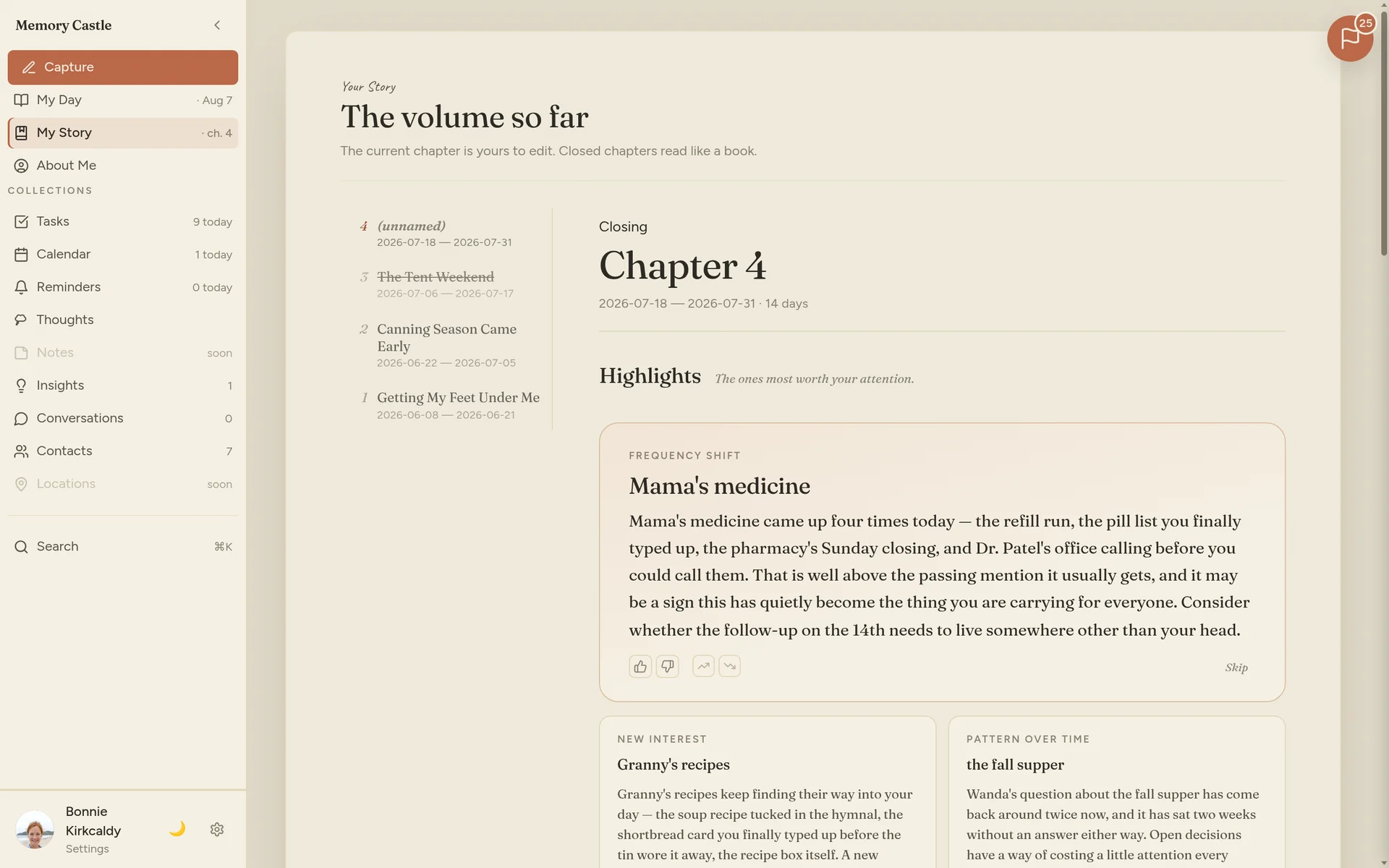
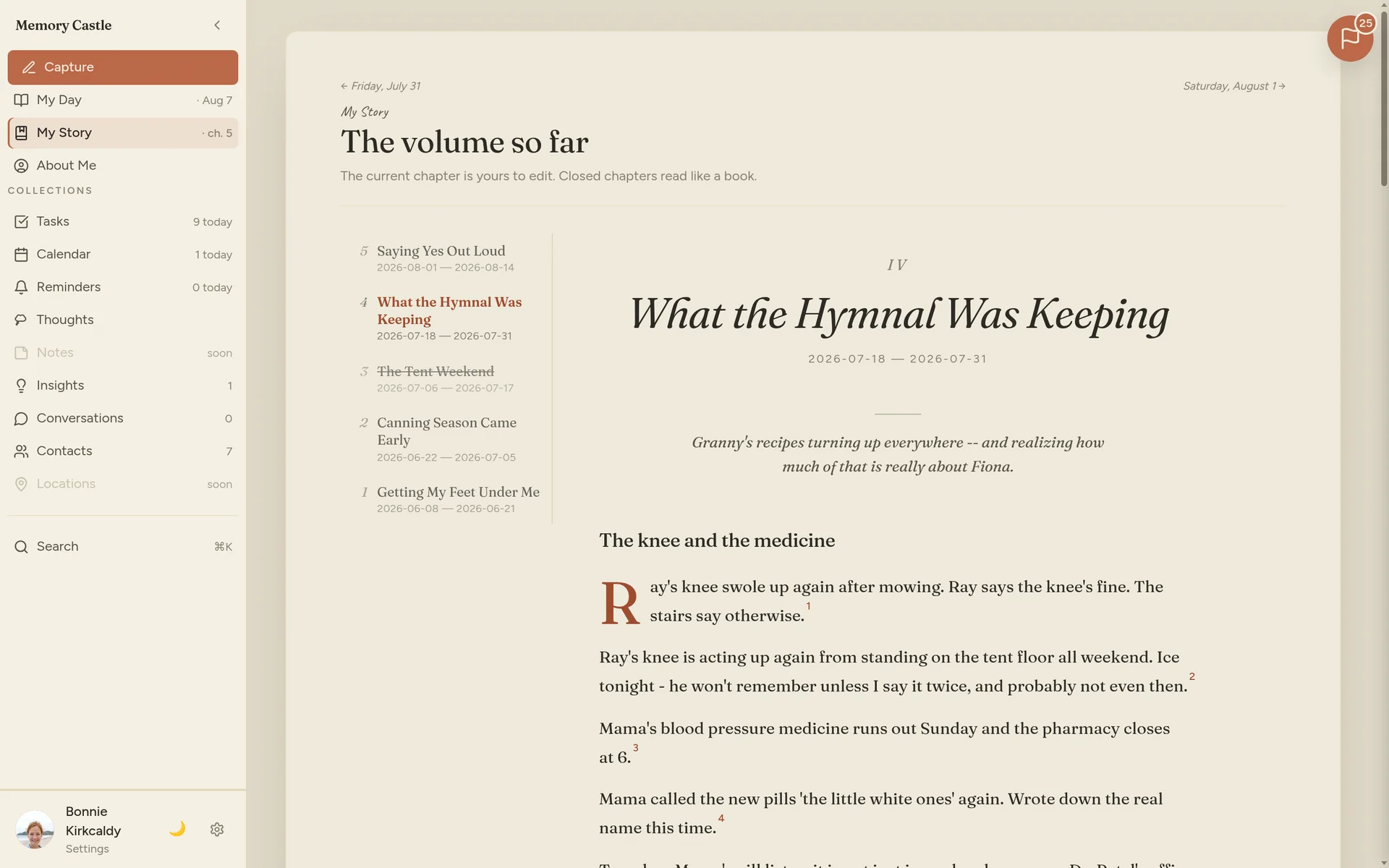
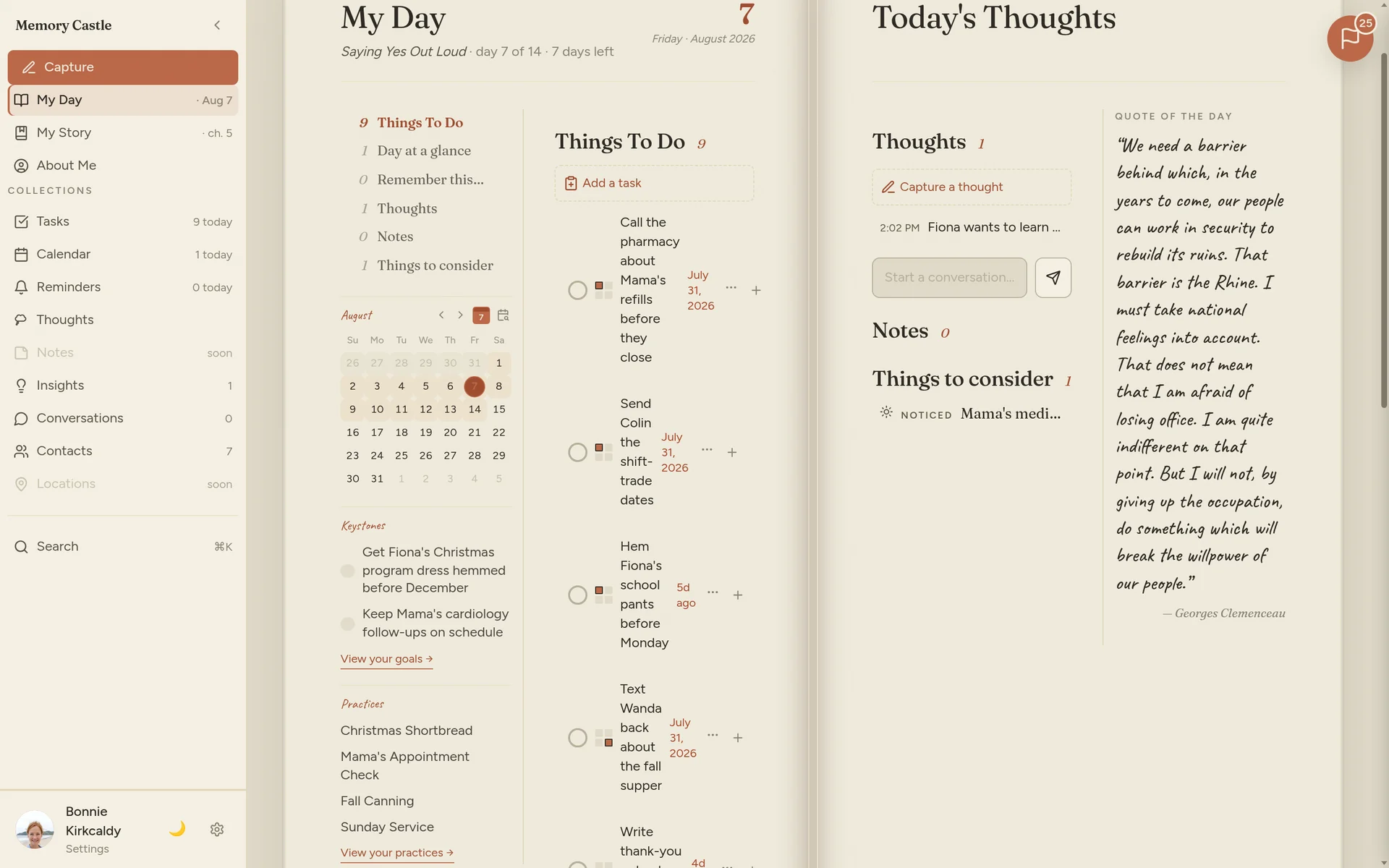
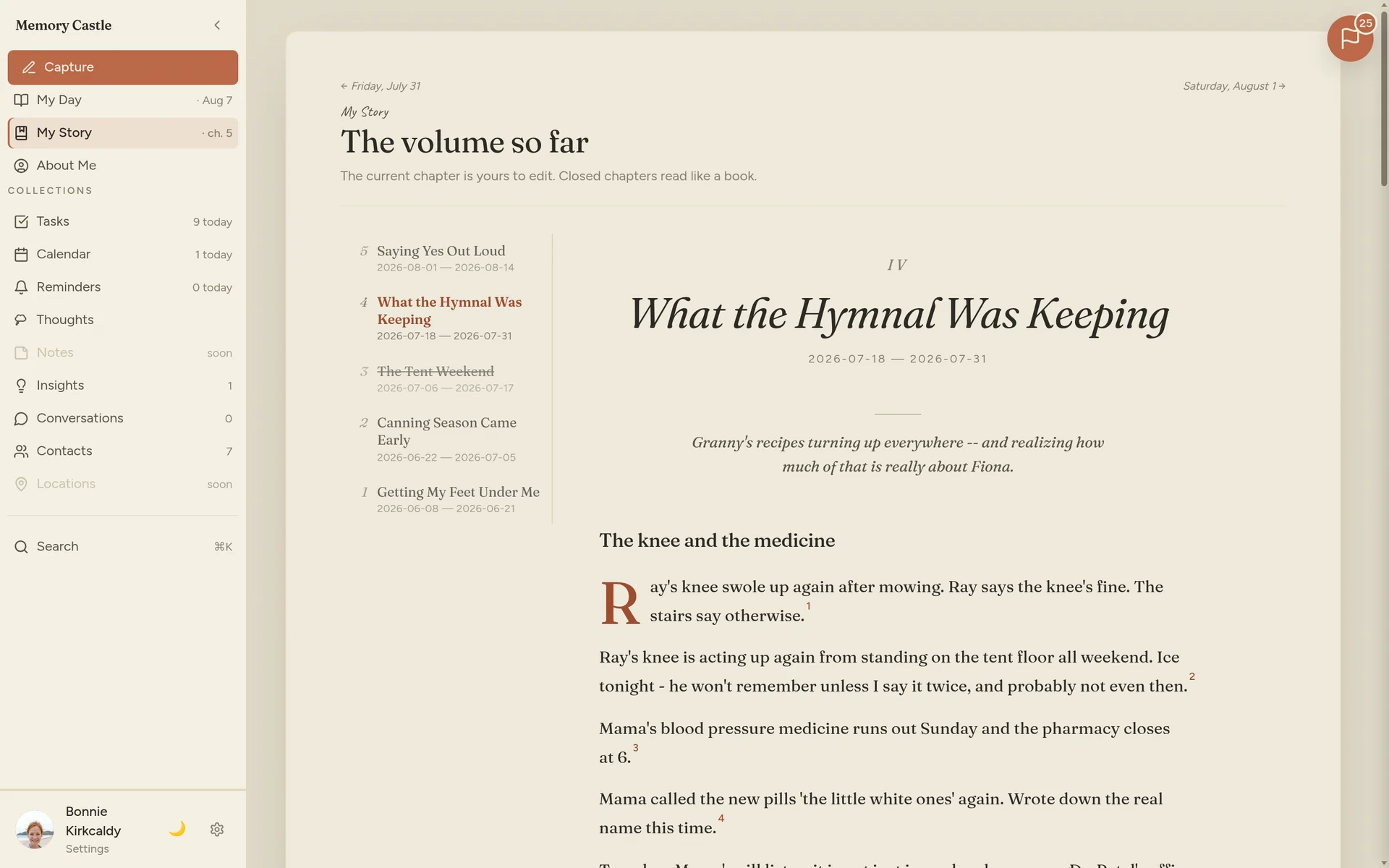
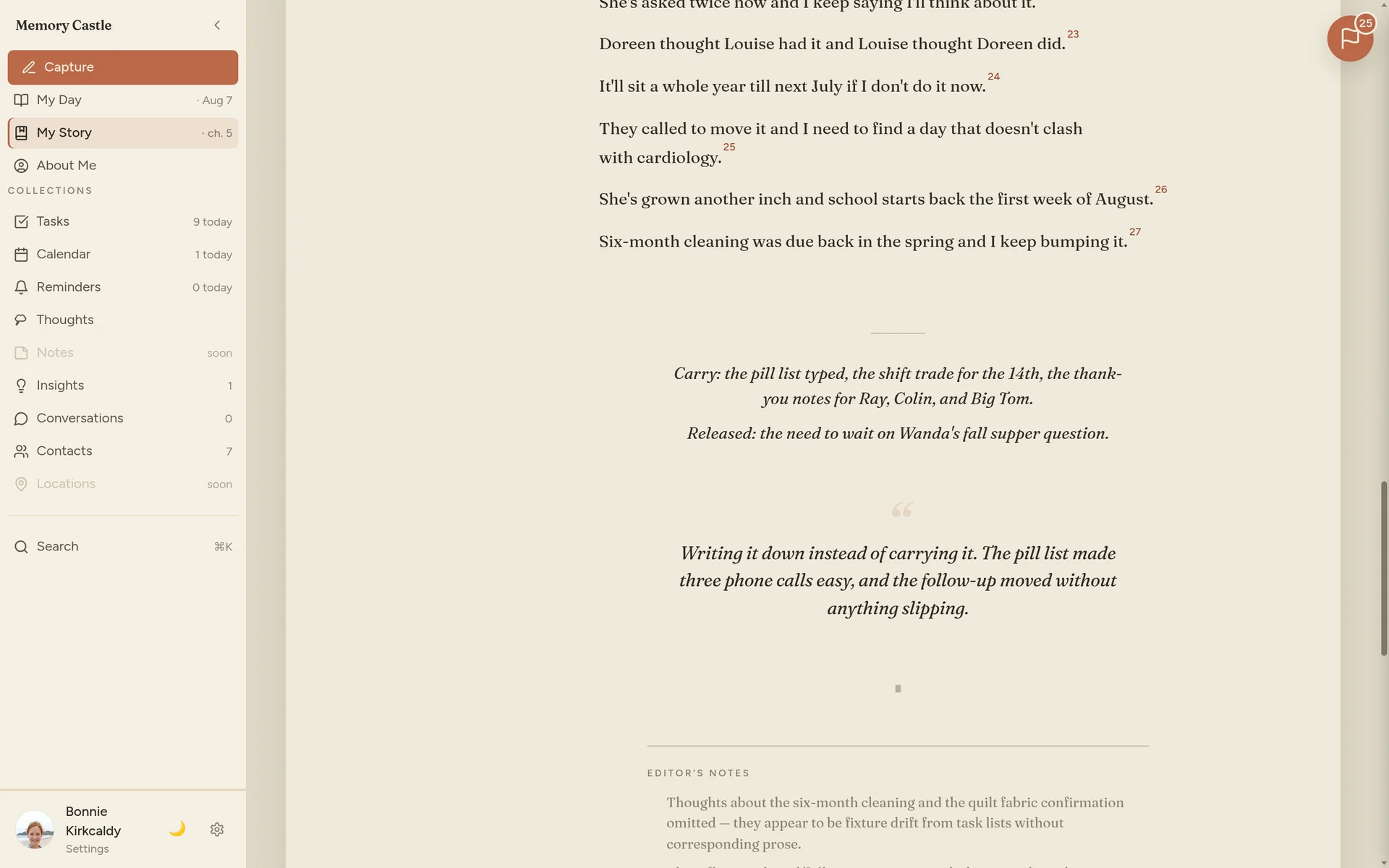
None of that arrives on day one, though. It arrives the way anything real does, which is daily. Do this on enough ordinary days and something assembles that you didn’t design: a page, with a date on it. Today’s tasks on one side, today’s thoughts on the other. Tomorrow there’s another. By Friday there are five, and not one of them cost you an evening. Five pages you didn’t write. Five days that would otherwise be gone.
Nothing in your life has ever held both halves of you at once. Your colleagues see one. Your friends see another. The people at your table see a third. This page holds them together. What you said mattered, beside what your day actually held, with nothing in between to hide the distance.
That distance is the gap, and it stayed invisible your whole life for exactly that reason. Now something is holding both, and keeping a record of it.
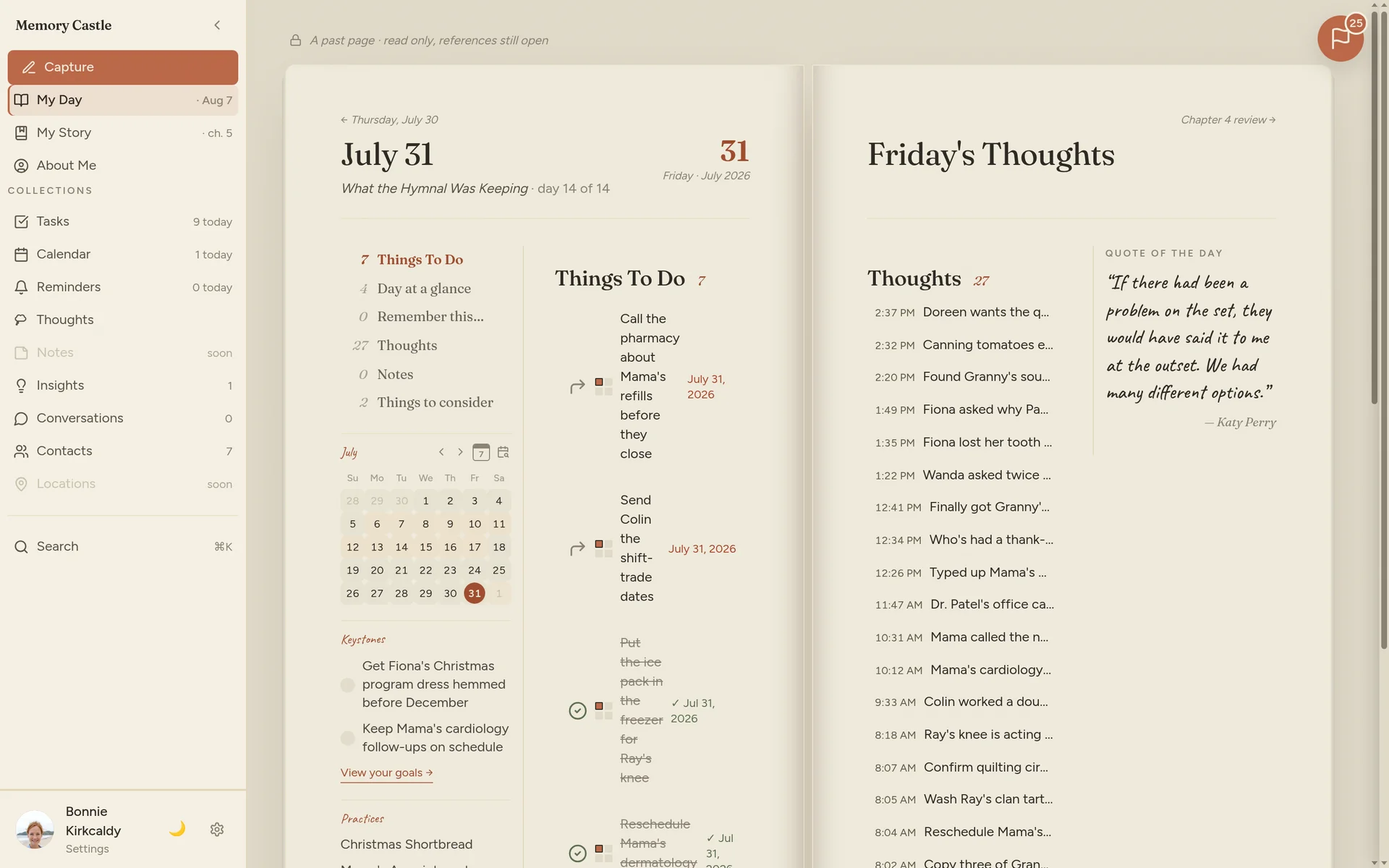
There’s nothing else to do. No filing tonight, nothing to clean up later, no backlog waiting for you when you get busy.
So tonight, when the thought arrives and it’s a good one, you won’t have to choose between keeping it and going to sleep. You say it into the dark, put the phone down, and forget about it. It will be there in the morning, read and waiting. You go on living, out loud, and your story silently writes itself in the background.