The Waitlist
Be there when the gates open.
Hear Yourself Out
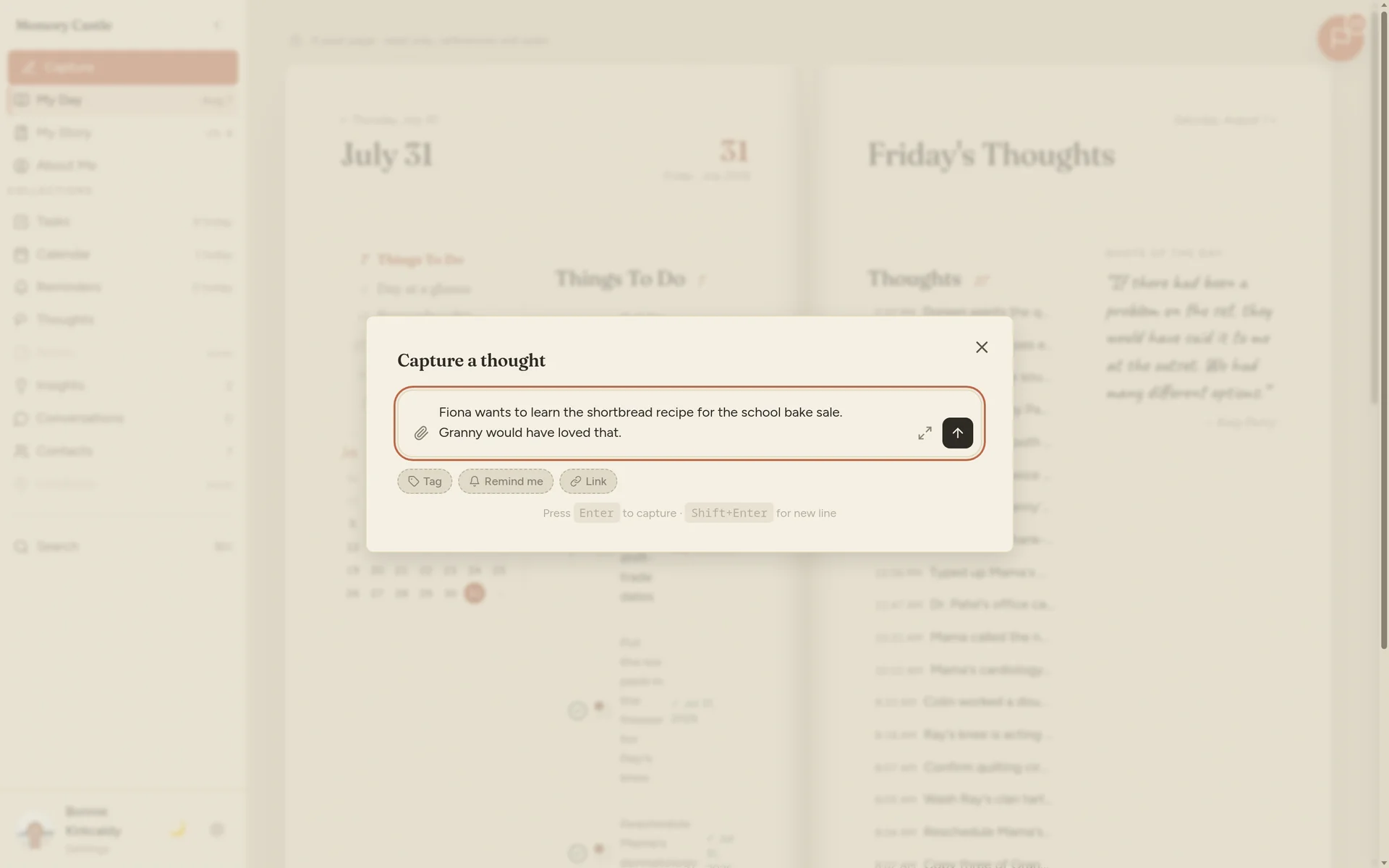
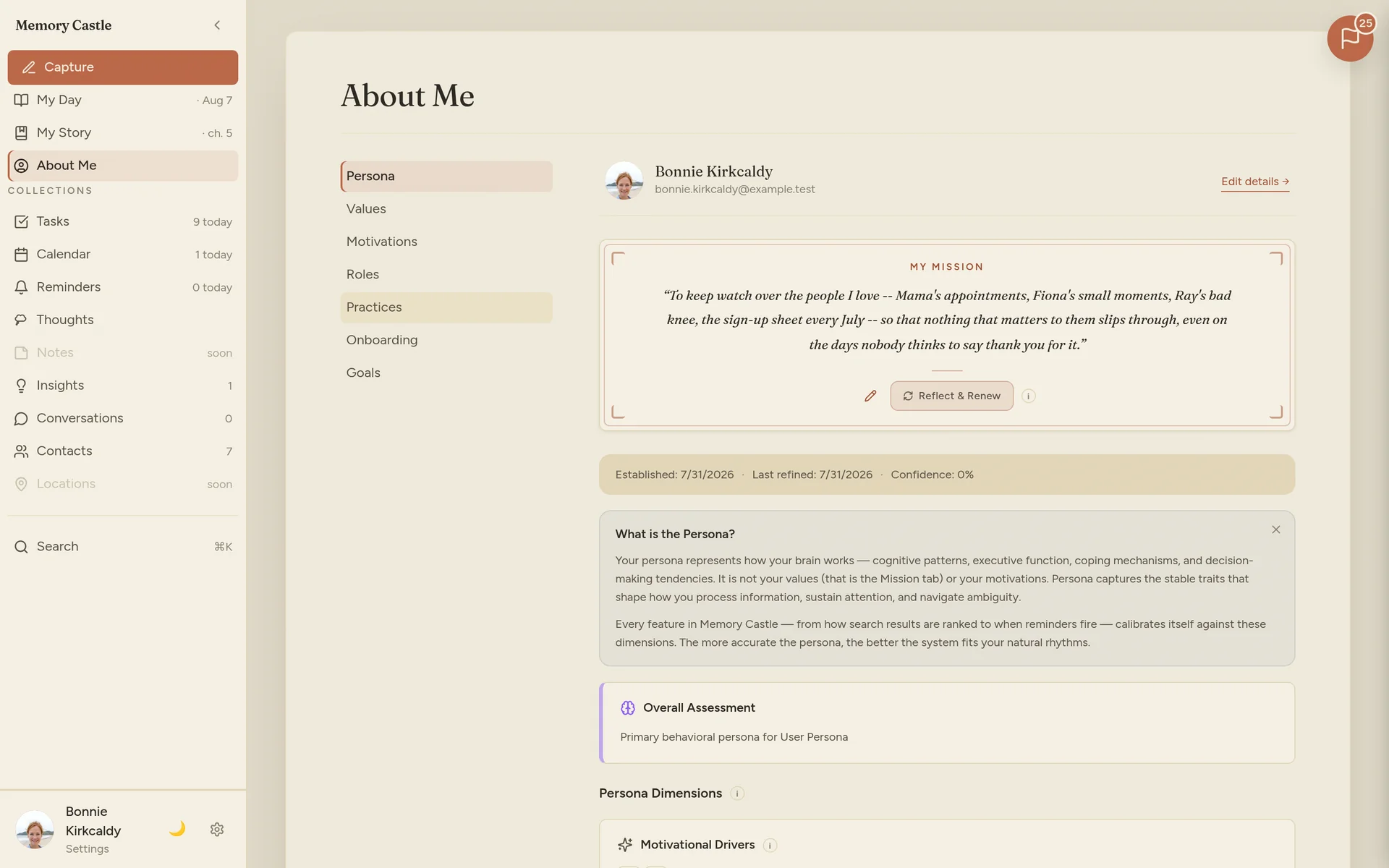
In this book so far: you've named the target, and your days have started going on the record.
You’ve been meaning to call the dentist for about a year.
Nothing hurts, which is the problem in a way. No pain forces the issue, no card comes in the mail, nothing makes today the day instead of some other day. The thought just surfaces on its own: brushing your teeth, filling out a form at a new doctor’s office.
Each time it arrives it feels new. Mildly annoying, easy to set down, gone in a minute. Nothing marks it as a repeat. If someone asked how many times you’d thought about the dentist this year, you’d guess three or four, and you’d say it with confidence.
Most of what you never get around to has that shape. Not a decision, not a failure of will, just a thought that arrives, gets set down, and never accumulates. One reminder is easy to dismiss. A stack of them would be impossible to ignore. You’ve never once seen the stack, because your mind keeps the thought you’re having and lets the rest go.
Psychologists have a name for that. They call it change blindness: a change that happens slowly enough doesn’t register as a change at all. Your own face is the clearest case. It changes a little every day, you look right at it every day, and you never once catch it happening. Then someone hands you a snapshot from four years ago and the difference is undeniable.
Missing the change isn’t a lapse in attention. Attention is exactly what fails. You only ever have today to look at, and today always looks like yesterday.
Your life changes at that speed too, and no one is taking the snapshots.
Change blindness covers almost everything worth knowing about yourself.
You can’t see what stopped. Starting makes noise: you buy the shoes, you tell someone, you put it on the calendar and start walking in the evening. Quitting makes no noise. There was no day the walks ended, no evening you decided to stop, nothing that asked you to notice, so you’d still describe yourself as someone who walks right up until somebody asks when you last did.
You can’t see what’s building, because no single day differs enough from the one before it to register. You can’t see what you repeat, because each time feels like the last. You can’t see what’s quietly taken over more of your week than you’d ever agree to, because it arrived a little at a time.
Change blindness runs in both directions. You can’t watch yourself get worse at something, and you can’t watch yourself get better at it either. No one catches the week they stopped worrying about money. You notice years later that you aren’t anymore, and you have no idea when it happened or what you did that worked.
That blindness costs more than it sounds, because becoming who you said you’d be requires knowing which direction you’re moving in now. You named the person you wanted to be, and you’ve been living. Between the naming and the living sits a heading, and you have no instrument for it. No one does. Your memory keeps intentions instead of behavior, and the people who know you hold fragments and keep no records.
You drift, and because of change blindness you find out in hindsight. By then you’ve become someone you never chose to be.
Memory Castle keeps the snapshots of who you were.
This is the part of personal growth management you cannot do alone. A record you interpret yourself only ever tells you what you already believed. It has to be read by something that wasn’t there when you wrote it.
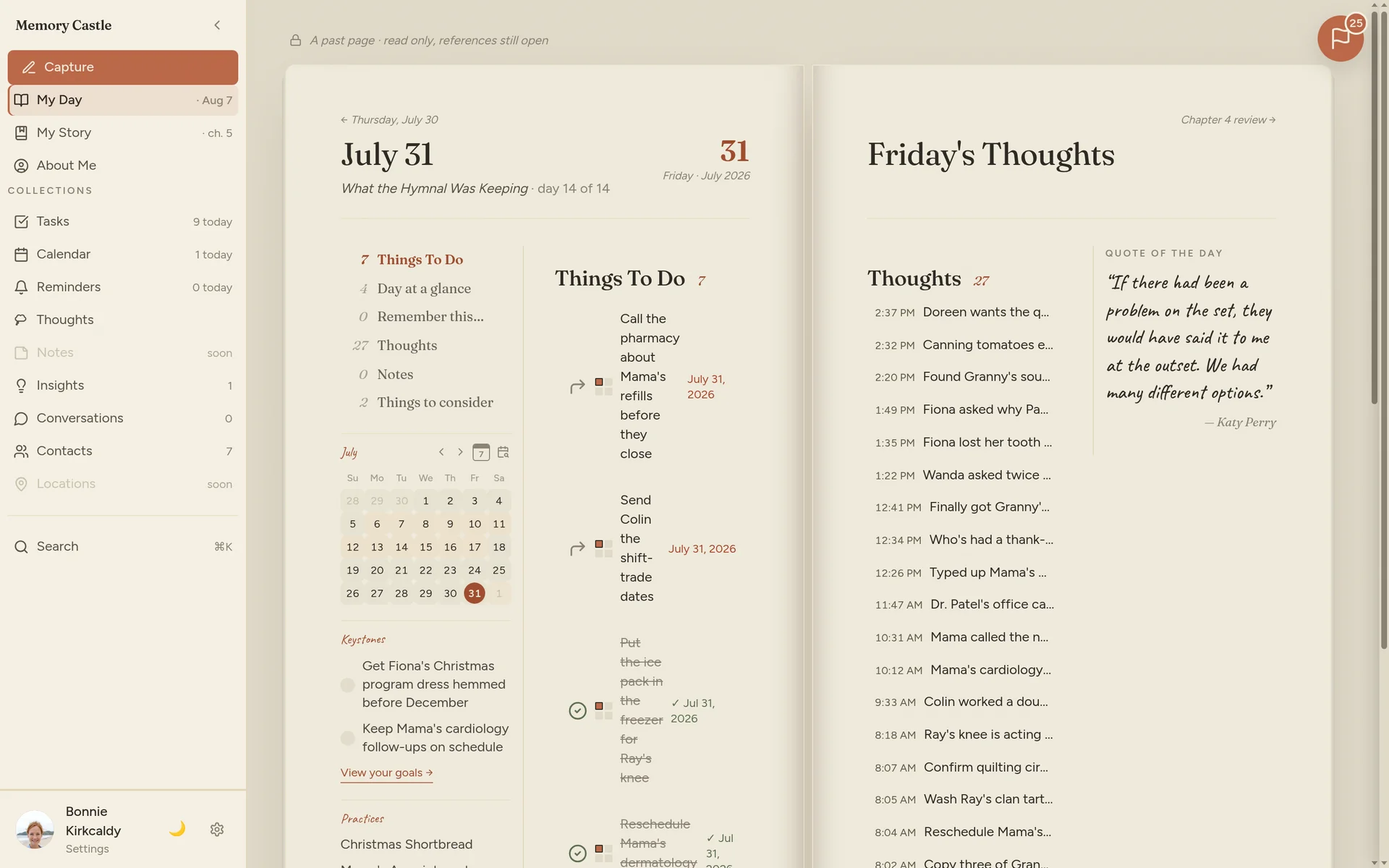
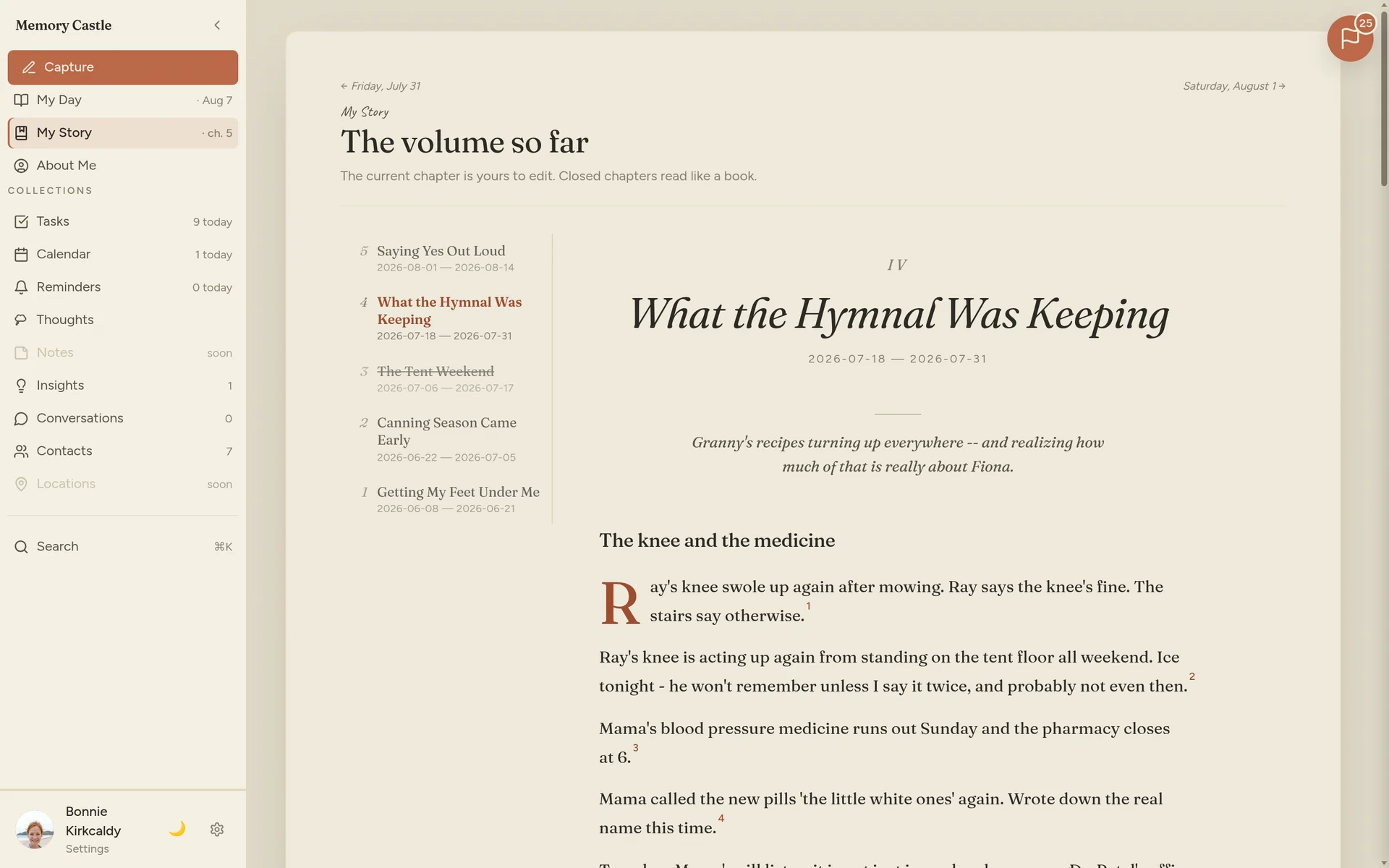
Everything you handed over in the last chapter went into one place and got read. The record isn’t a diary you’d have to go back and study. It’s you from two years ago, you from six months ago, and you from Tuesday, all held at once by something that doesn’t forget and has no stake in how you come off.
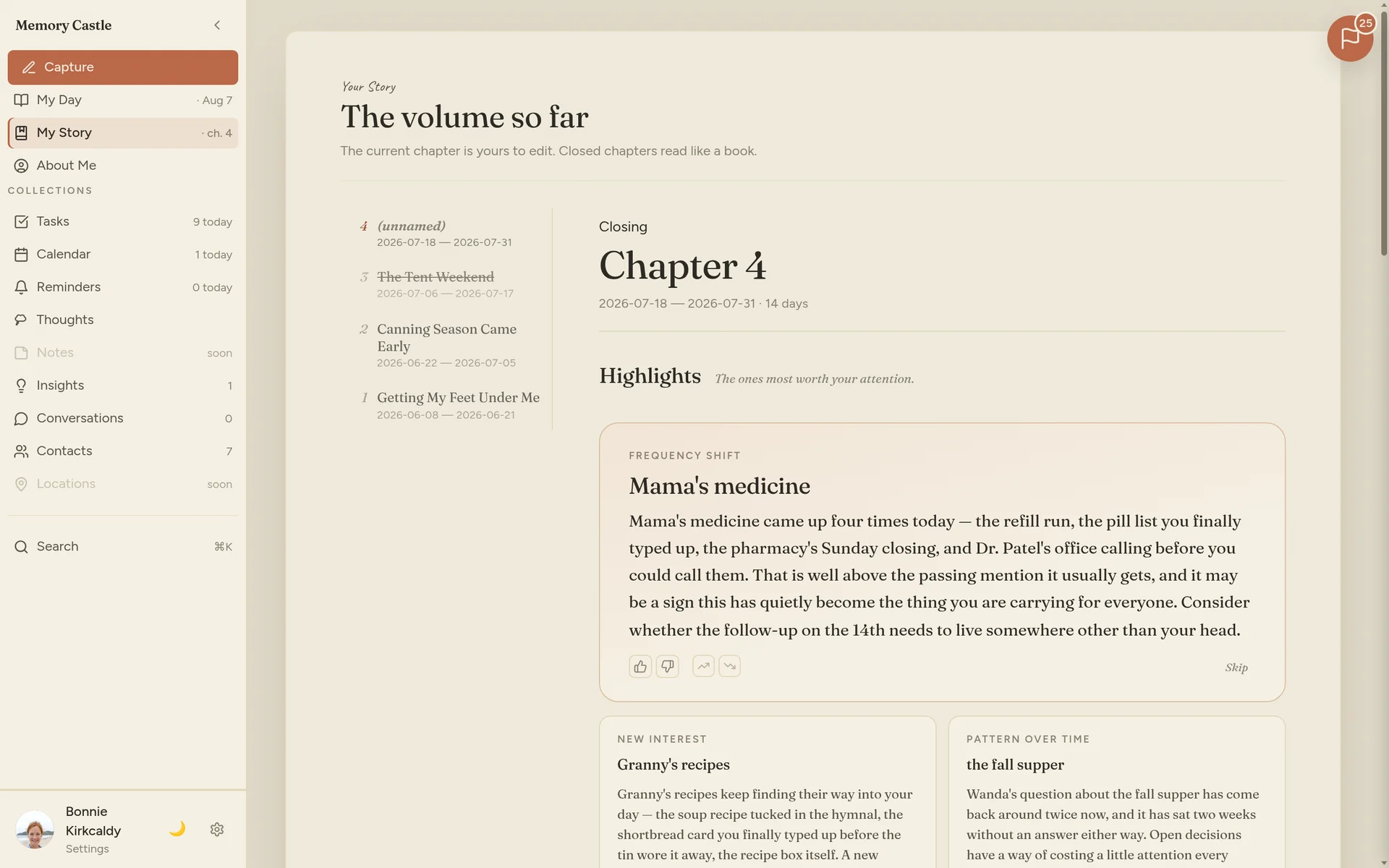
Then one Tuesday, a card is waiting for you.
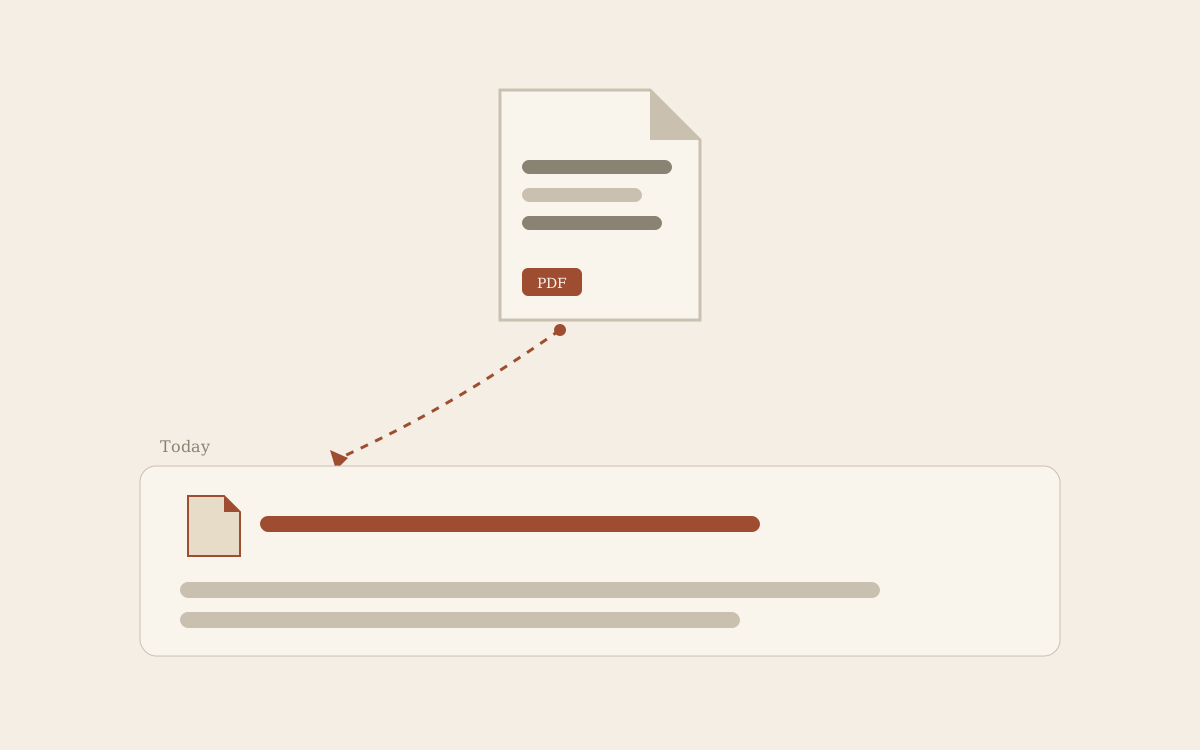
The card says you’ve mentioned the dentist eleven times in the last year.
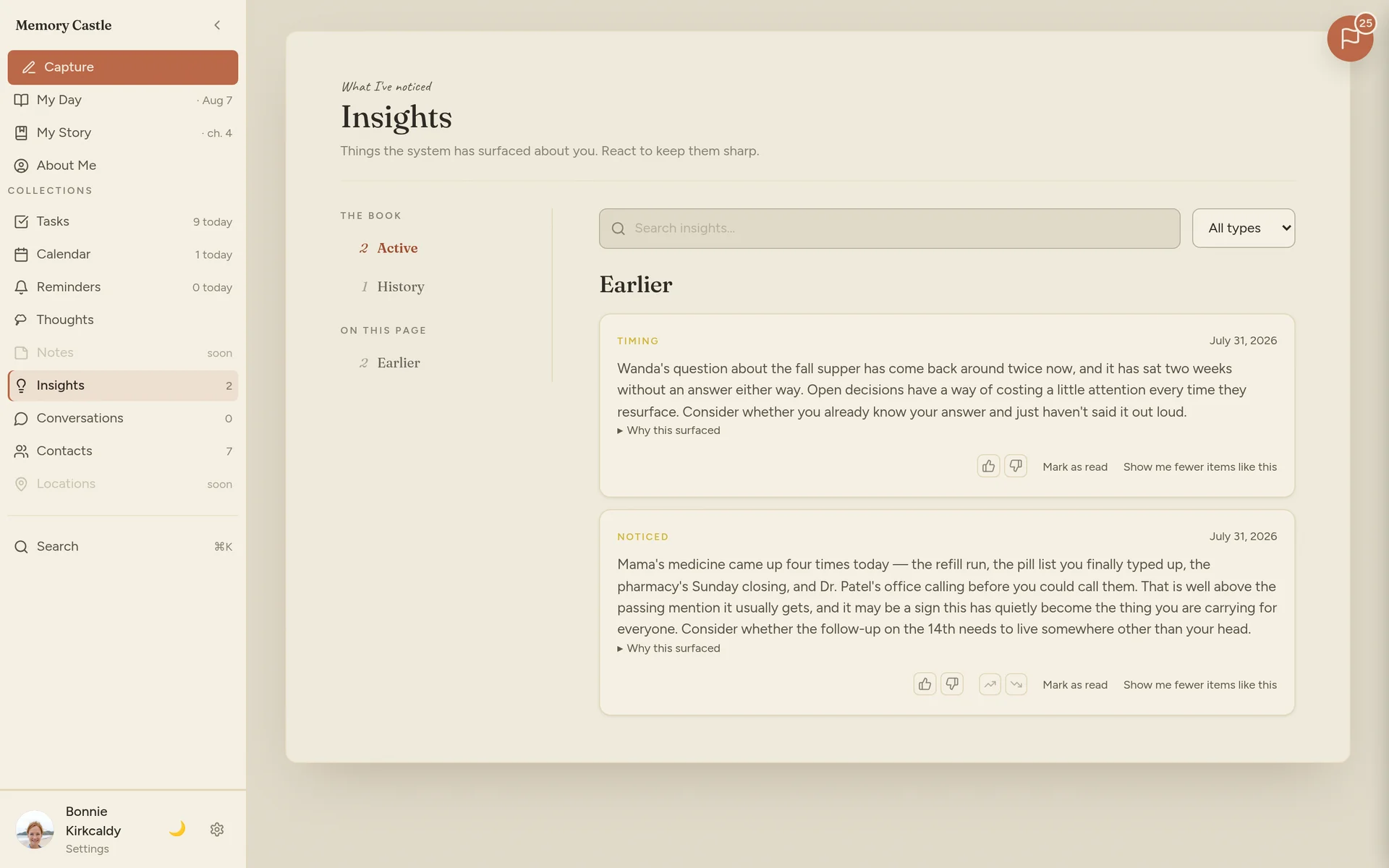
Read the card again and notice what it doesn’t do. The card doesn’t tell you to make the appointment. It doesn’t ask what you’re avoiding or suggest you’re the kind of person who puts things off. Eleven could mean you’ve been dodging it for a year. Eleven could just as easily mean it matters to you more than you’ve been giving yourself credit for. Memory Castle has no opinion about which, and no opinion is being held back to be polite. The card counted your own words and set the number in front of you. What eleven means is yours to work out, and you’re the only one who can.
Memory Castle counts everything the same way. You haven’t mentioned your brother in four months. You said family was what mattered most. Memory Castle won’t tell you what that means either. It sets the two facts beside each other, which is more than anything in your life has ever done.
The counting runs the other way just as often. The money worry that kept you awake most of last year hasn’t come up since April. You’ve written about the new job nine times this month and never once used the word dread, which was the only word you had for it in January. Memory Castle has no more opinion about those than it has about your brother. The record runs in both directions because your life does, and none of it was collected to prove a point about you.
When someone says hear me out, they’re asking you to listen to the whole thought before you form an opinion about it. They’re usually asking because the opening sounds worse than the ending. People don’t give themselves that courtesy. That’s why this chapter is called Hear Yourself Out. You reached a verdict on yourself years ago, on little to no evidence, and you’ve been living by that verdict ever since. You know the wording. I have no discipline. I never finish anything. I’m bad at keeping in touch. Memory Castle helps you hear yourself out. You get to see the true version of yourself before you reach a verdict, and the evidence rarely supports the sentence you’ve been serving.
Noticing is the easy half. Anything holding a year of your life could generate observations all day, and a system that told you everything it noticed would be unbearable inside a week. The hard part was always deciding what’s worth saying.
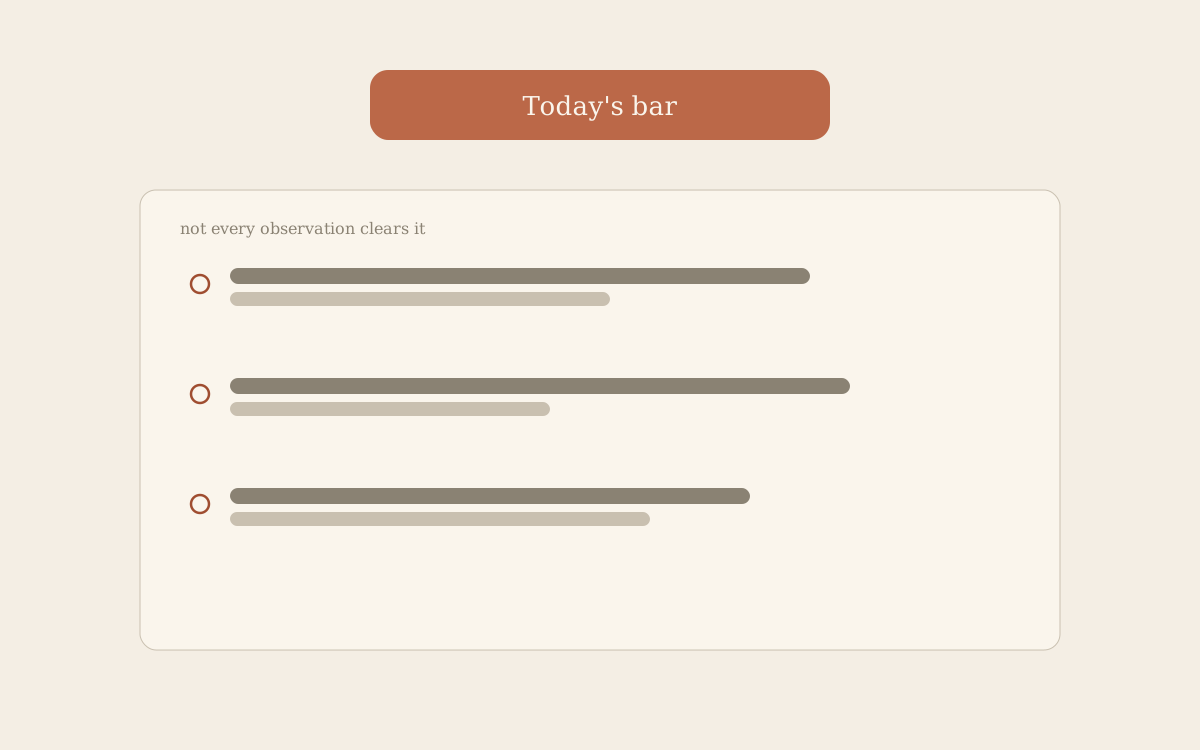
Memory Castle says nothing most days, and that silence is a decision rather than an absence. An observation has to clear two bars before it reaches you. It has to be surprising, and it has to matter. Where those bars sit depends on you, and they move as Memory Castle learns how much you actually want to hear.
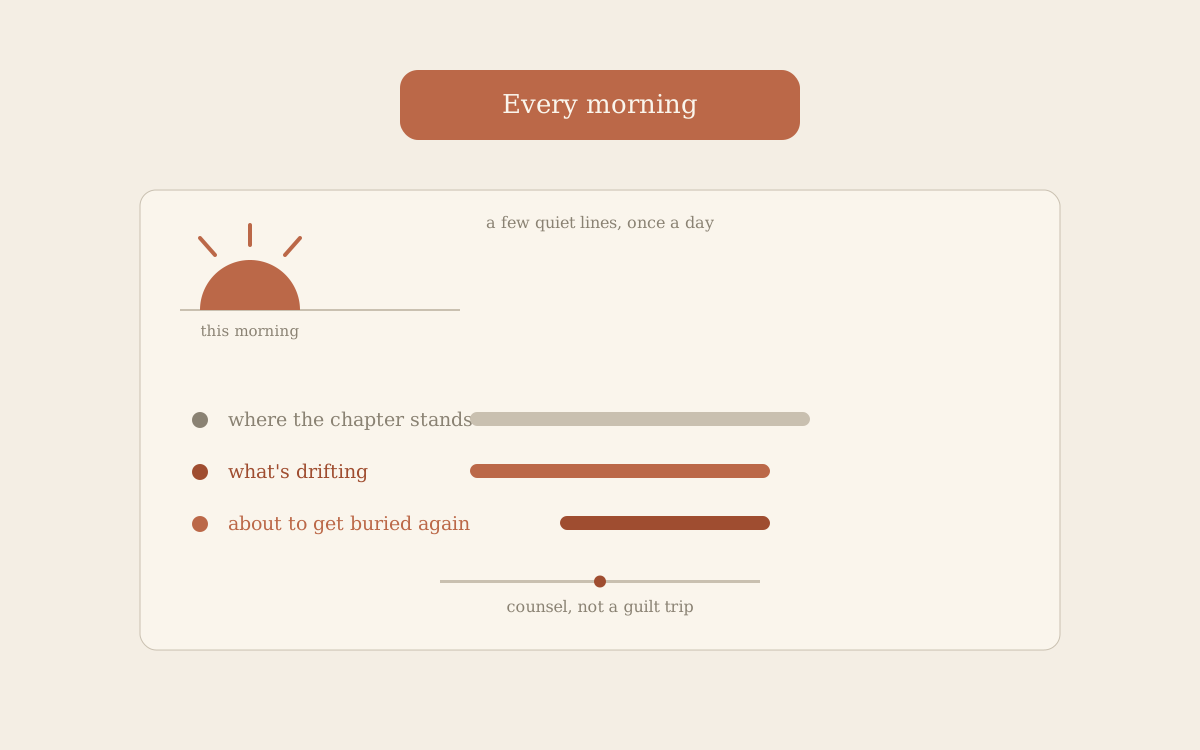
Speaking isn’t one volume either. Most of what Memory Castle notices waits on a page you can visit when you feel like it. What matters more turns up in your day. Only the rare one interrupts you, and there’s a hard limit on how often that happens.
When the card does speak it stays short. One to three sentences, in words you’d use yourself. No cheerleading, no reading your own numbers back at you. If something is slipping, the card says so plainly and leaves the lecture out.
The card brings one fact to your attention. What you do about it is yours. Memory Castle softens the wording when the evidence is thinner — appears to, this could be — so you’re never guessing how much weight to put on it, but the deciding was never Memory Castle’s to do.
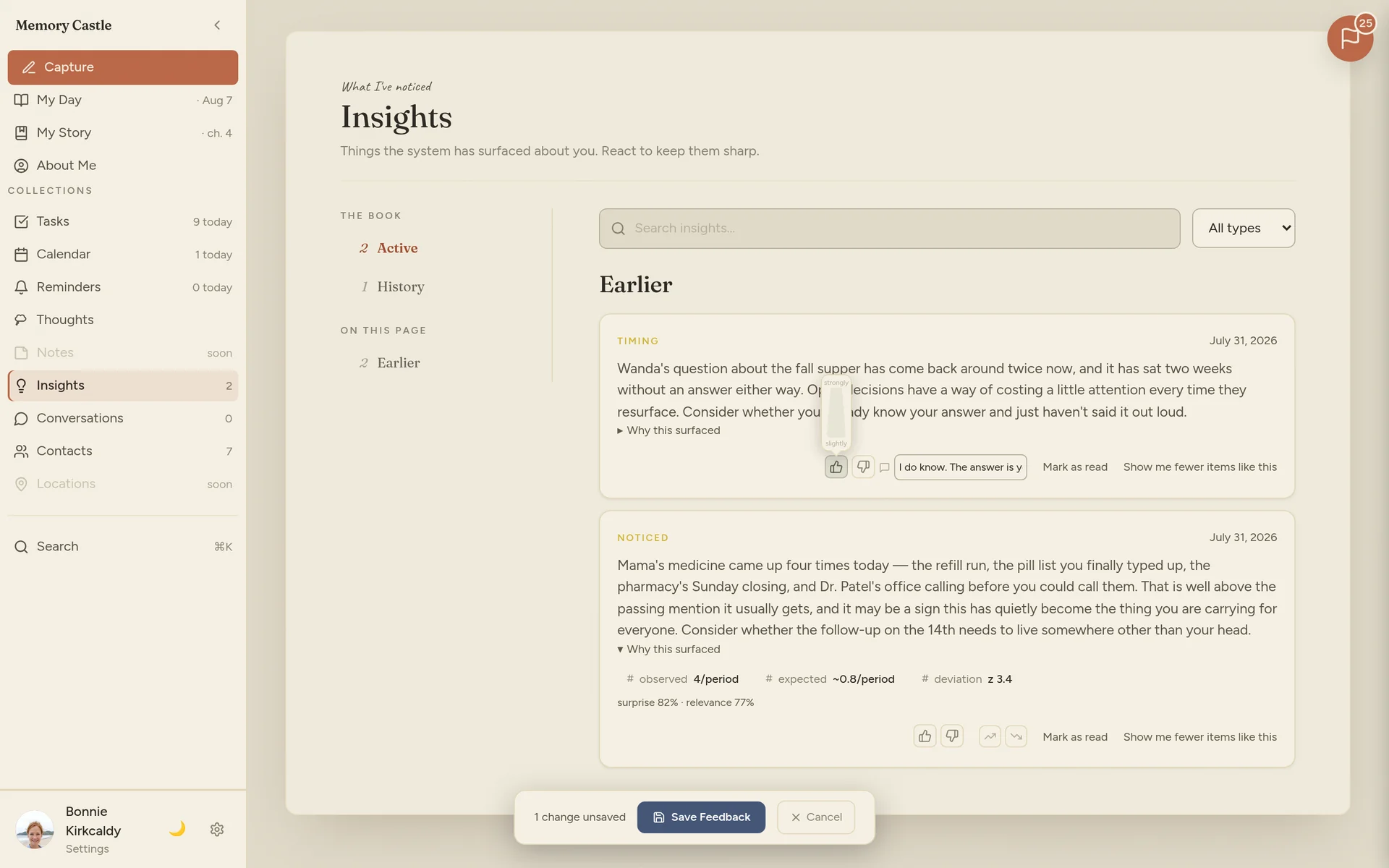
Under every card is a link that says why this surfaced. Open it and you see what Memory Castle was looking at and how it decided. You can say no and say why, ask for fewer like it, or say nothing at all. Silence is an answer too, and a kind of card you keep ignoring shows up less.
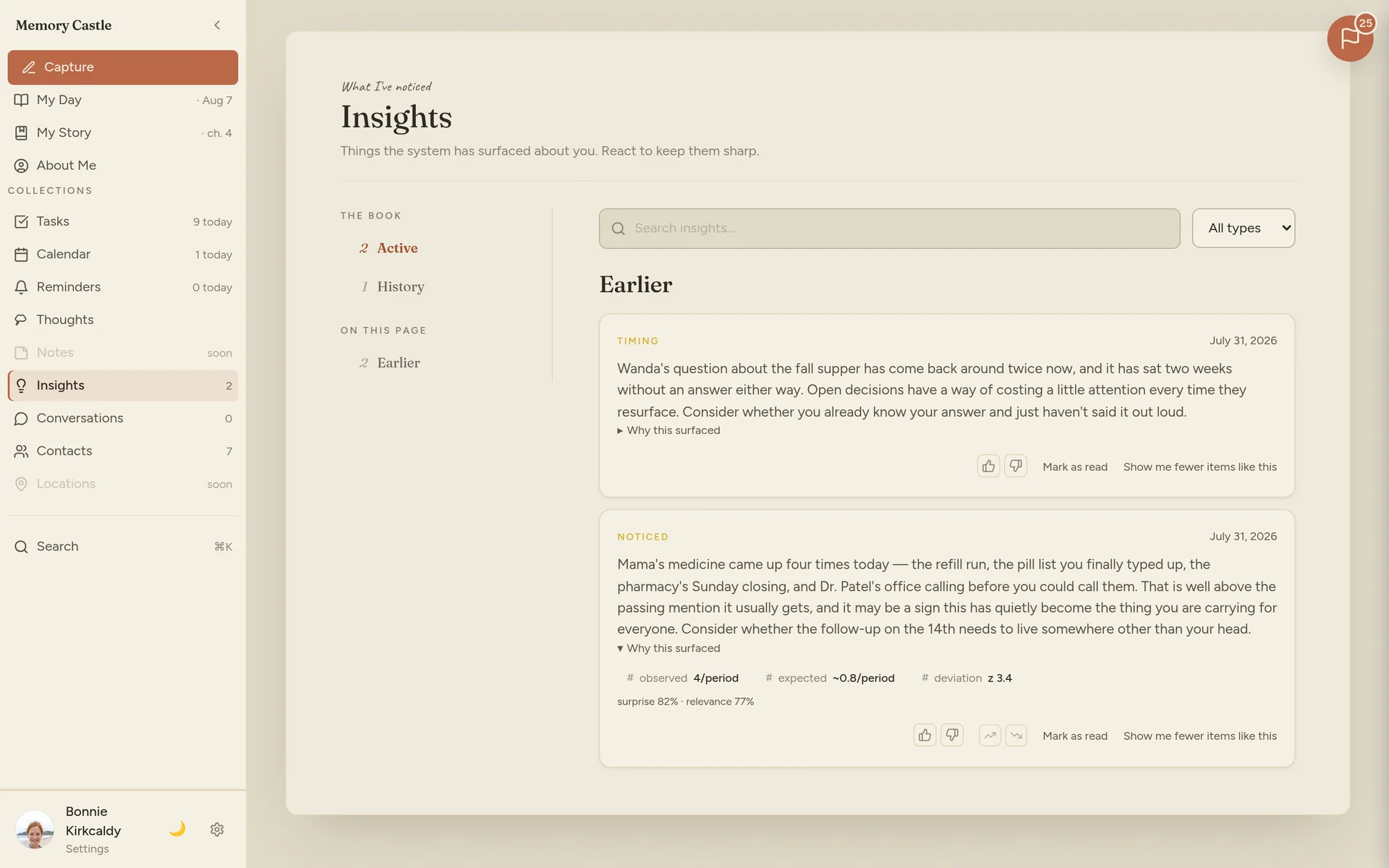
Then Memory Castle leaves you alone. Nothing follows up. Nothing checks whether you made the appointment. Memory Castle proposes, you decide, and if you decide it was wrong, it was wrong.
You still might not call the dentist. That was never the point. The point is that after a year of not knowing, you know it’s eleven, and whatever you decide from here you’ll be deciding it with the record in front of you instead of a feeling and a guess.