


The Waitlist
Be there when the gates open.
Introduction
Personal Growth Management
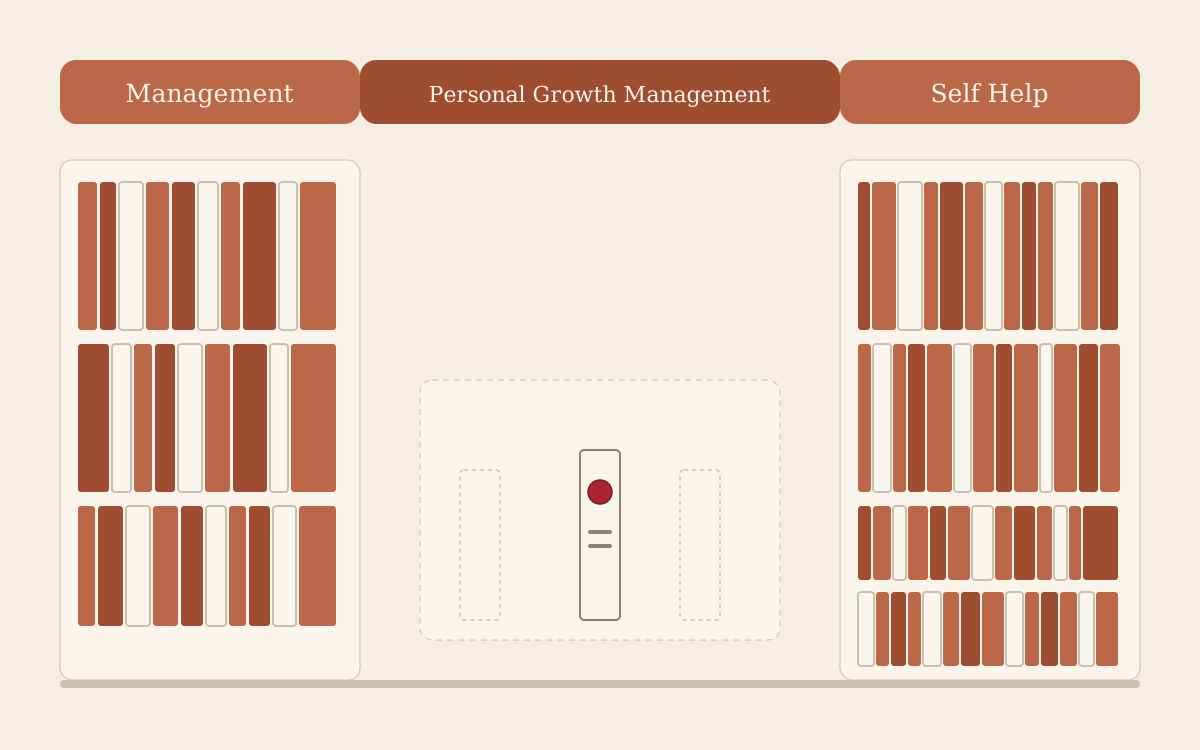
Walk into any bookstore and you will always find a management section. Strategy, planning, leadership, operations, continuous improvement. It amounts to about a century of serious work on one question, which is how a group of people decides what matters, spends a stretch of time on it, and then finds out honestly what came of it. There are people who teach this for a living. Most of it has already reached you in some diluted form, as training nobody called training.
Another section you will always find in any bookstore is self help. It’s bigger. Habits, mindset, motivation, discipline, purpose. Hundreds of books helping thousands of people, if not millions.
The management books are rigorous because the money is real, and because a company writes down what it does. What they’re building is the company, and you turn up in them roughly the way materials turn up in a plan for a house.
Self help is written for you. What it can’t give you is a process, for the plain reason that a process has to see what’s actually happening, and no author has ever been able to see your Tuesday.
One section has a process and the wrong beneficiary. The other has the right beneficiary and no process. Neither has ever treated you as the thing being built.
The shelf between the two sections is empty.
My proposal is a third section, sitting between the other two. It takes its process from management and its understanding of people from self help, and it’s built for the person standing in the middle. I call it Personal Growth Management.
Personal growth management is deciding who you want to be, keeping an honest record of who you’ve actually been, and putting those two side by side often enough to do something about the difference. Do that for a year and you will be able to say exactly how you changed, which is not something you can say about last year.
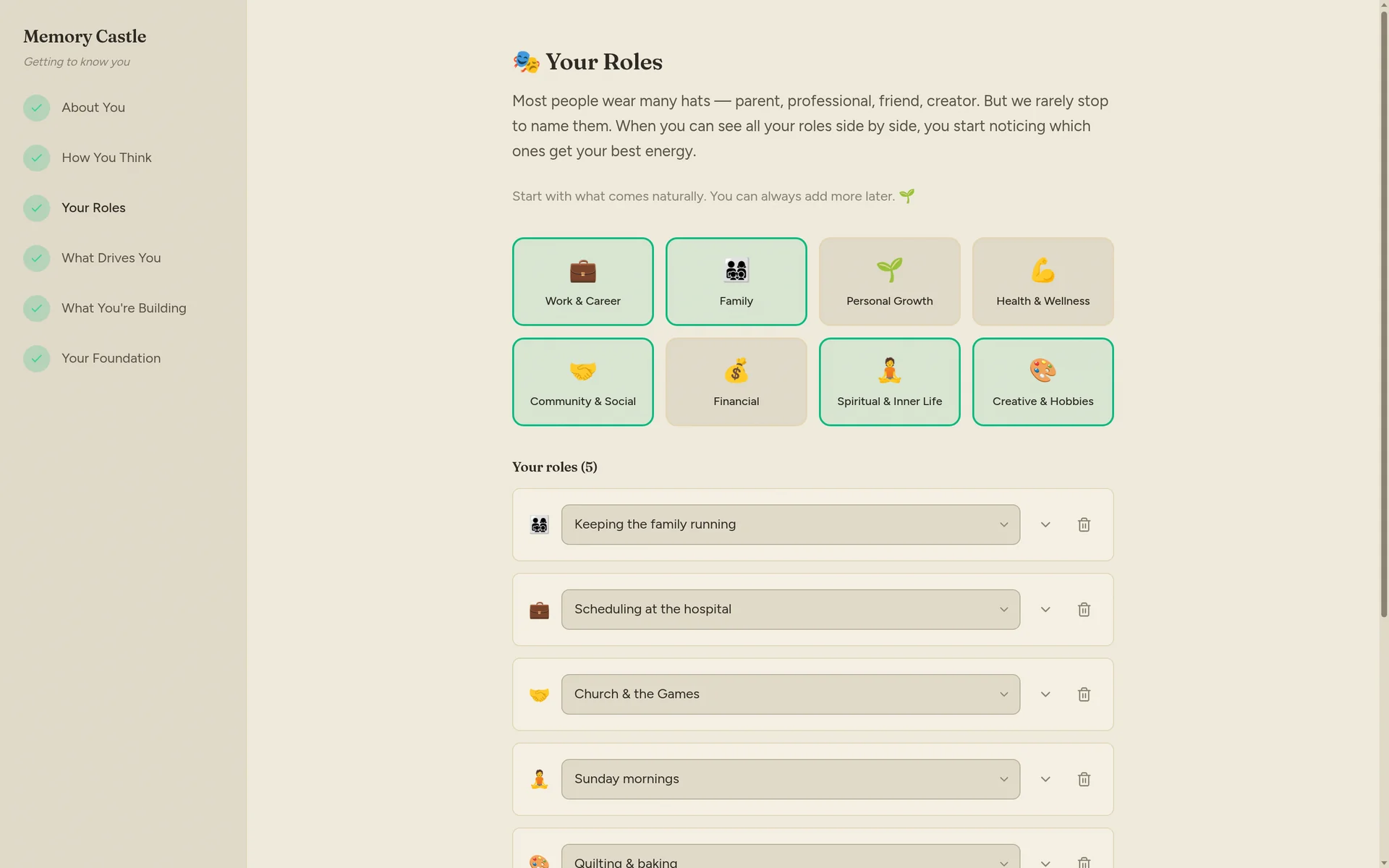
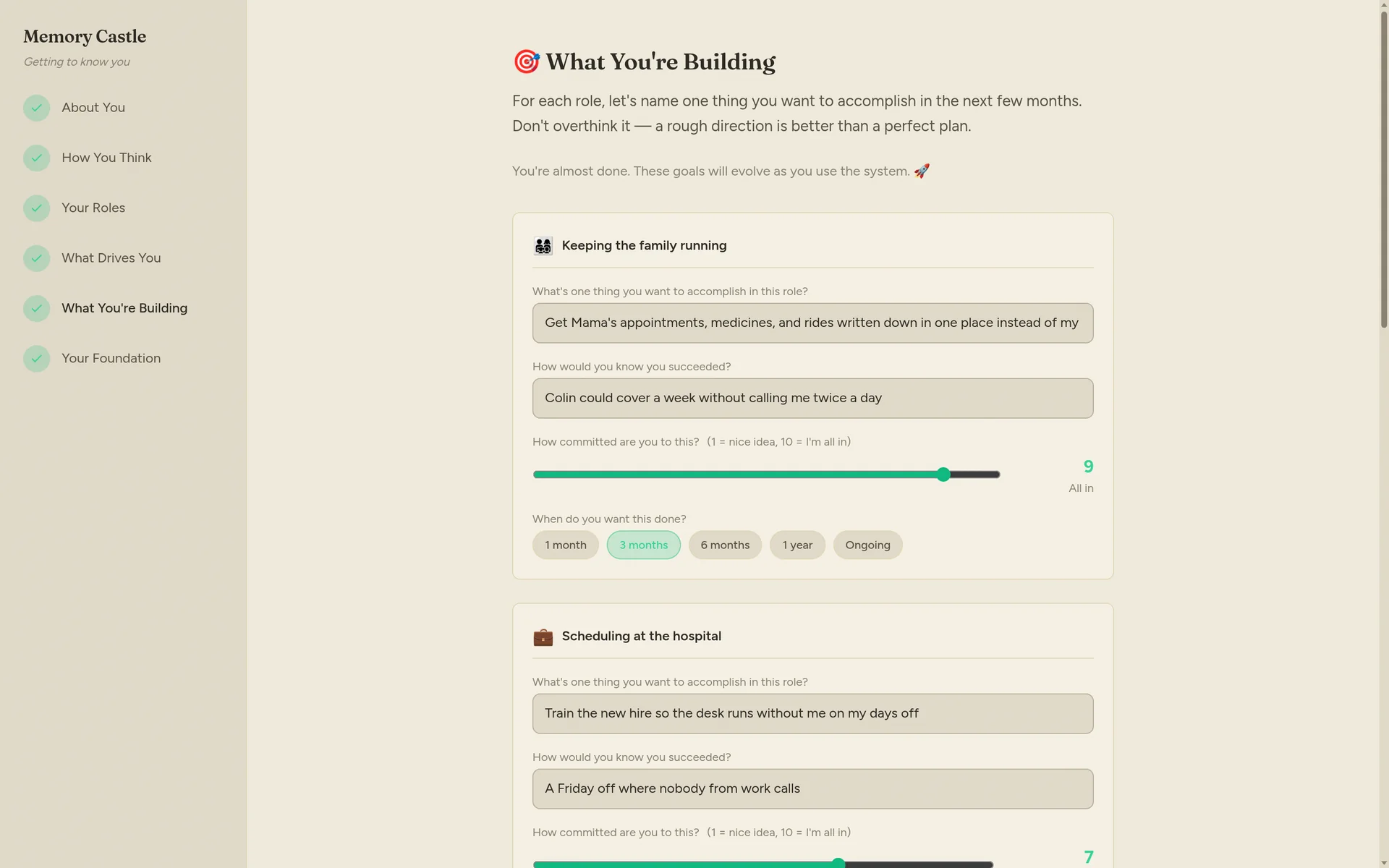
In practice it’s five things, in an order. Start where you are. Live out loud. Hear yourself out. See how far you’ve come. Become who you said you’d be.
Those five are the same cycle the management section teaches, with a person where the company usually goes.
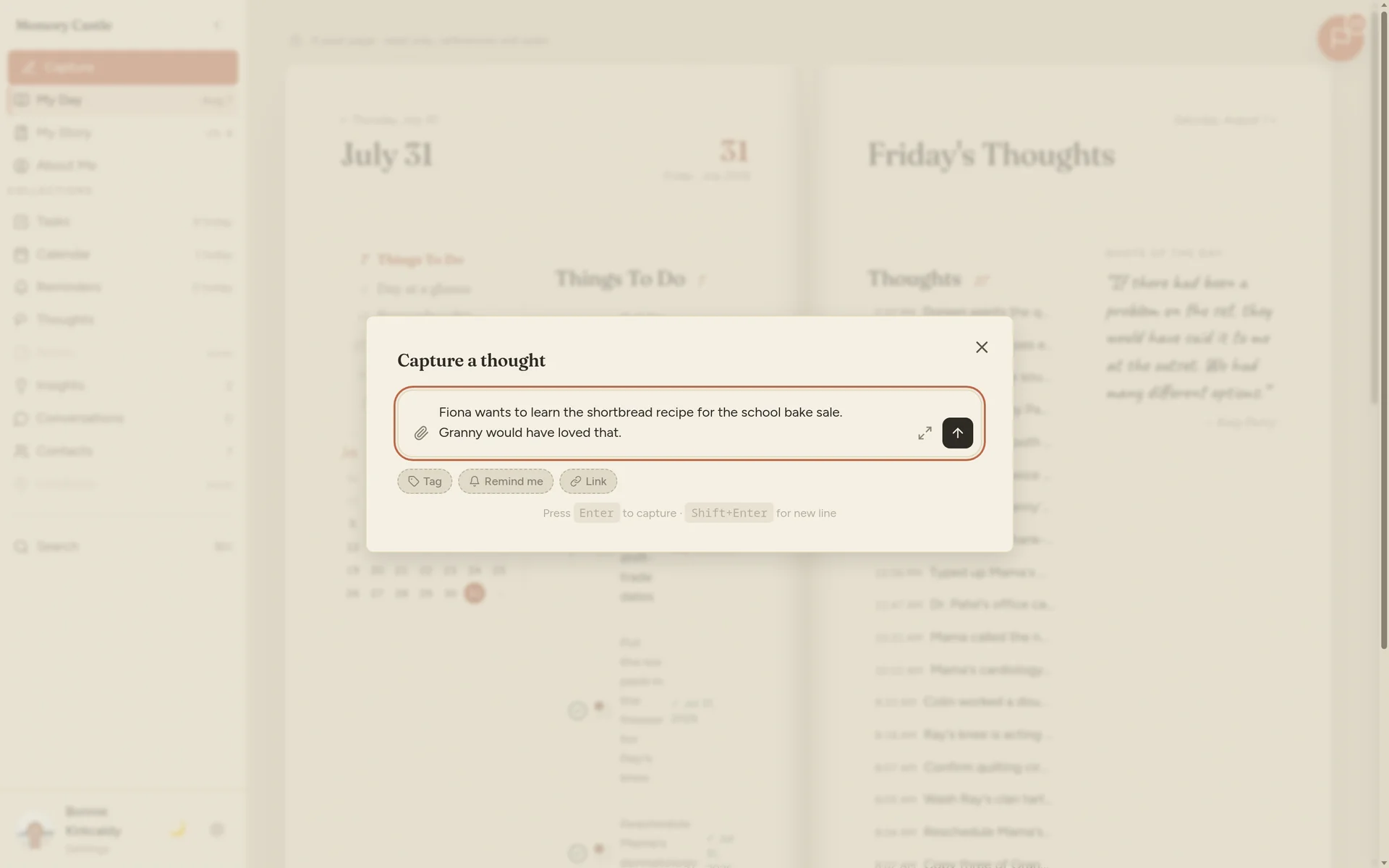
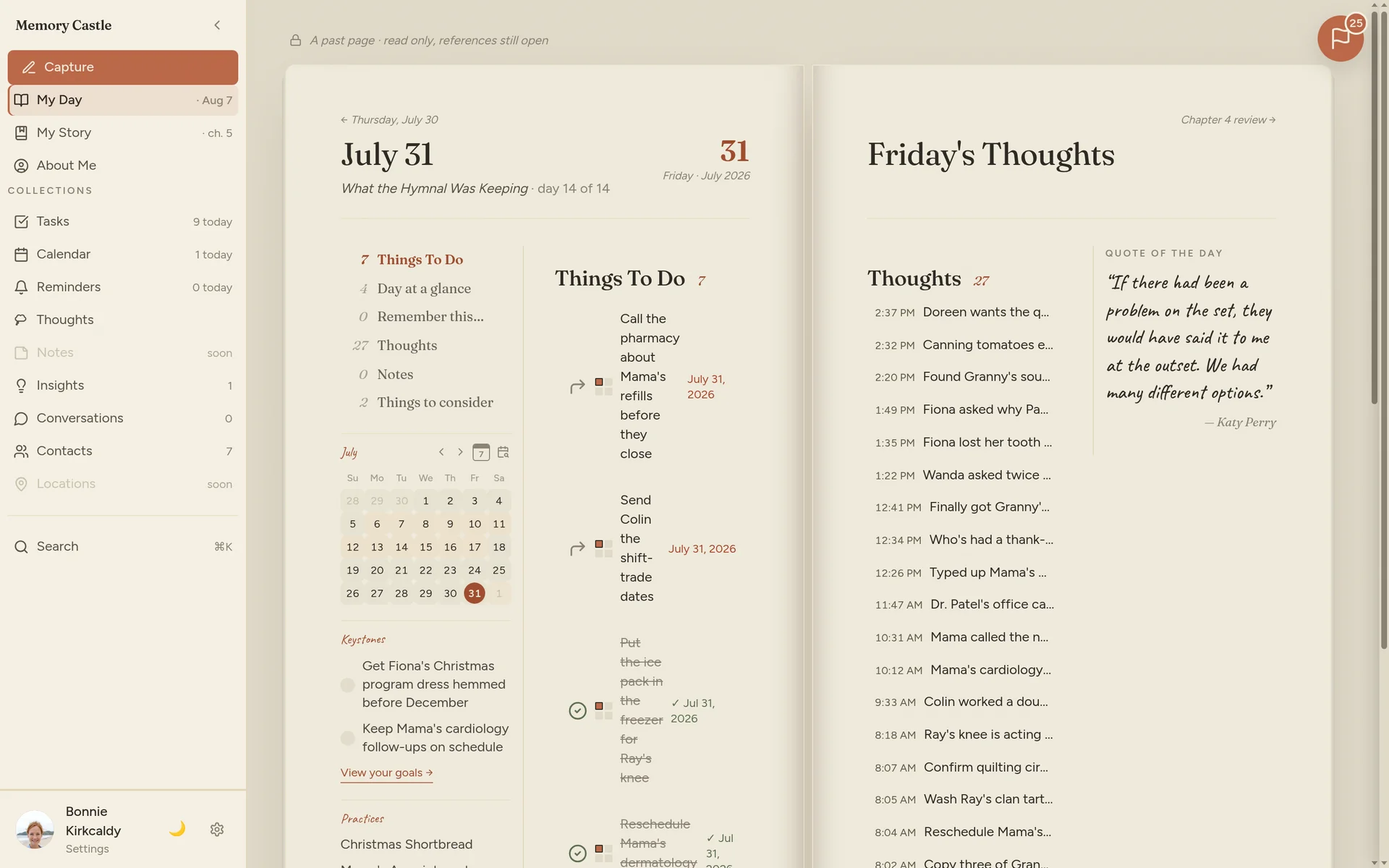
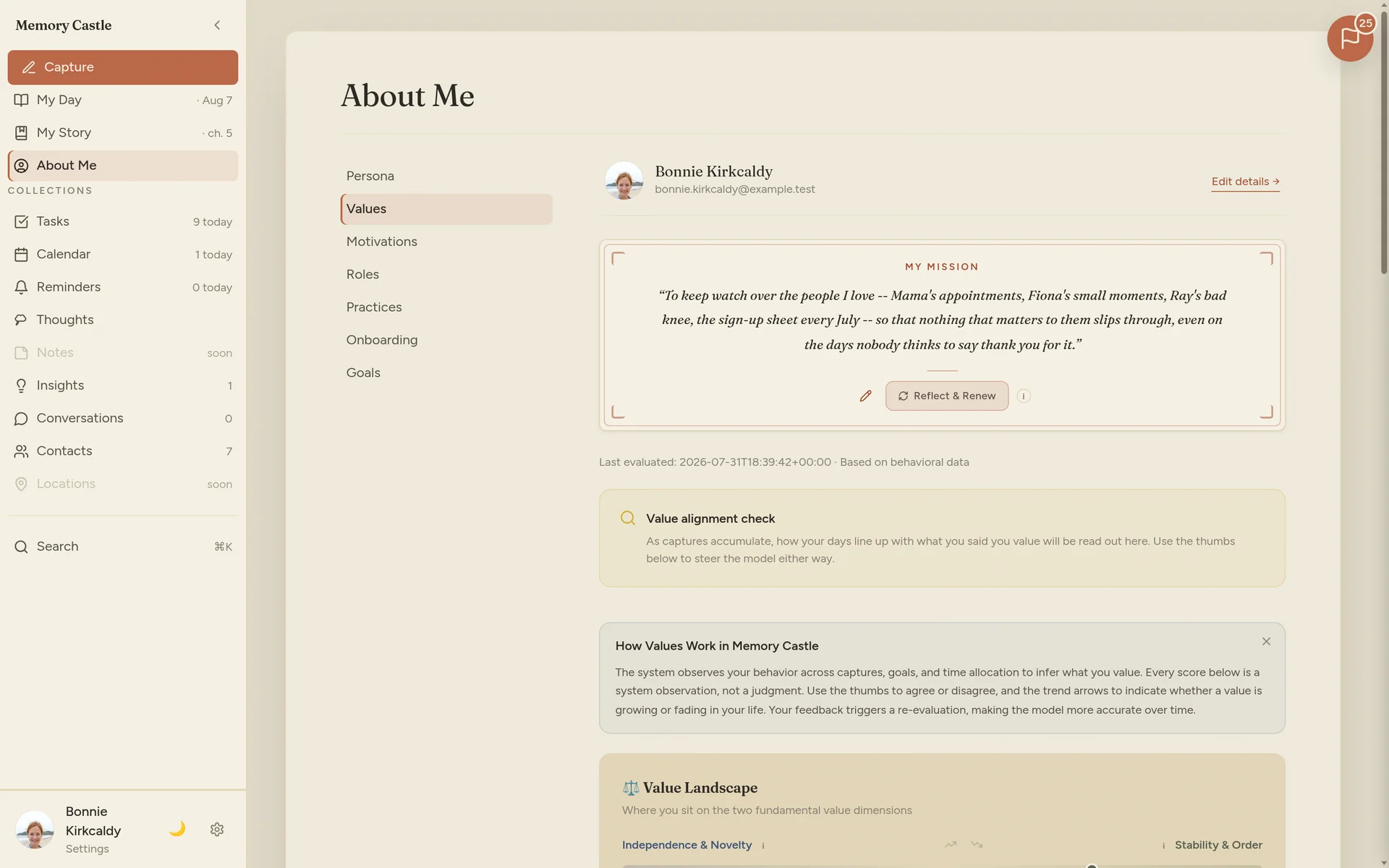
The whole cycle turns on the second step. Hearing yourself out, measuring the distance, planning the next stretch: none of it is possible without a record of what actually happened. A company keeps books, which is why it can run this at all. No person ever has, because writing down your own days while you’re busy living them costs more time and energy than any reasonable person should be willing to pay.
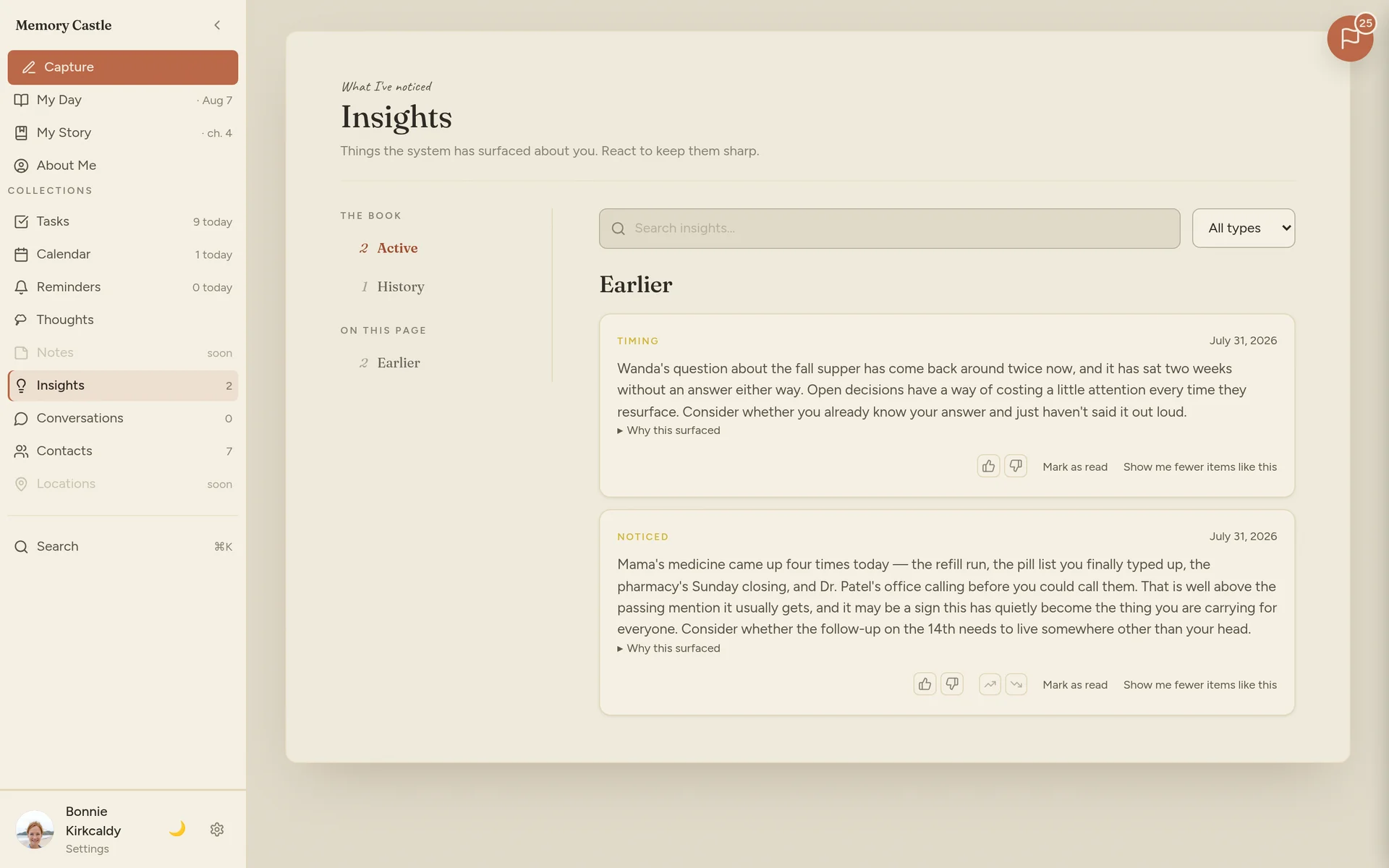
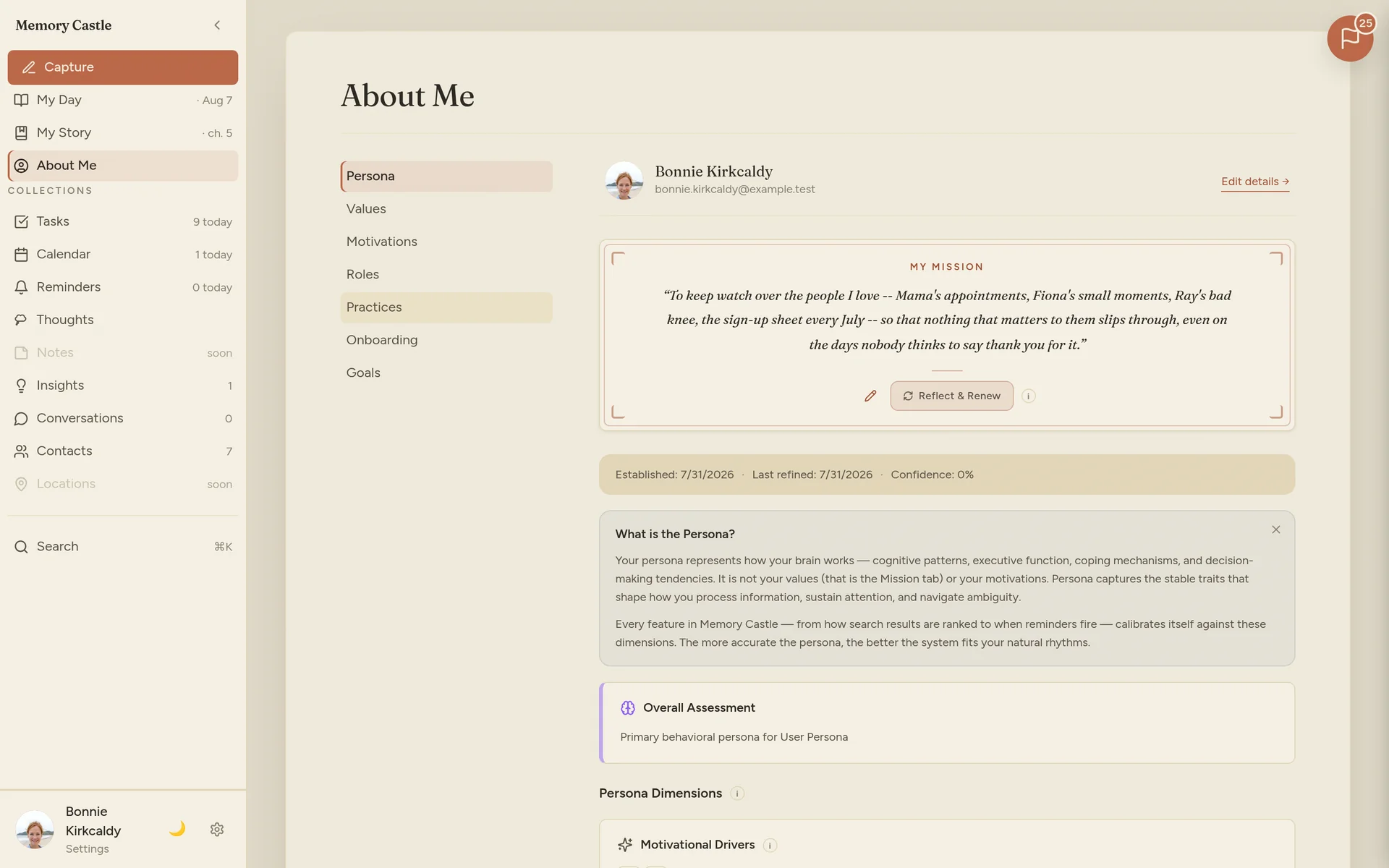
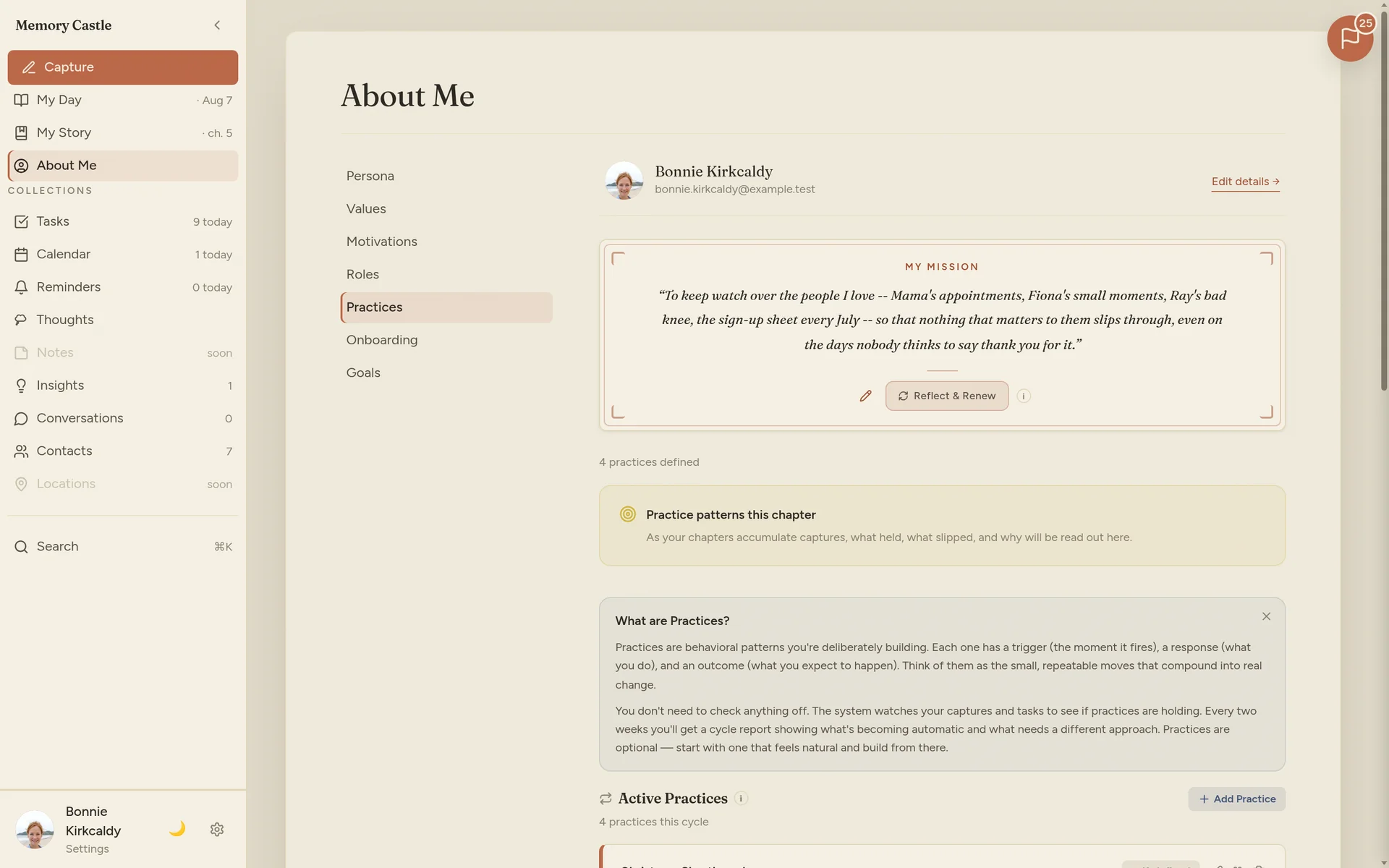
Personal growth management is the process. Memory Castle is the system that runs it. It keeps the books, and it reads them.