
The Waitlist
Be there when the gates open.
Start Where You Are
The plans were never the problem. They were written for someone who doesn’t exist.
Look at the last one you made. It assumed you’d be up at five. It assumed nobody would need you at eight. It assumed a version of you with more sleep, fewer interruptions, and a Tuesday that behaved itself. That person never showed up, because that person isn’t you. You built a system for a stranger, then blamed yourself when the stranger didn’t move in.
This is why every honest attempt at change begins in the same unglamorous place. Not with who you intend to be. With whoever is actually here. The one who’s tired by nine, with the commute and the group chat and the thing on Thursday. Start with them, because they’re the one who has to do the living.
Starting where you are takes two things, and most people only ever do one. The first is honesty about the present: what’s working, what’s barely holding, what you’d change first if changing were easy. The second is a target: some description of who you’re trying to become, specific enough that you’d recognize it if you arrived. Without the first, you’re measuring against a fantasy. Without the second, you’re only keeping records.
Personal growth management begins here, and it begins the way managing anything begins: with a target and a starting point. Your own life is the only thing you have ever tried to run without either one written down.
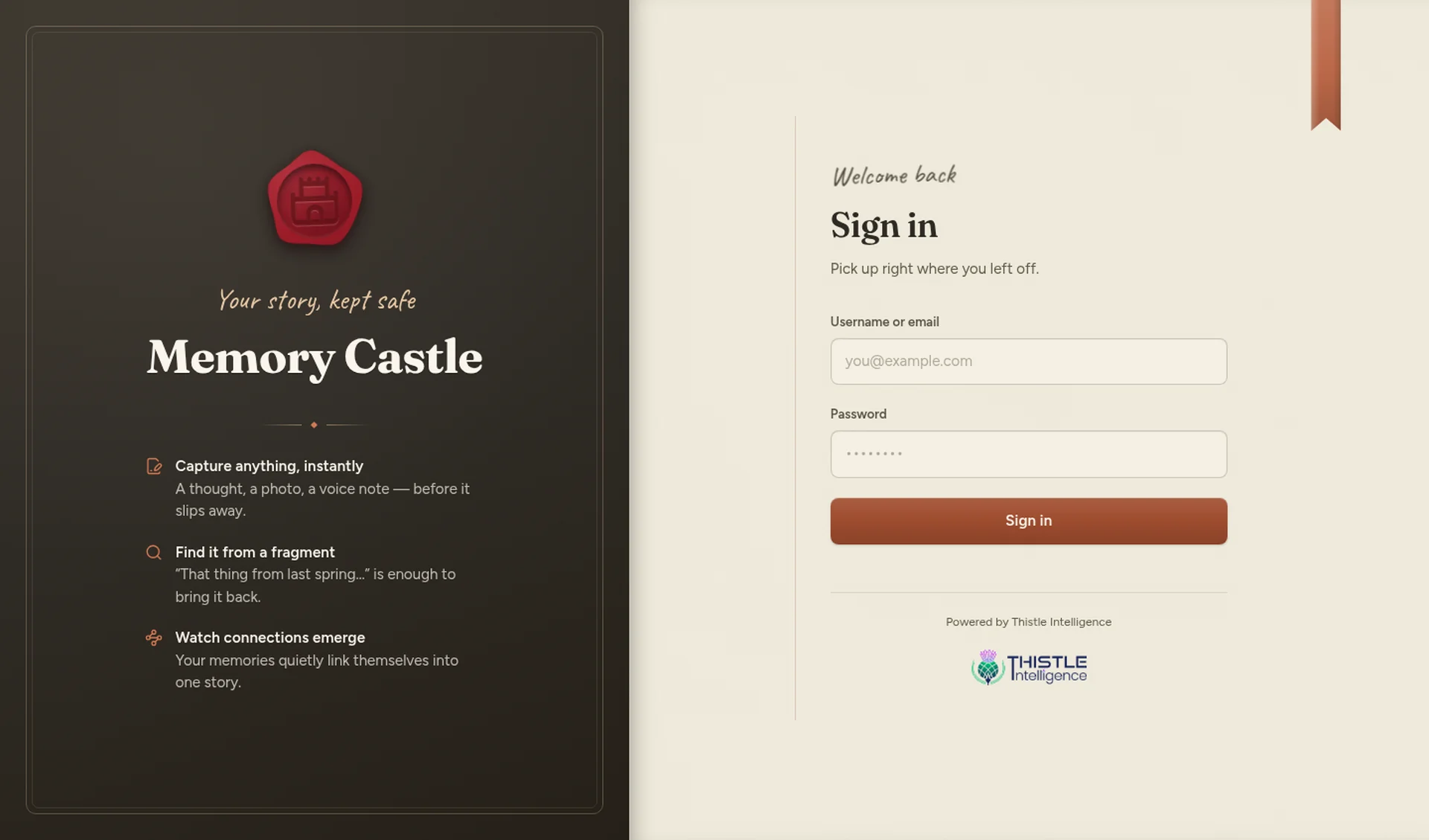
The door comes before any of it. It looks like any sign-in screen, except for the line above it: your story, kept safe. You read that promise a few pages ago. Here is where it actually lives, said before you’ve handed over a single thing, which is the only order that makes sense. A promise like that is worth nothing offered after the fact.
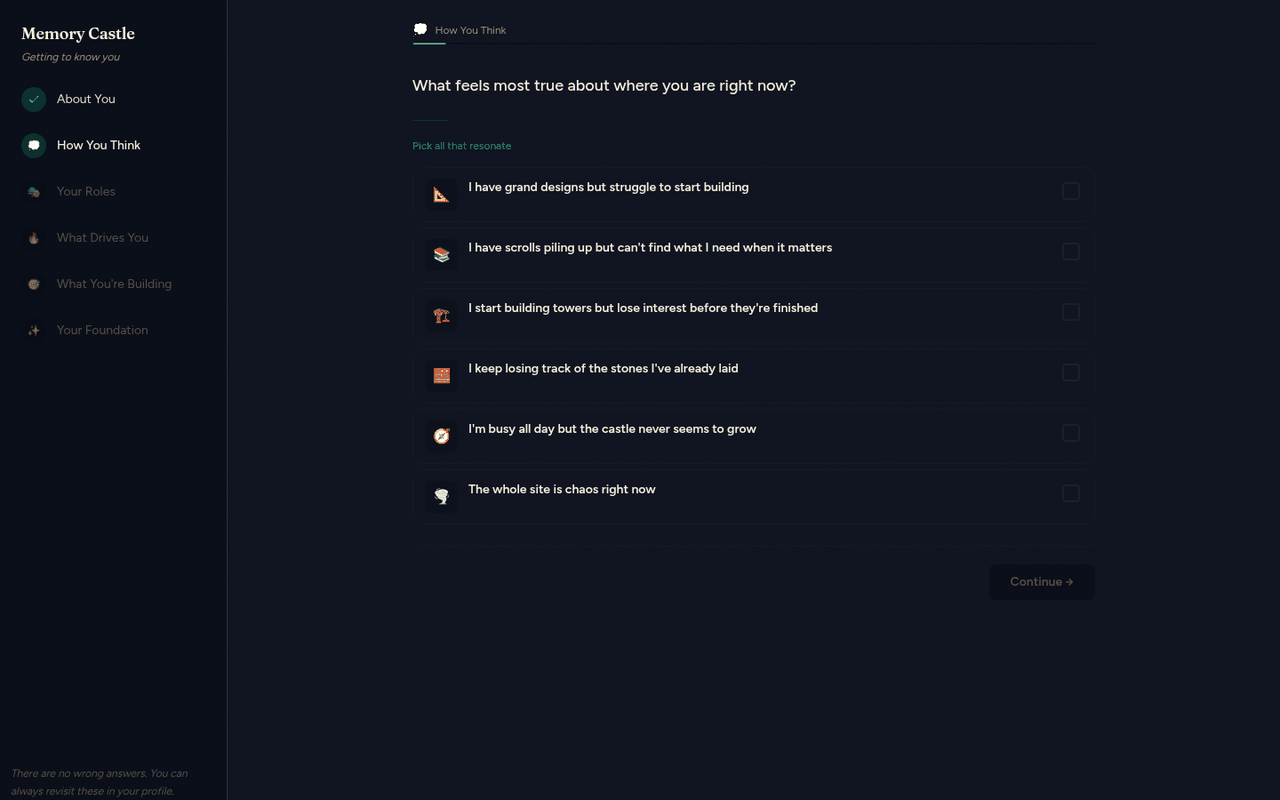
Inside, the first question is the plainest one: what feels most true right now? Grand plans you never break ground on. Ideas piling up faster than you can find the one you need. Progress that stalls halfway up the tower. Details you know you wrote down somewhere. Days that stay busy while nothing grows. Or everything at once, which is its own honest answer.
Then it does something no app has done to you before. It tells you a story and asks what you’d do. The lumber for the garden beds has been stacked in your yard for months, and a neighbor mentions they’re starting a community plot and invites you to join instead. Do you finish yours, or go with them? There’s no right answer and it doesn’t pretend there is. You pick the one that’s actually true, then another, then another.
It isn’t asking you to describe yourself. Describing yourself is where everyone lies, gently, without meaning to. Ask a person whether they’re organized and you’ll get the answer they’d like to be true. Ask them what they’d do about the lumber and you get something real. By the end the castle knows how you decide, what you avoid, what you drop when things get heavy, and how much noise you can stand from a system that’s trying to help.
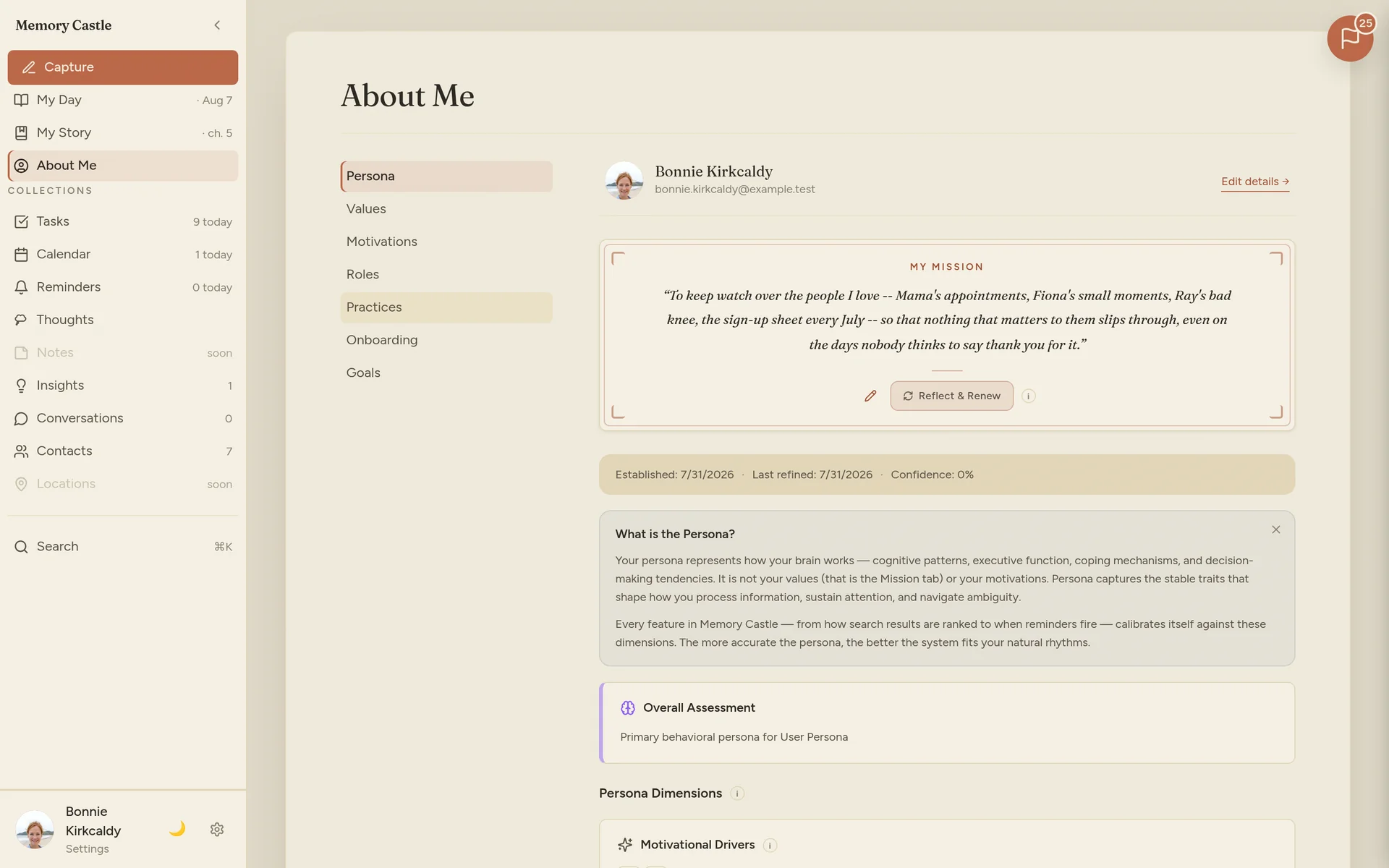
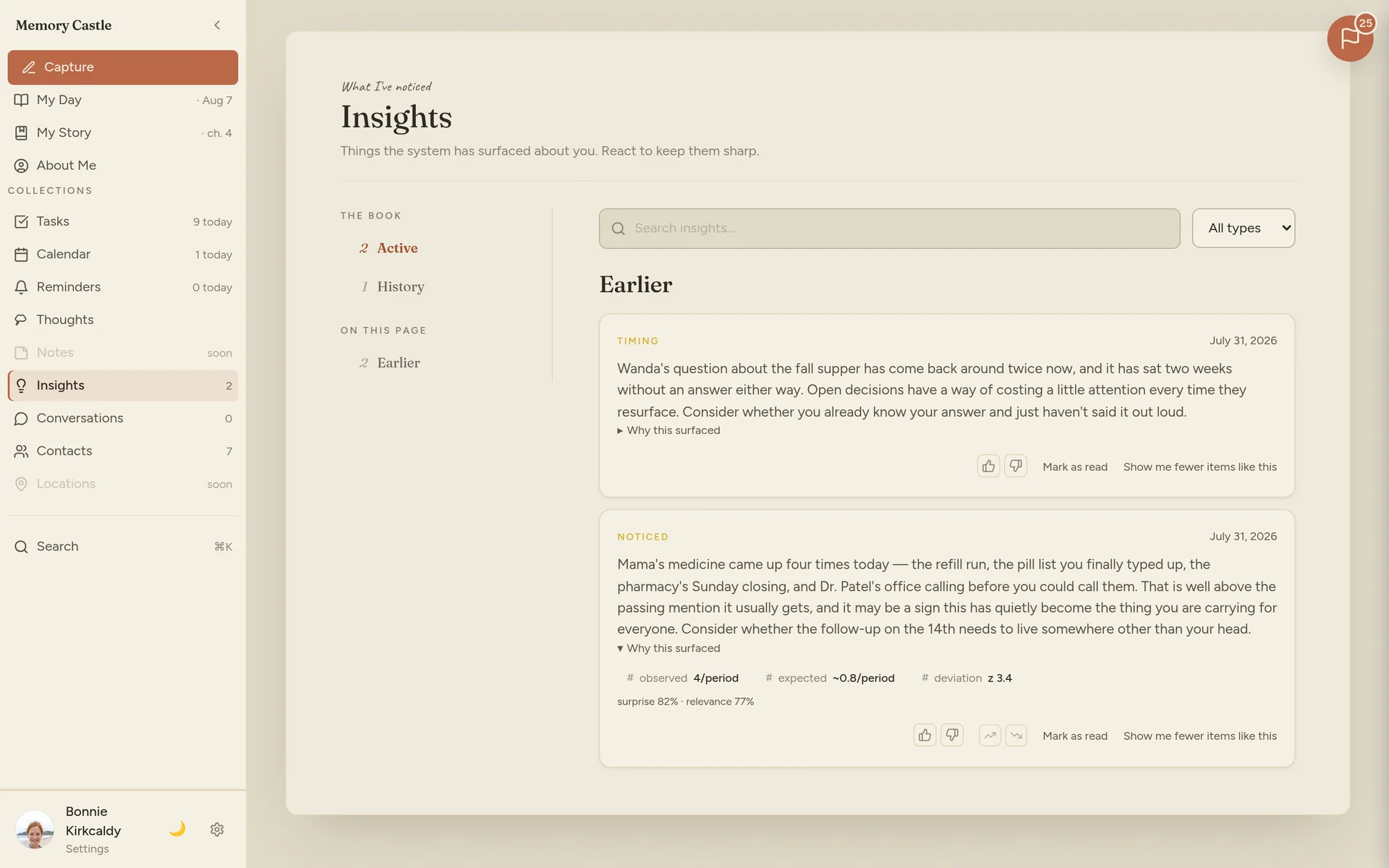
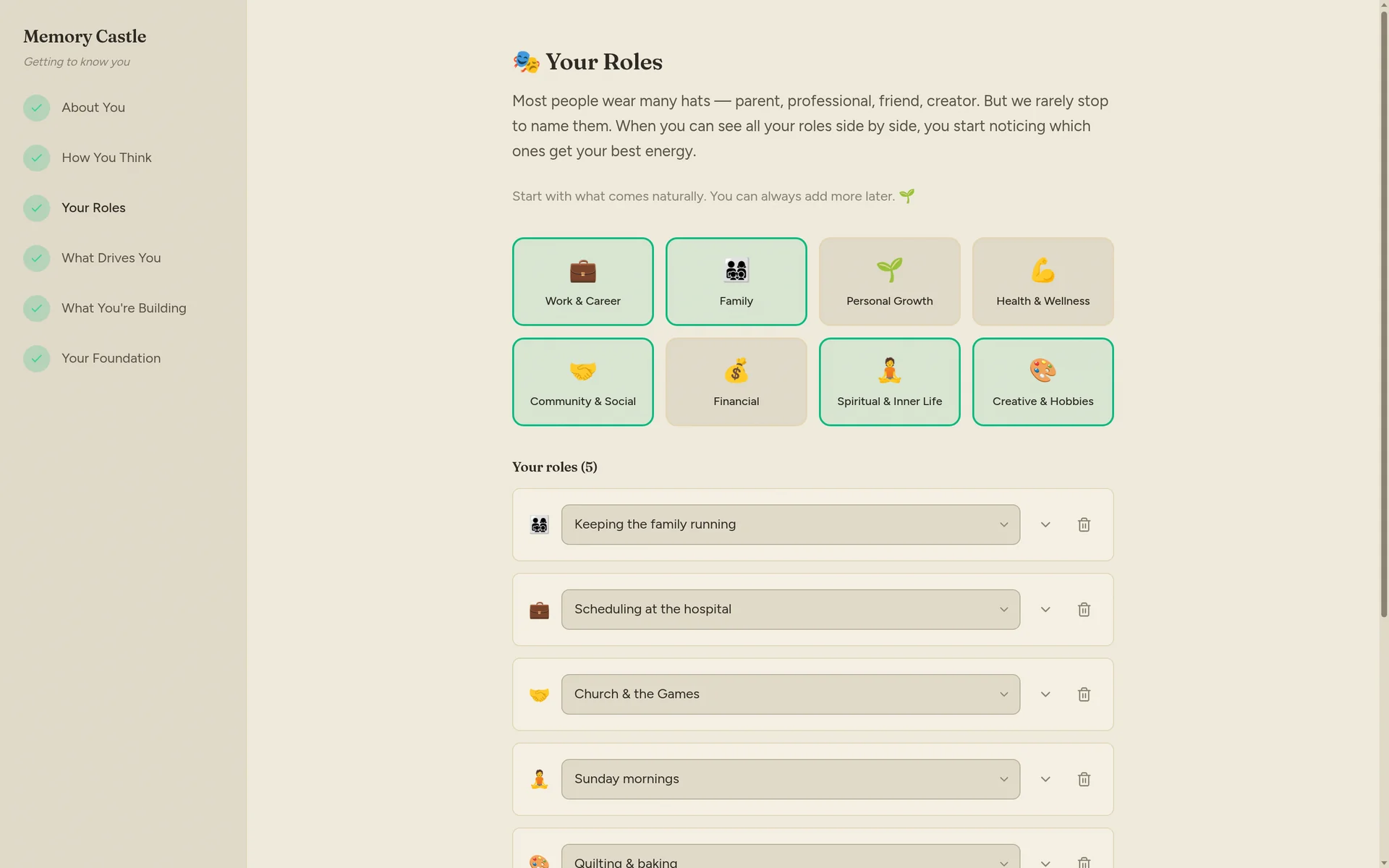
Then the target, one part of your life at a time. Work. Family. Health. Money. The creative thing you do because it feeds you. You pick the roles you actually hold from what a life tends to contain, and for each one it asks the question that matters more than the name: why does this role matter to you?
Naming them separately isn’t bookkeeping. Every tool you own puts your whole life in a single list, and in a single list the loudest thing always wins. Nothing about being a good friend is ever urgent. Nothing about the person you used to be at a piano ever files a ticket. Roles are how the quiet parts of a life get a name, which is the only way their silence ever becomes something you can notice.
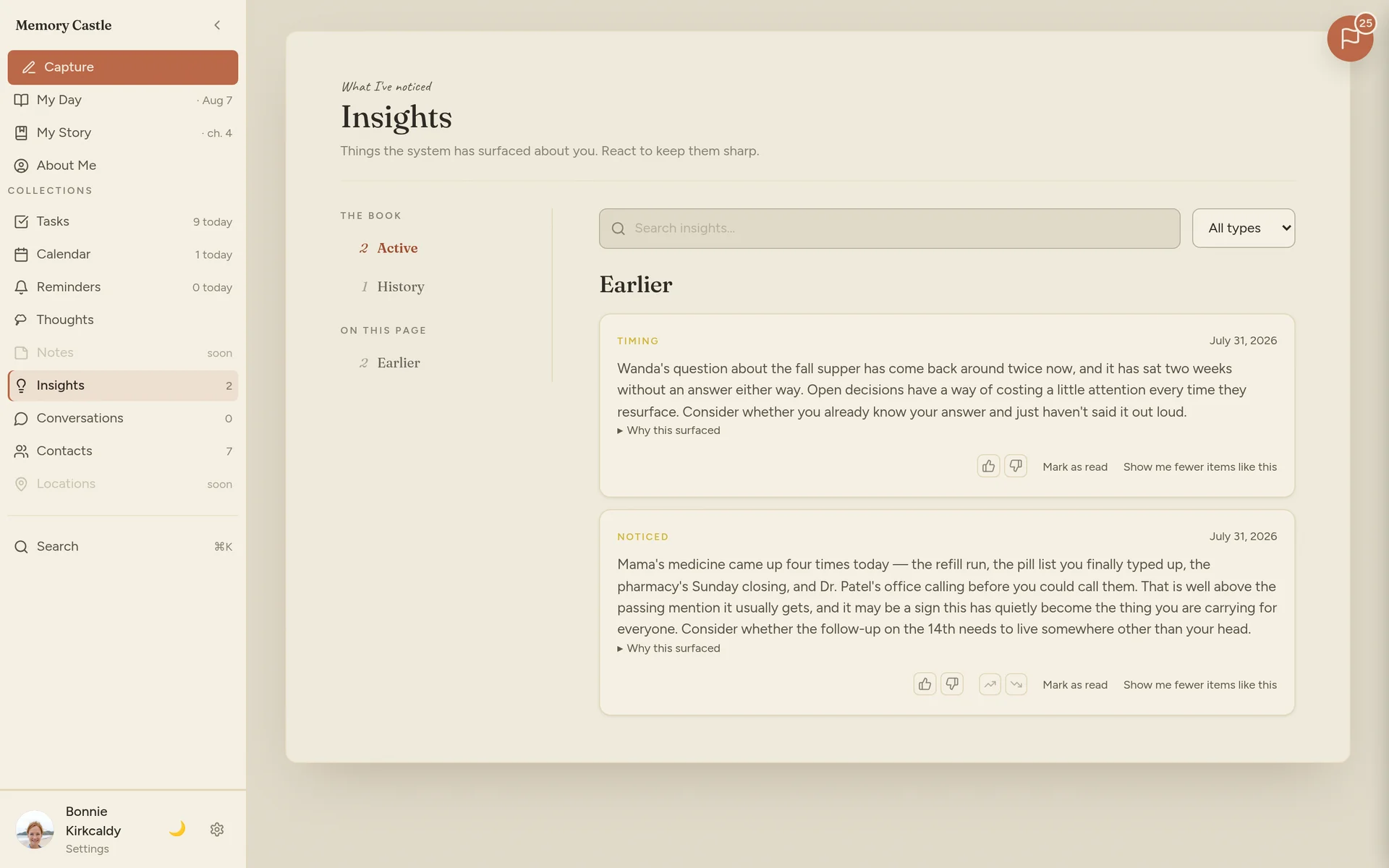
Then two questions with nowhere to hide. If you could only focus on one thing for the next year, what would it be? What do you keep saying you’ll get to and never do? Those are the whys you can name today. There are others you can’t yet, and the castle finds those later, in what you keep circling back to, then hands them over for you to confirm or wave off.
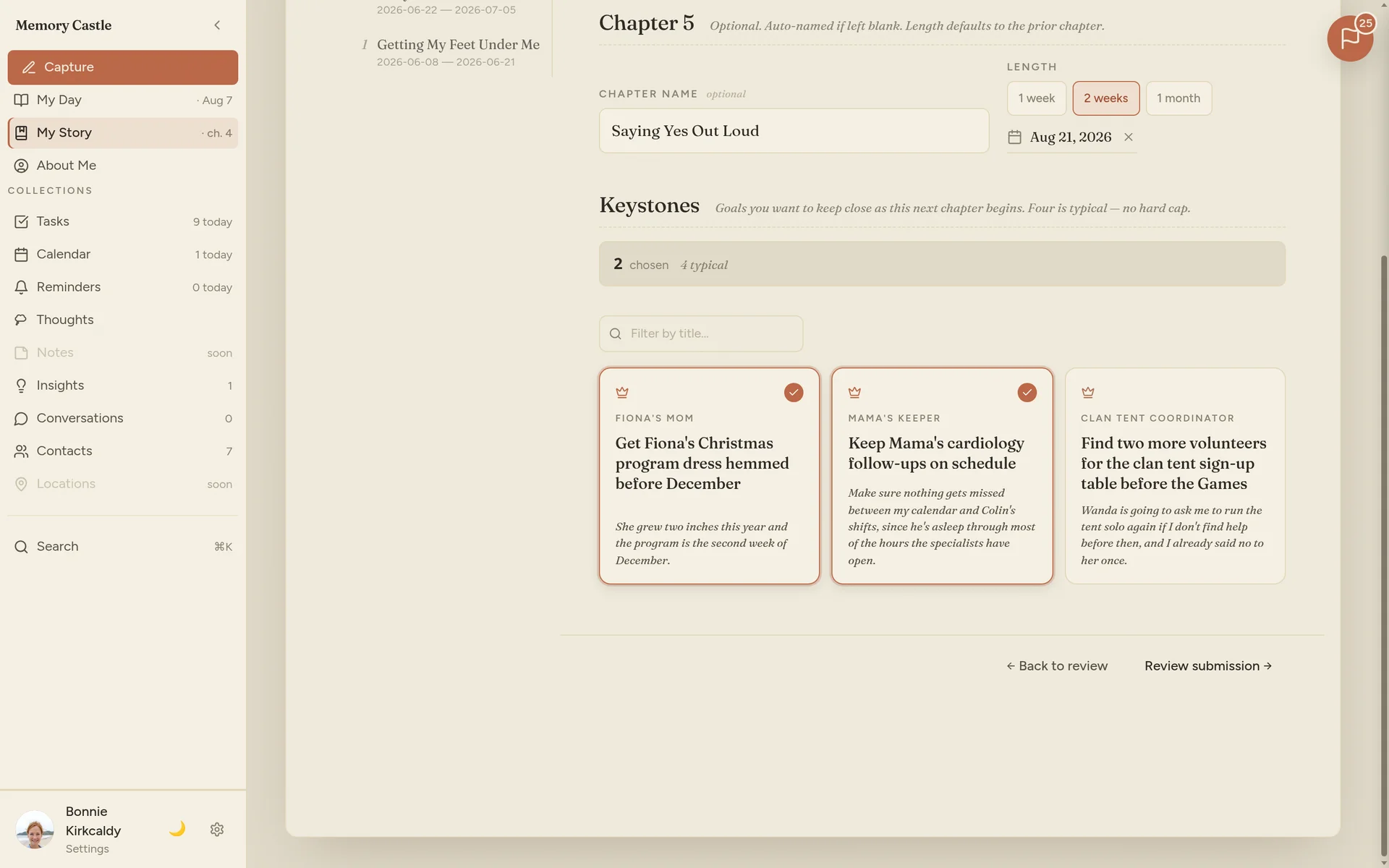
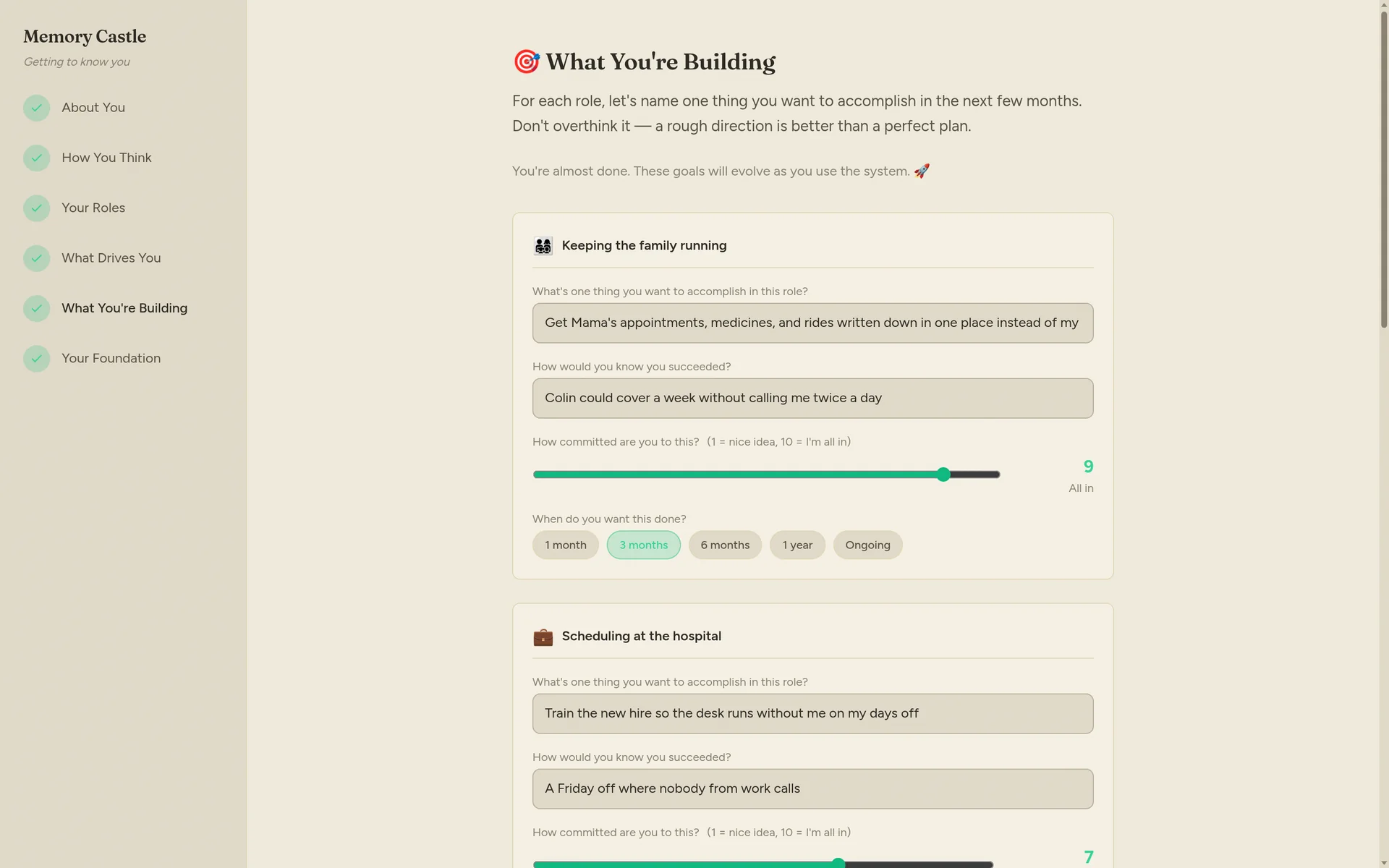
Goals come next, one per role, and they’re small on purpose: one thing for the next few months, how you’d know you got there, and an honest number. One means nice idea. Ten means I’m all in.
Write that number down for yourself sometime, even if you never use any of this. Everyone writes down goals. Almost nobody writes down how badly they actually want them, which is the only figure that predicts what happens next. A three you keep calling an eight will fail, and when it does you’ll blame your discipline instead of your honesty.
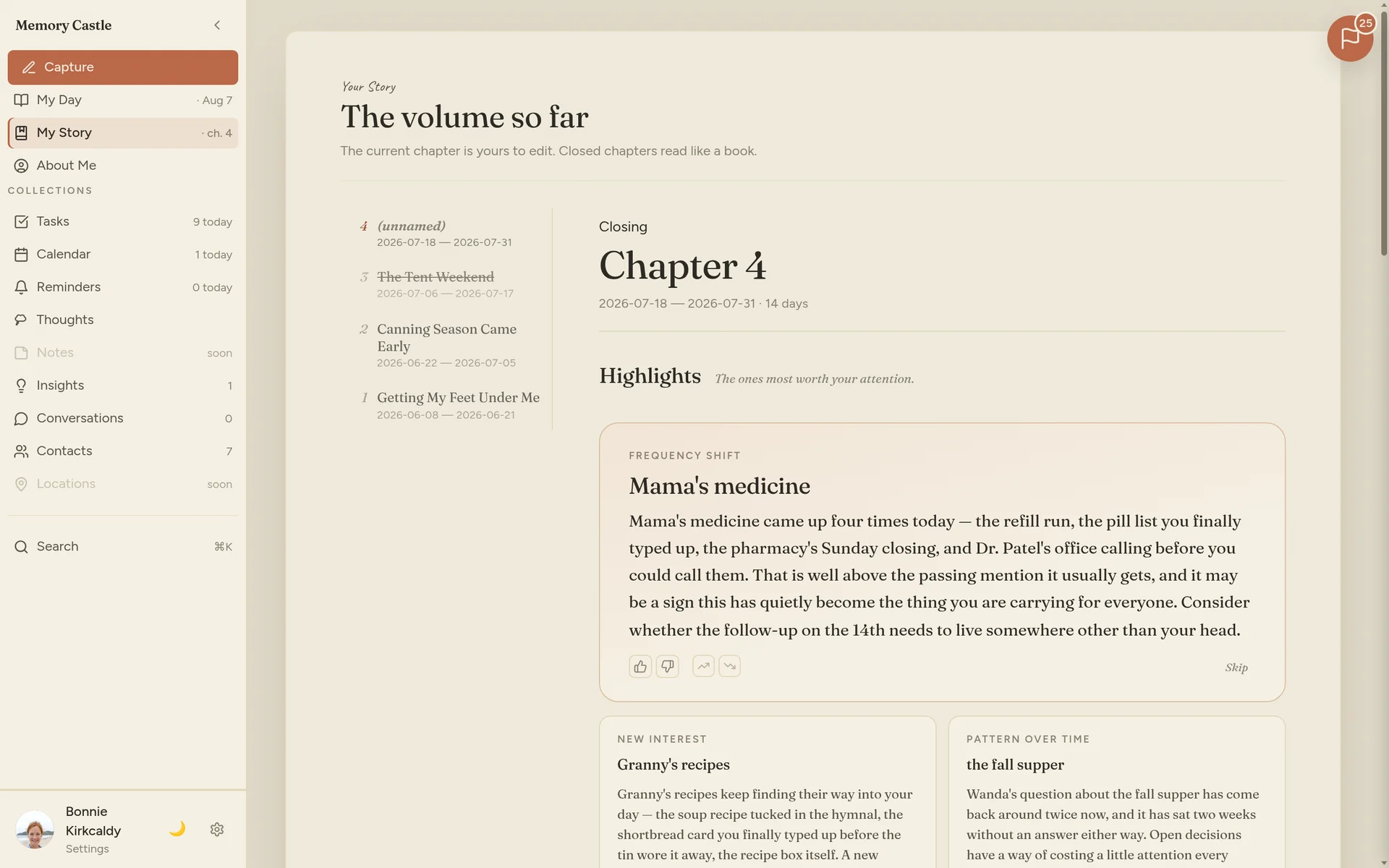
Here the number isn’t left to your word alone. Your days get compared against it. If you said eight and you’ve been living a three, the castle tells you. It isn’t an accusation. One of those two numbers is wrong, and only you can decide which. Maybe the commitment was real and the week ate it. Maybe you were being polite. Either answer is worth having, and neither one is available if nothing is paying attention.
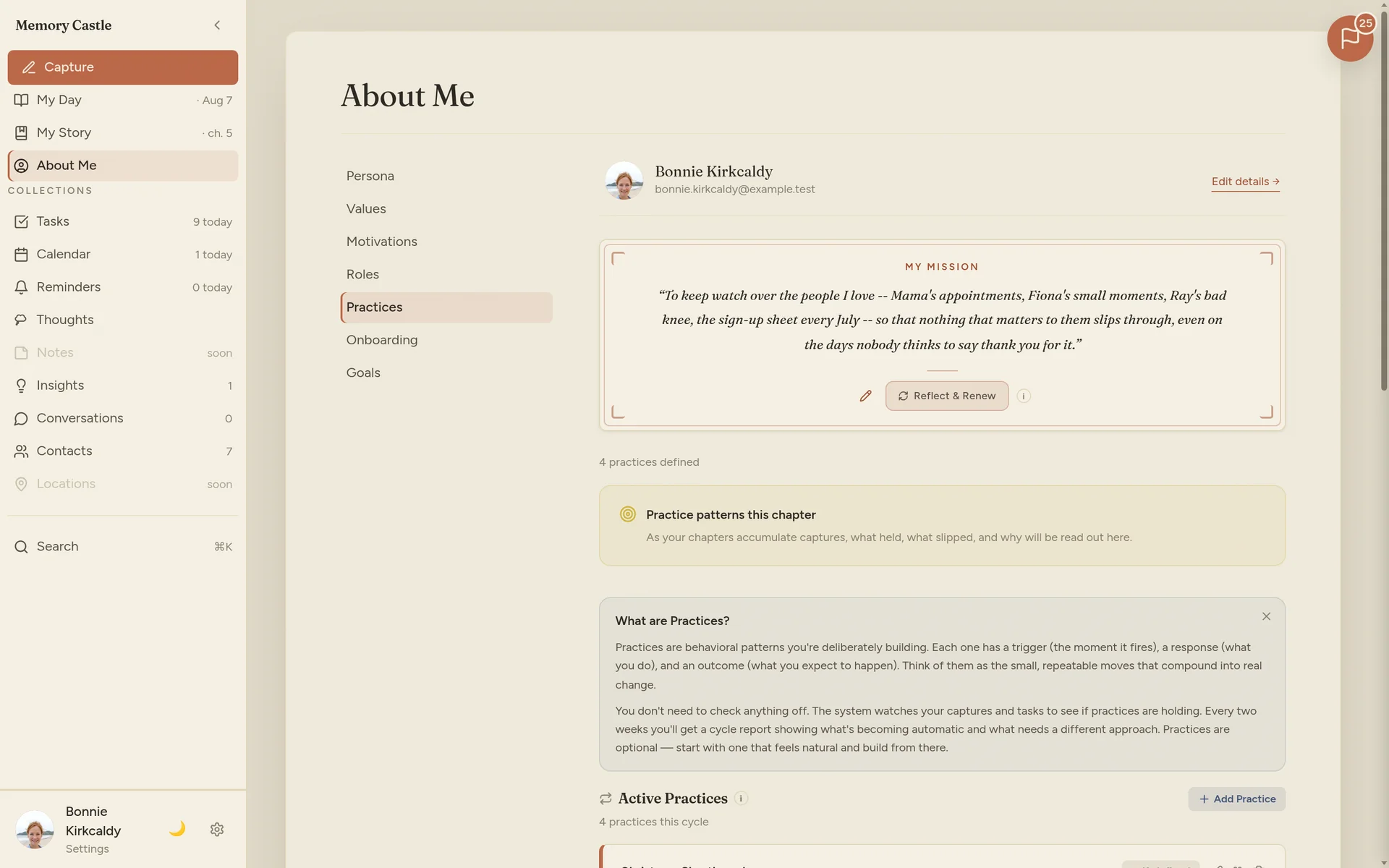
One thing you’re never asked for on day one is how you’ll actually do any of it. A goal says where. A practice says how: when the morning is quiet, I write. When work ends, I walk. Each one is a small bet, linking a moment you can count on to something you’ll do in it. Those come later, once you know which moments in your week are actually reliable, because guessing at that from a standing start is exactly how the last plan died.
The mission statement waits too, for a better reason. That’s the page every other system opens with, and it’s the hardest blank page in the genre. This one holds off until there’s enough of you on record to write one from, then helps you write it. A mission assembled from evidence beats one invented under pressure.
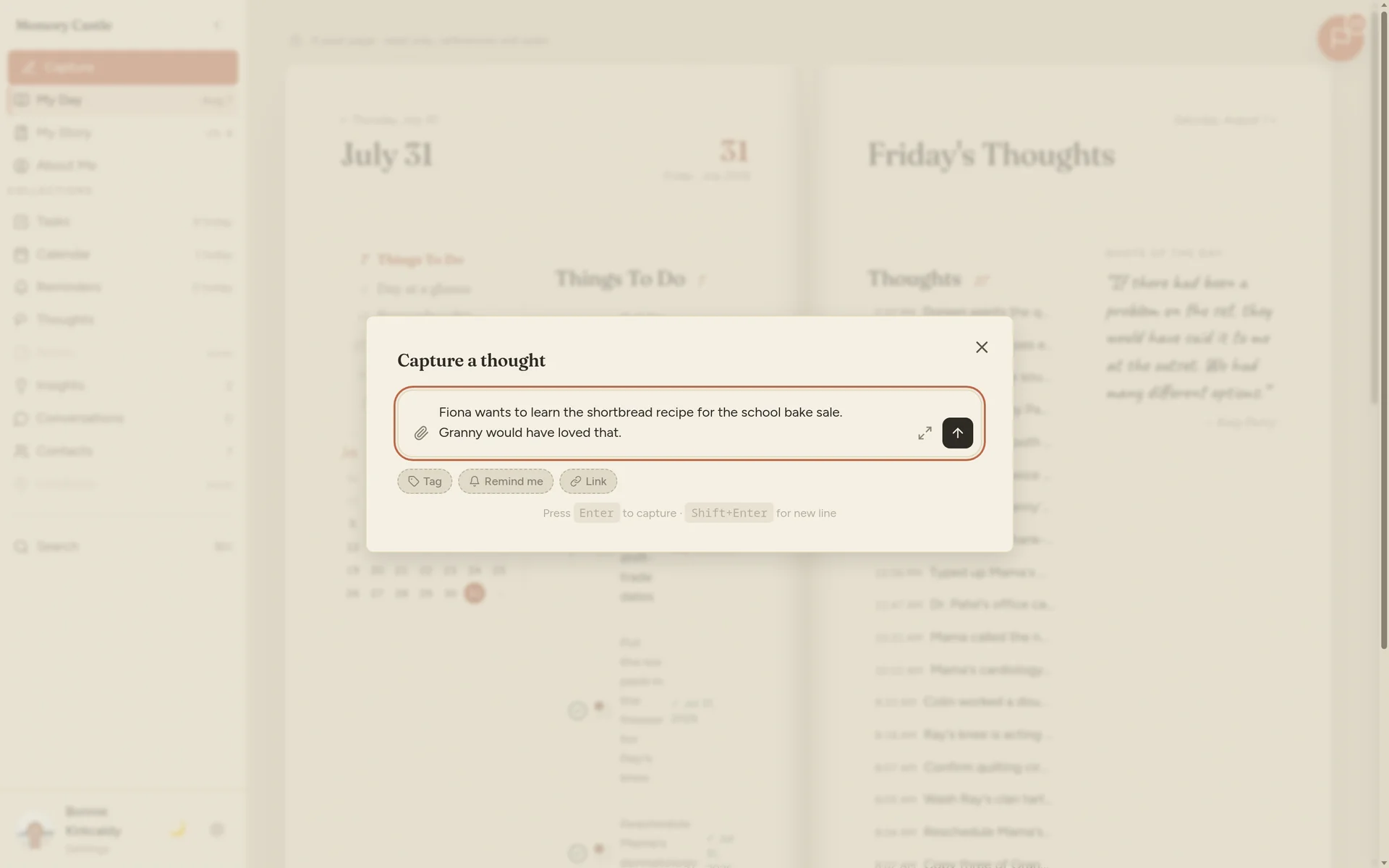
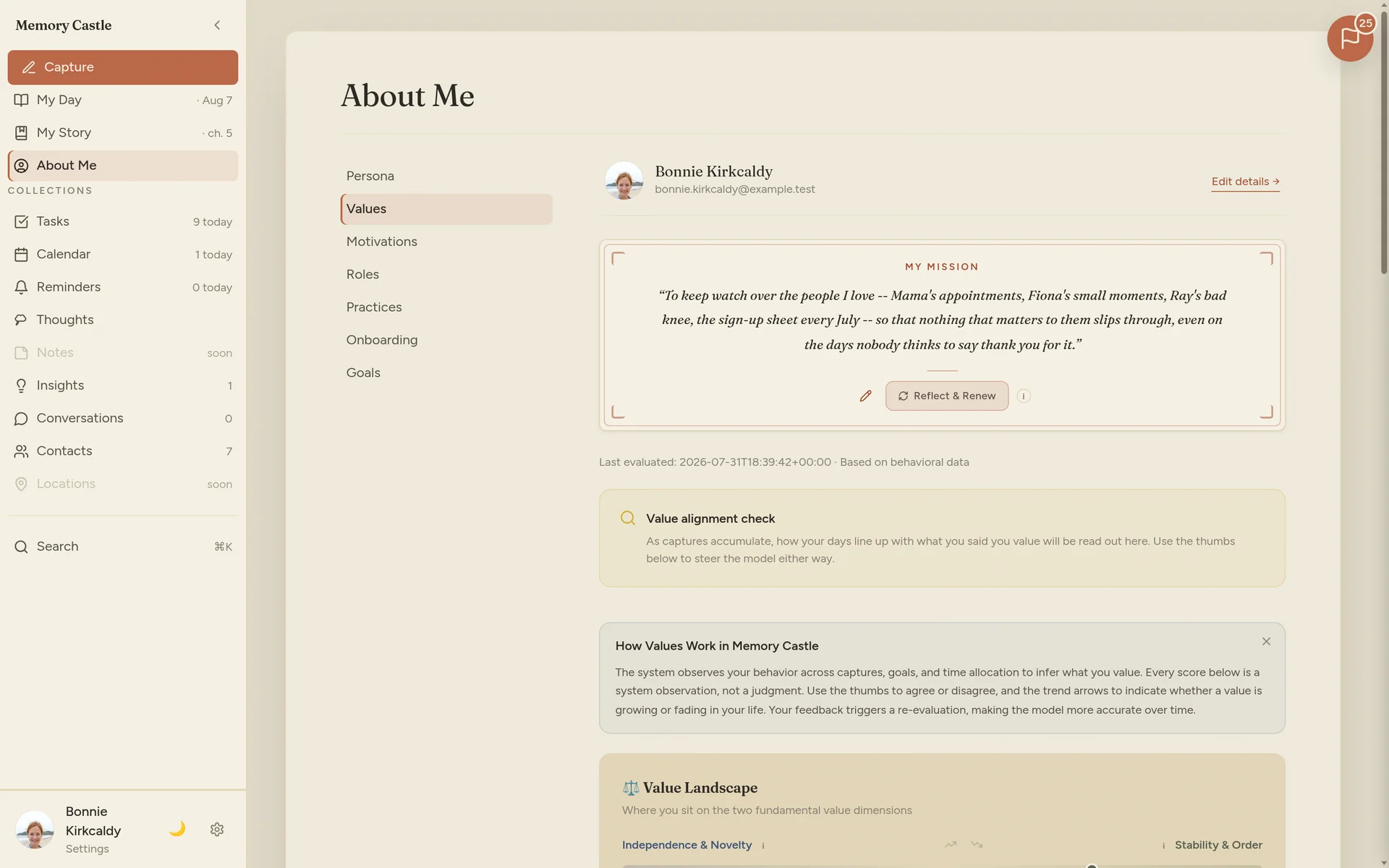
At the end it shows you everything at once and calls it what it is: your foundation. Roles, motives, goals, the shape of how you think. All of it adjustable, none of it final.
Here’s why one sitting matters more than it looks. Noticing what changes later requires knowing where you started. Recognizing your own words when they come back requires knowing what you were reaching for. Both ends of the gap get set right here — the one you’re standing on, and the one you’re aiming at.
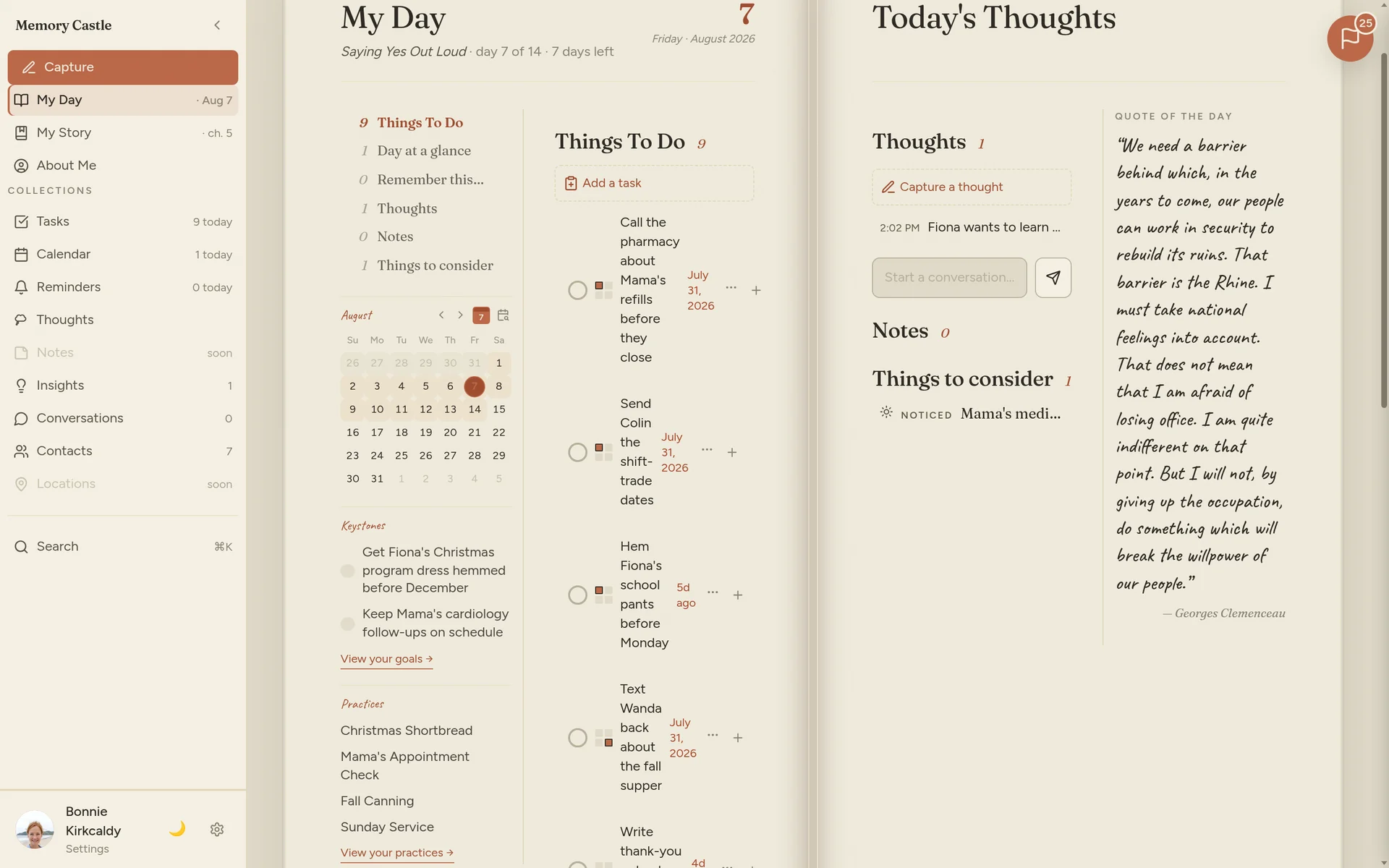
That’s the whole ask, and it happens once. This is the last time anything asks you to fill something out. From here, you just live.