

The Waitlist
Be there when the gates open.
What It Does
Memory Castle is a personal growth management system. You say who you’re trying to become. It keeps the record of what you actually do, reads it, and tells you what it finds. Everything below is part of that, and it’s the whole list.
Start where you are
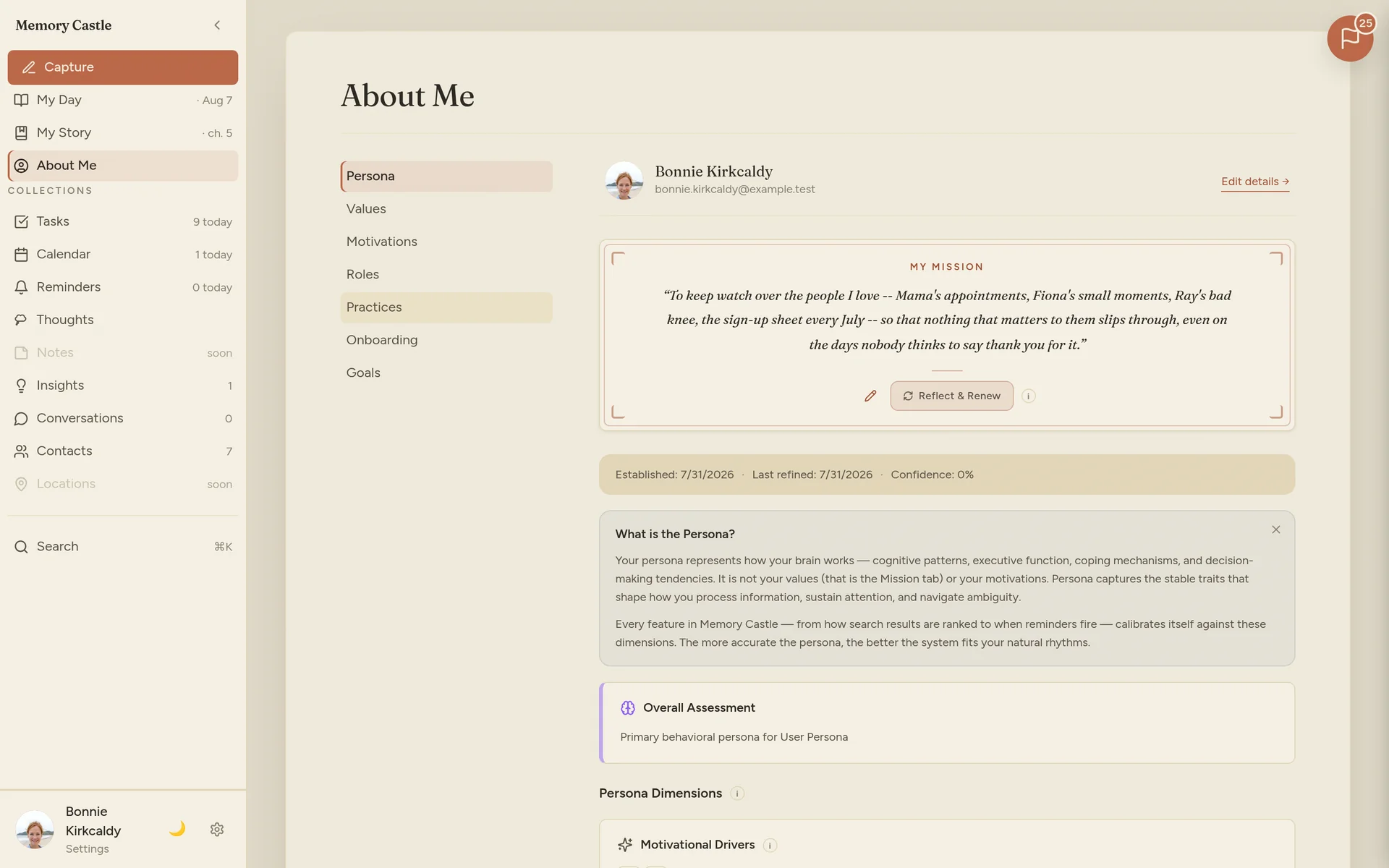
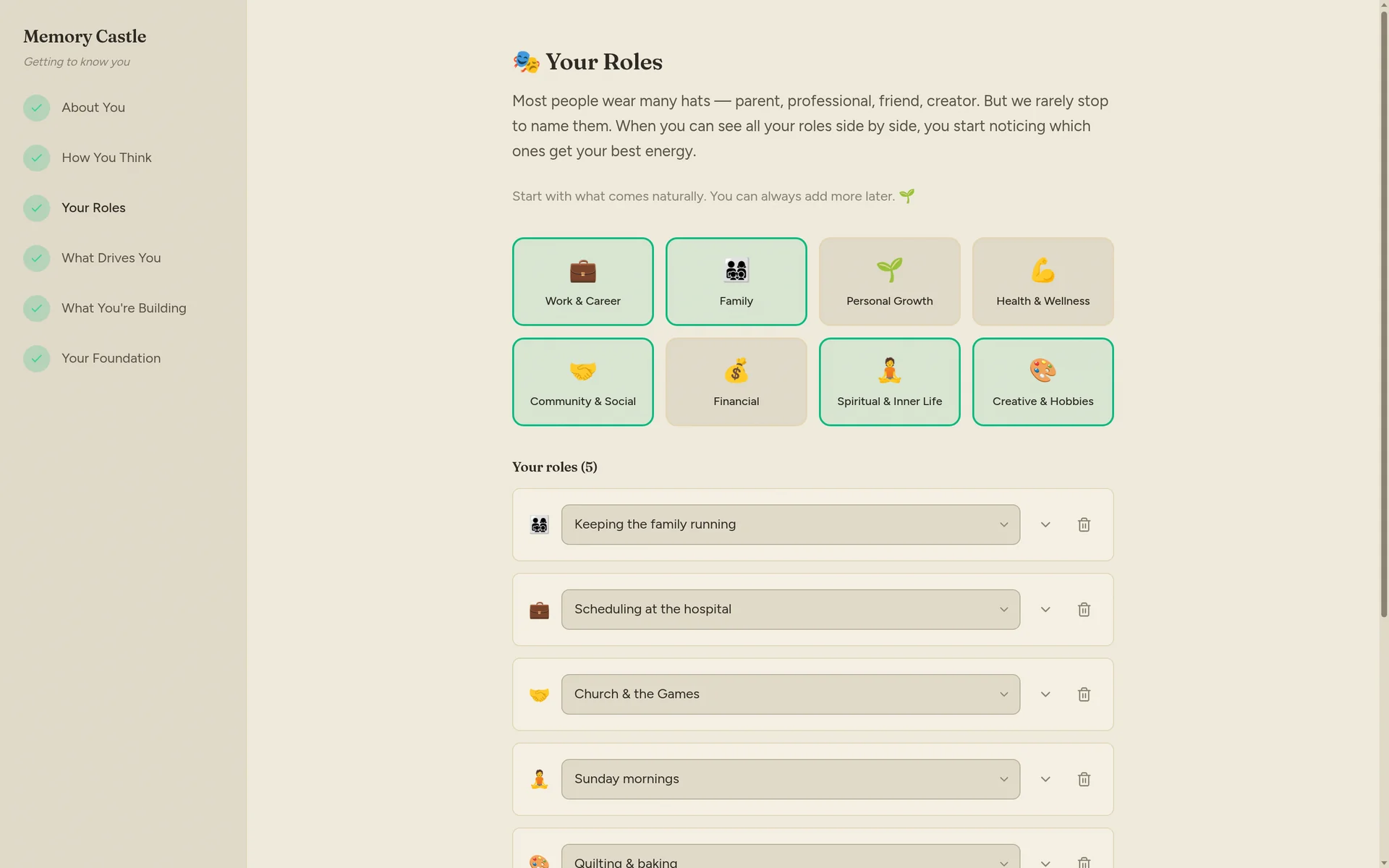
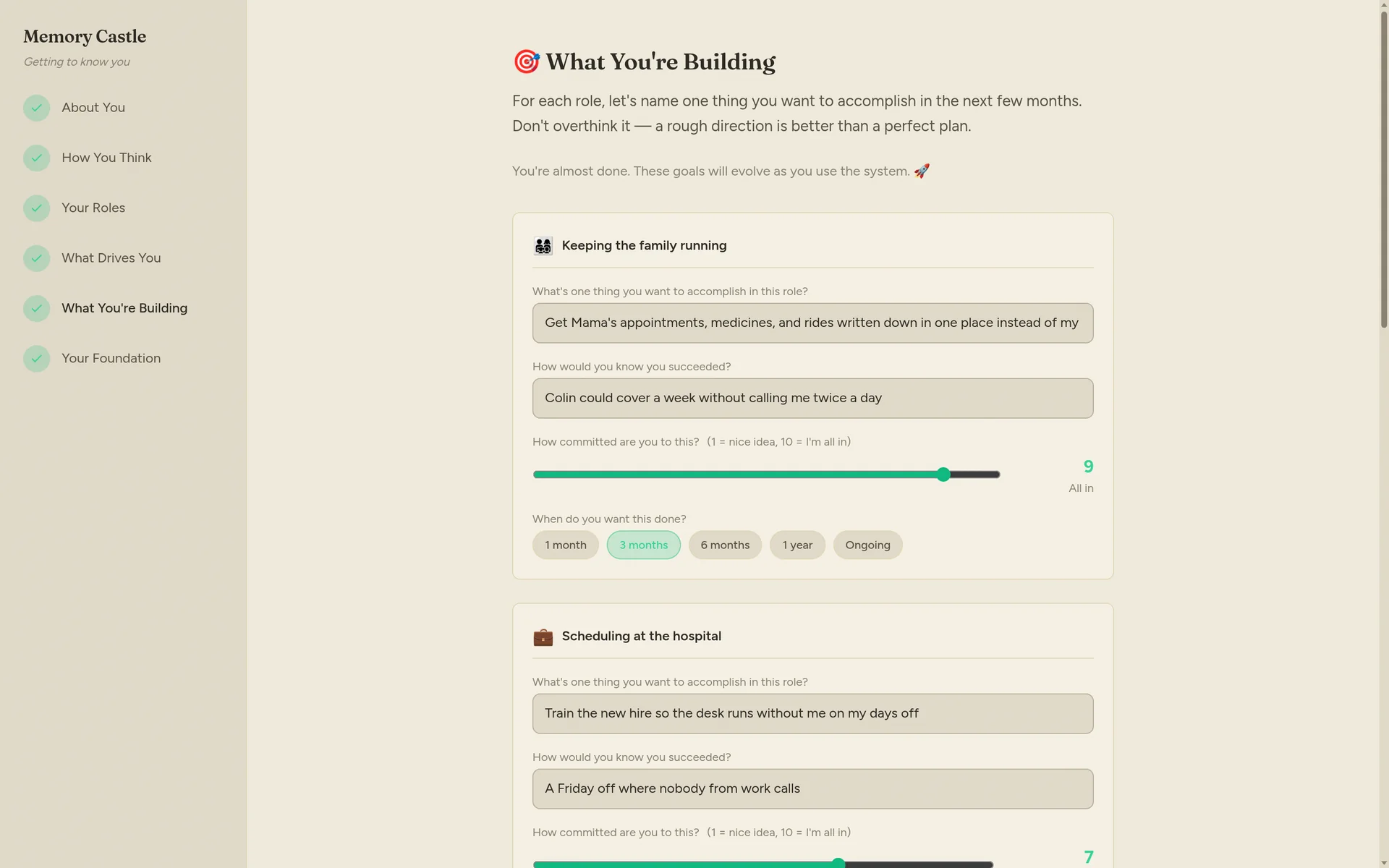
Setting up takes one sitting. You name the roles you actually carry, say why each one matters, and put a goal or two under each with an honest number for how much you want it. You answer a set of situations that have no right answers, which is how it learns the way you decide rather than the way you’d describe yourself. All of it sits in one place you can revise whenever who you’re becoming changes.
Live out loud
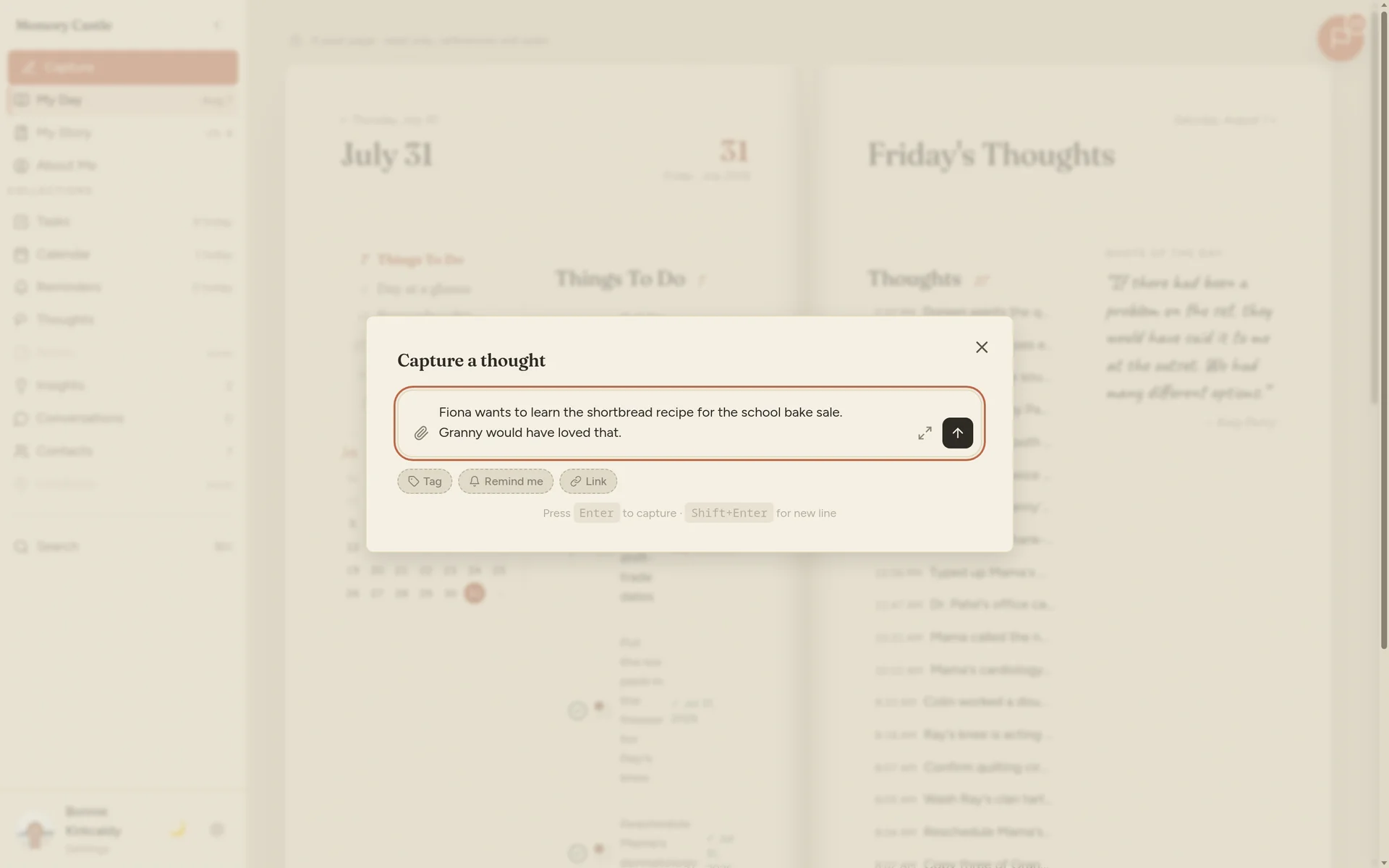
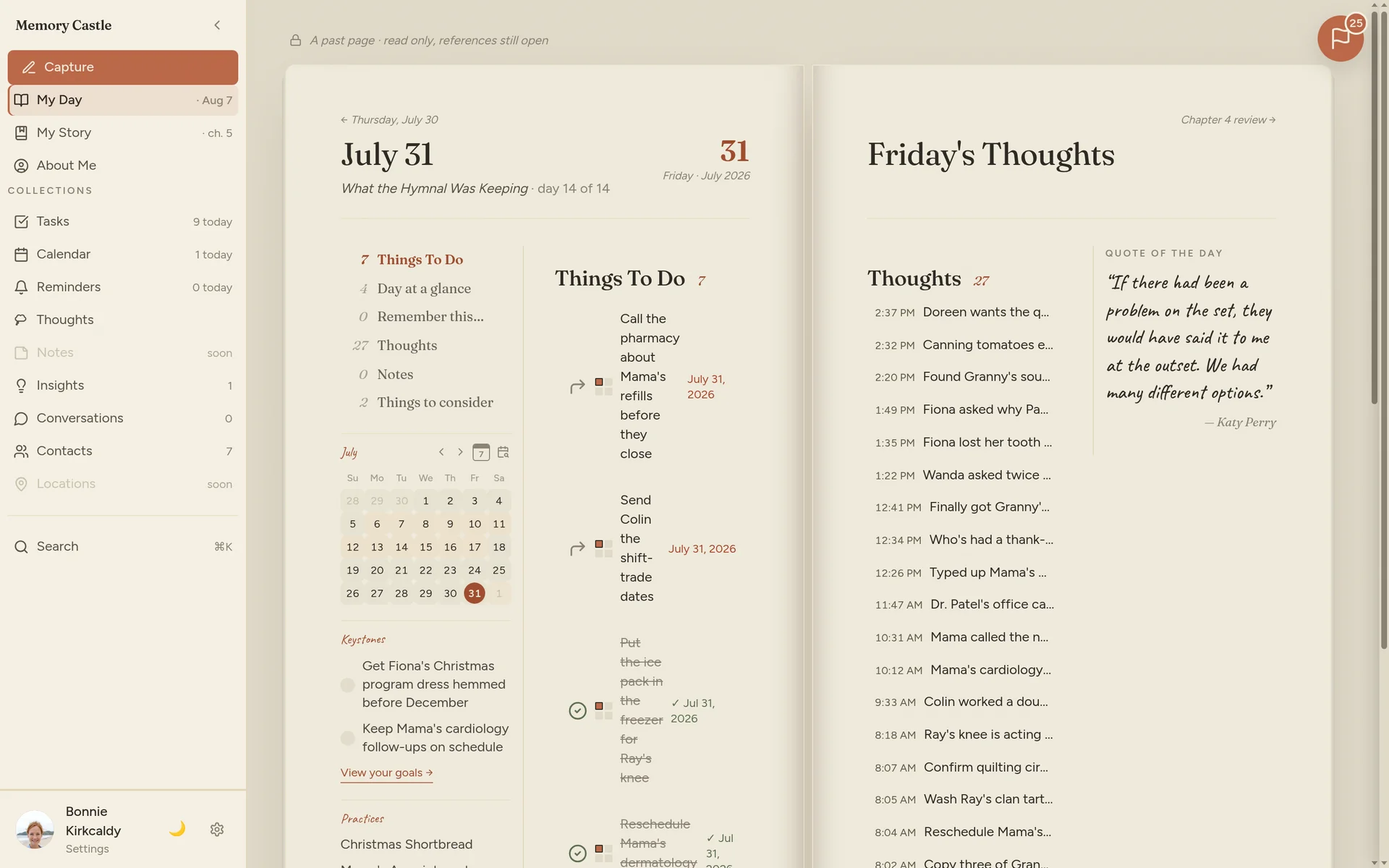
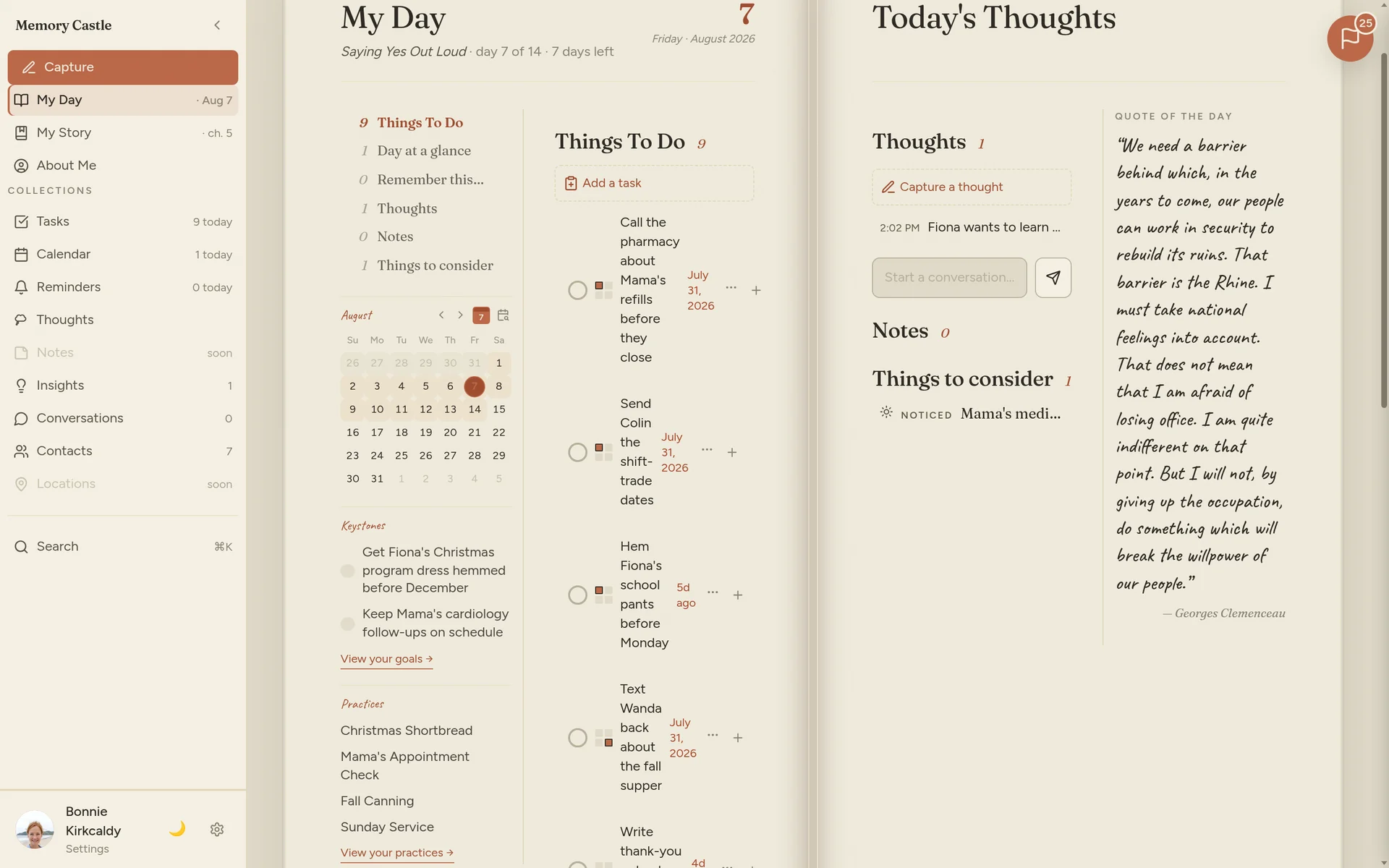
One box takes whatever you have. Type it, say it, or drop a file in: a photo, a PDF, a spreadsheet, an export from an app you gave up on two years ago. Nothing needs a folder or a project or a decision about where it goes. It’s timestamped when it arrives and lands on that day’s page, which assembles itself out of your tasks, your calendar, your reminders, and everything you handed over, in order.
Memory Castle also connects to what you already use, so a good deal of your life arrives without you doing anything: Notion, Todoist, Obsidian, your calendar, your email.
Hear yourself out
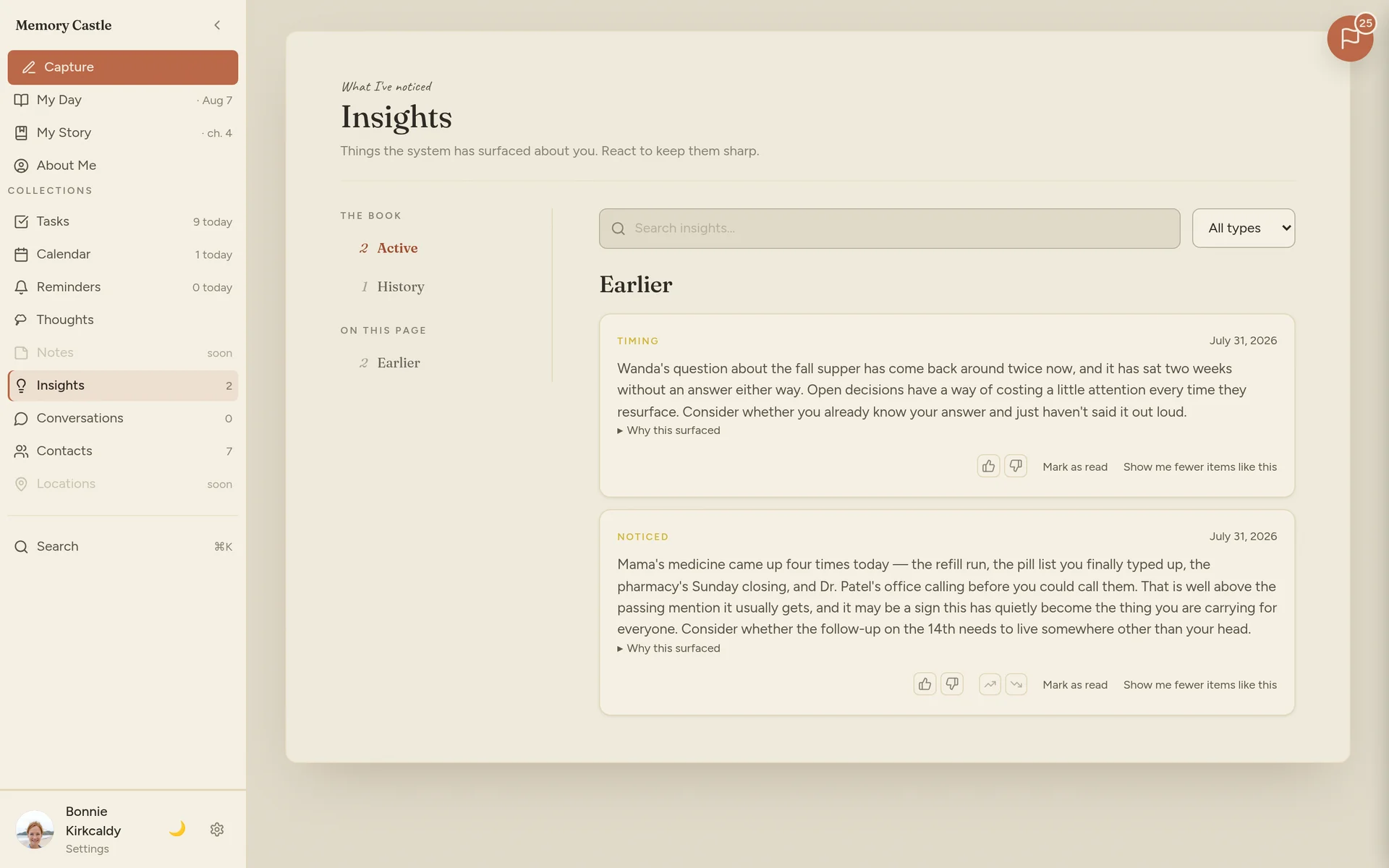
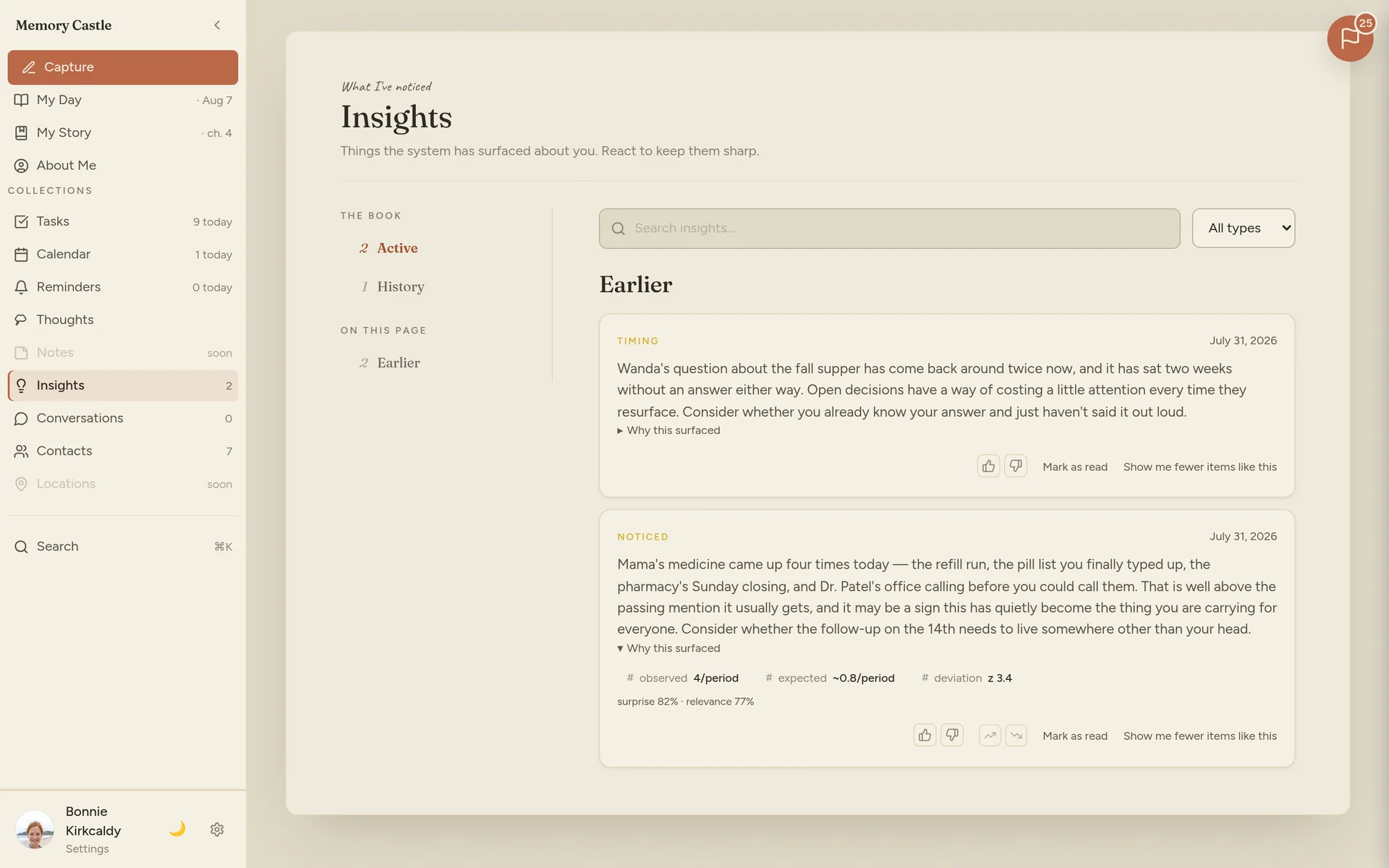
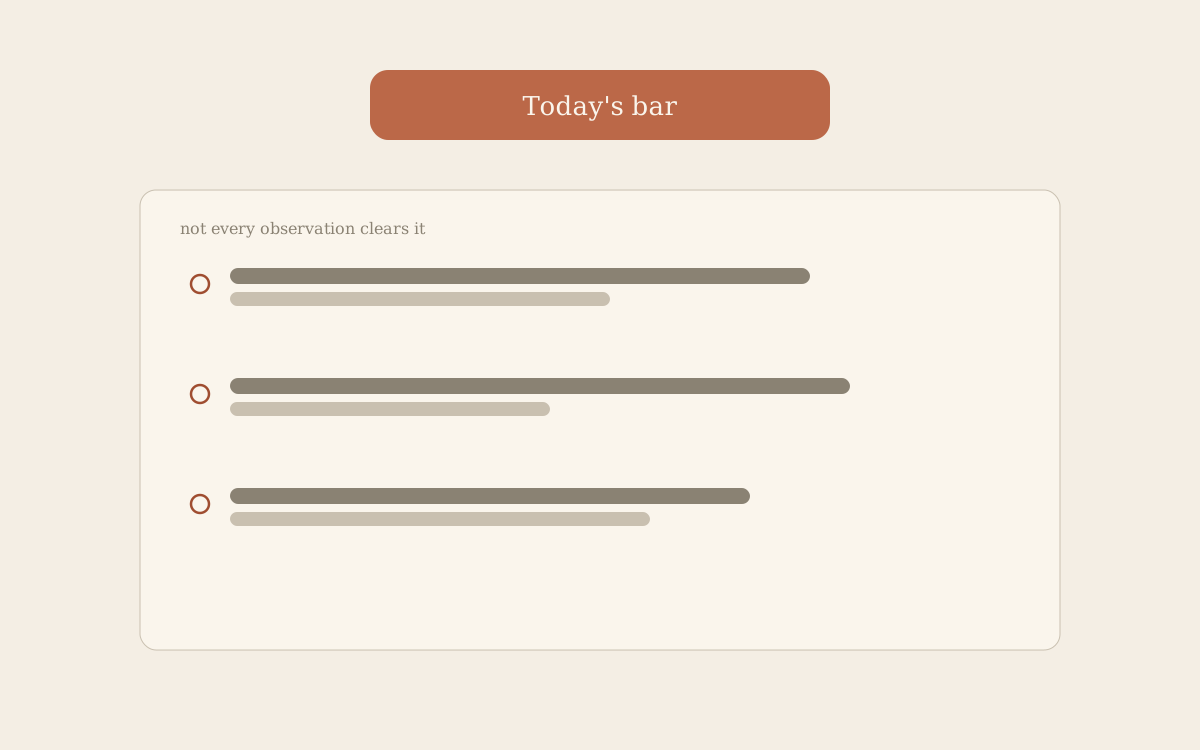
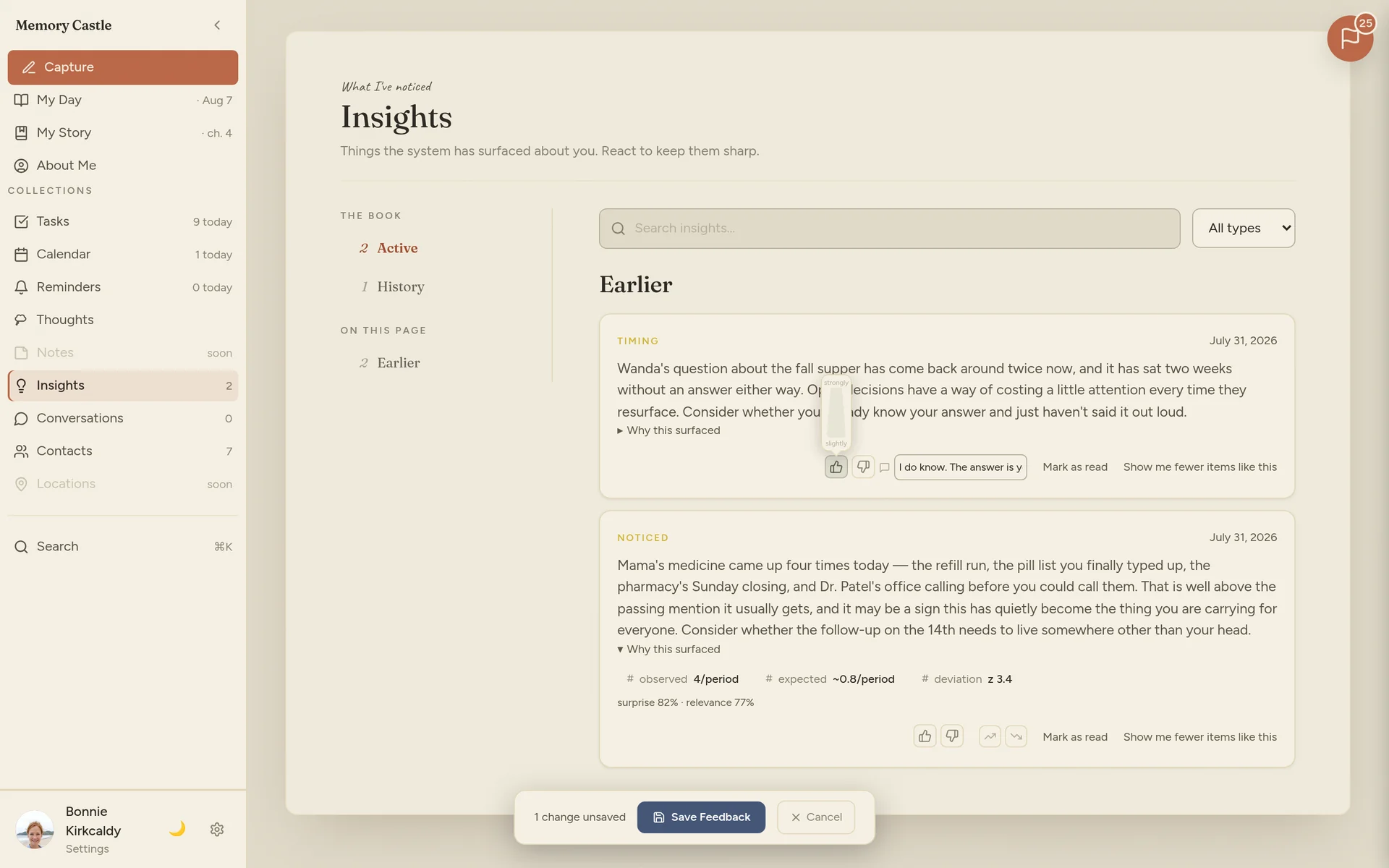
Memory Castle reads what accumulates and speaks first when something is worth saying. An observation has to be surprising and it has to matter, and where those two bars sit depends on you. Most of what it notices waits on a page you can visit. What matters more turns up in your day. Only the rare one interrupts.
Every observation shows its work. A link under each says why it surfaced and what it was looking at. Agree, disagree, or let it pass, and what you say changes what reaches you next.
You can also just ask. Chat answers out of your own record rather than out of general advice.
See how far you’ve come
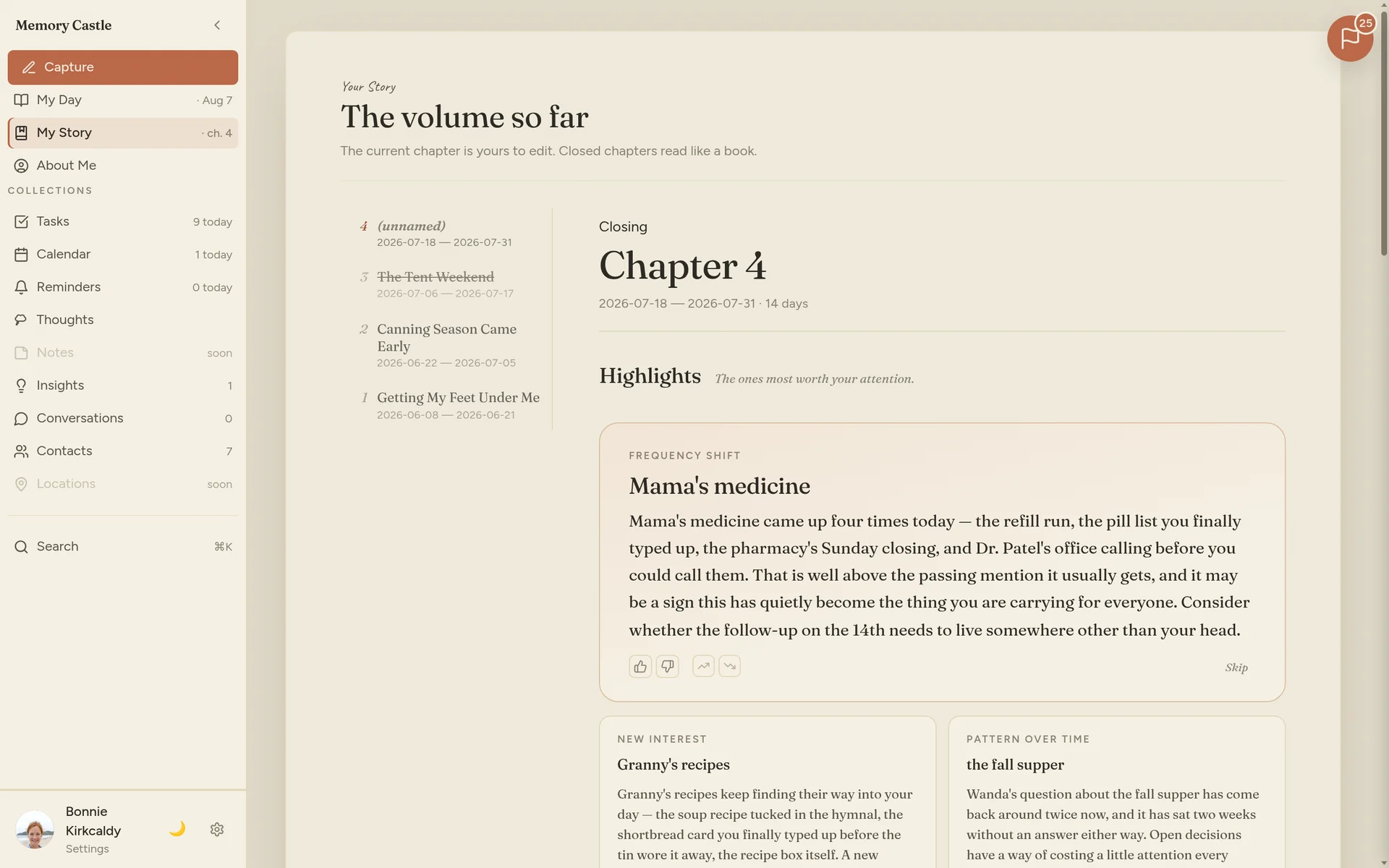
Your life inside Memory Castle runs in chapters, and you decide how long one is. When a chapter closes there’s a session. Memory Castle goes first with what it noticed, then asks what you noticed. Every goal and practice gets its honest number, and three optional questions ask what worked, what didn’t, and what surprised you.
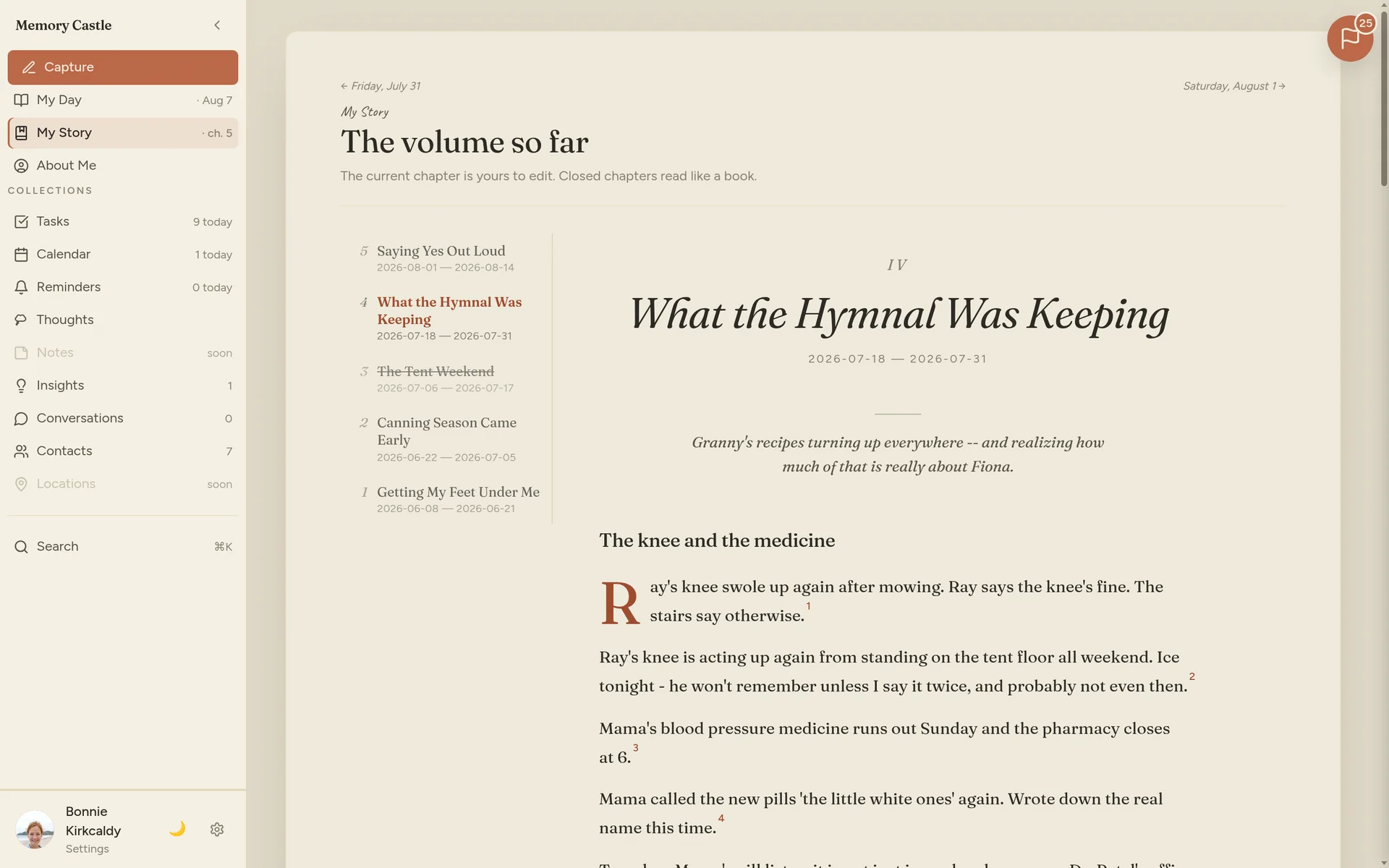
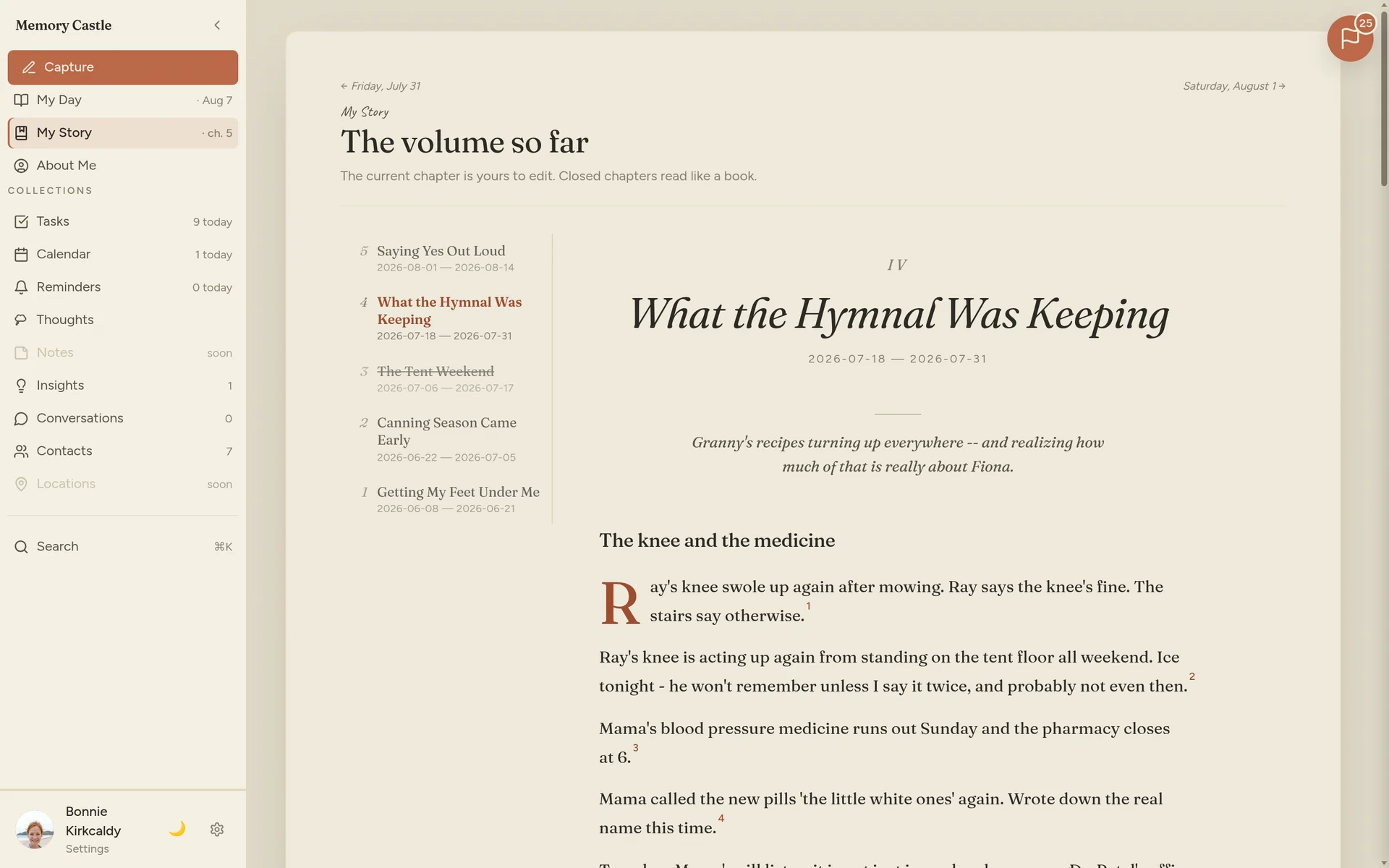
Every open thing gets one decision, whether it comes with you or gets set down, and both lists print on the chapter’s last page. Closed chapters bind in order onto a spine you can read back.
A while after the session, the chapter comes back written in your own words, with every line traceable to the thought it came from and a short note saying what was left out.
Become who you said you’d be
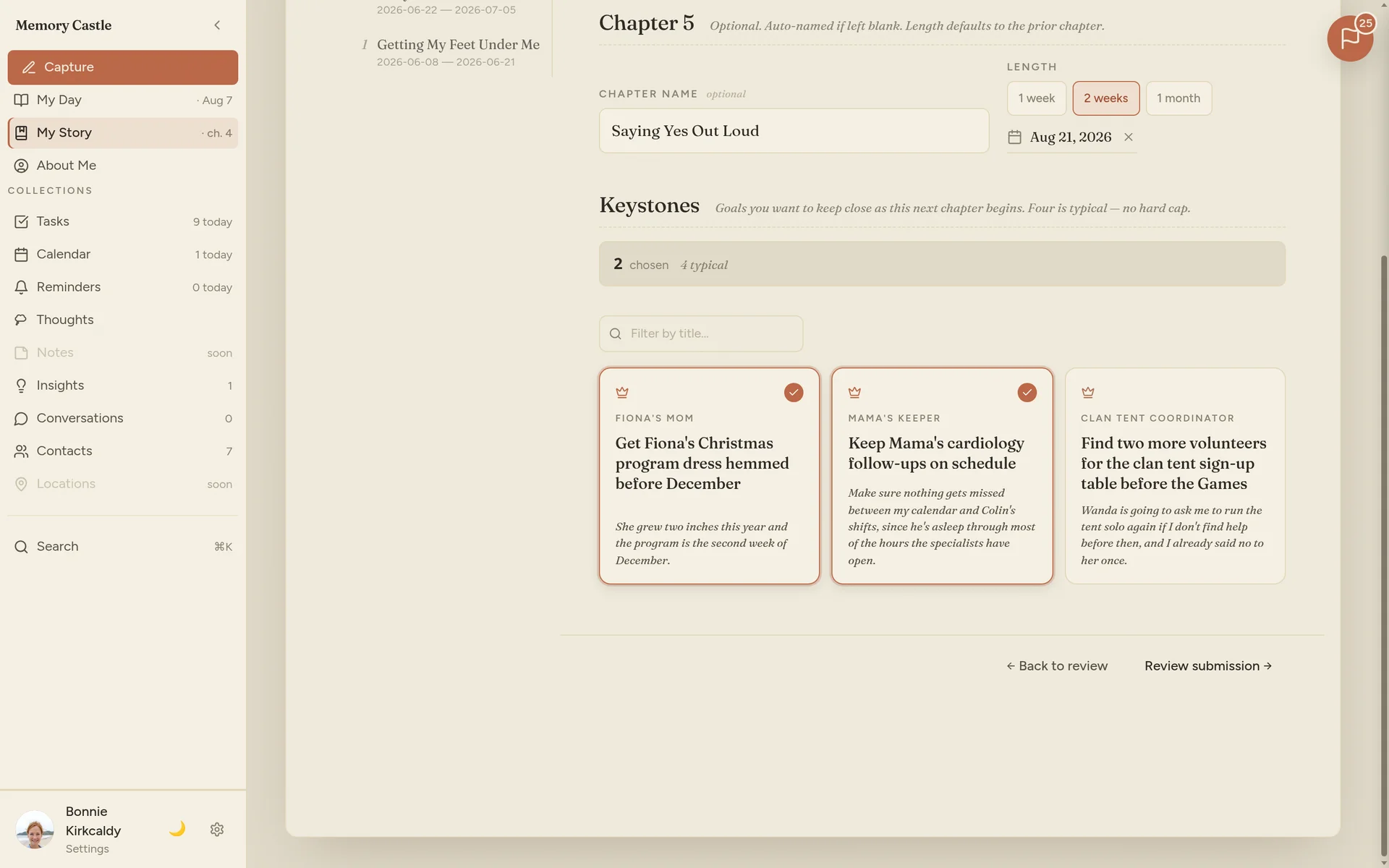
The same session opens the next chapter. You name it, set its length, and choose the few goals it rests on. Memory Castle proposes some of them, drawn from every chapter you’ve closed, including goals and practices your own days already show that you never wrote down.
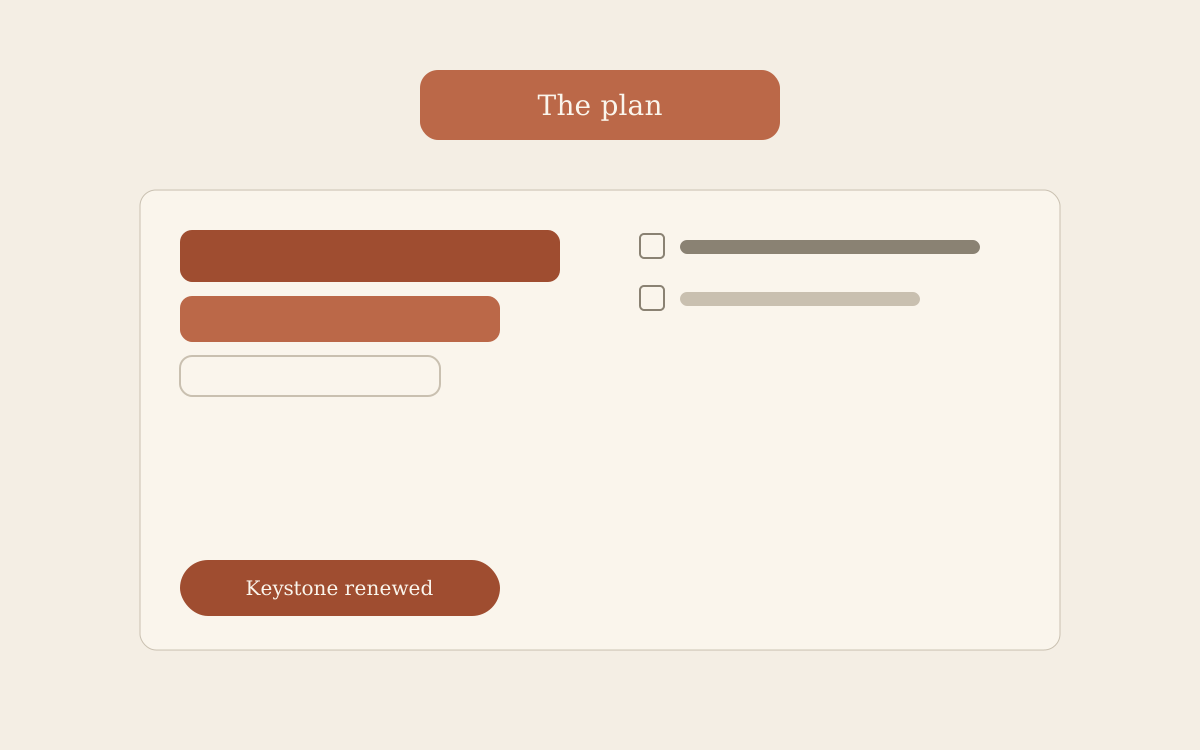
Out of those comes a plan: things to do, time set aside on real days, priorities weighed with urgent against important, and unfinished work either moved somewhere real or cut small enough to start. You put your name on it, and when life arrives mid-chapter the plan bends.
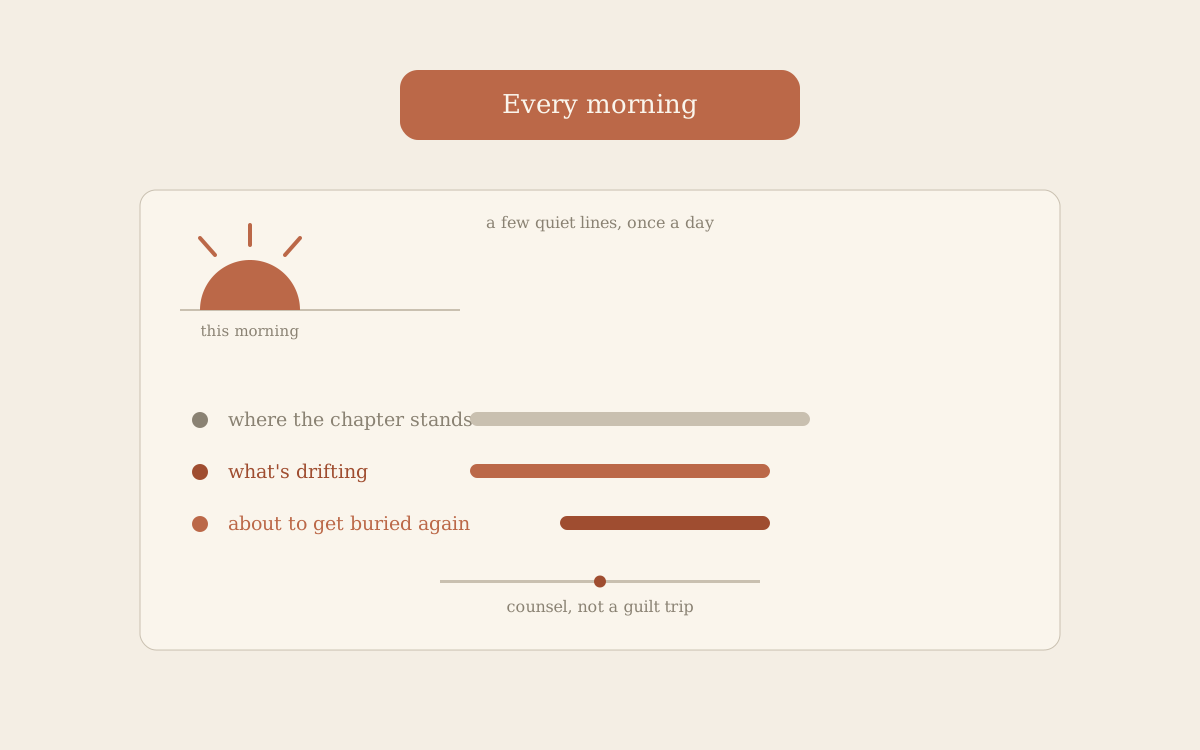
Every morning Memory Castle has already been through yesterday, and offers a few quiet lines about where the chapter stands and what’s drifting.
What it’s built on
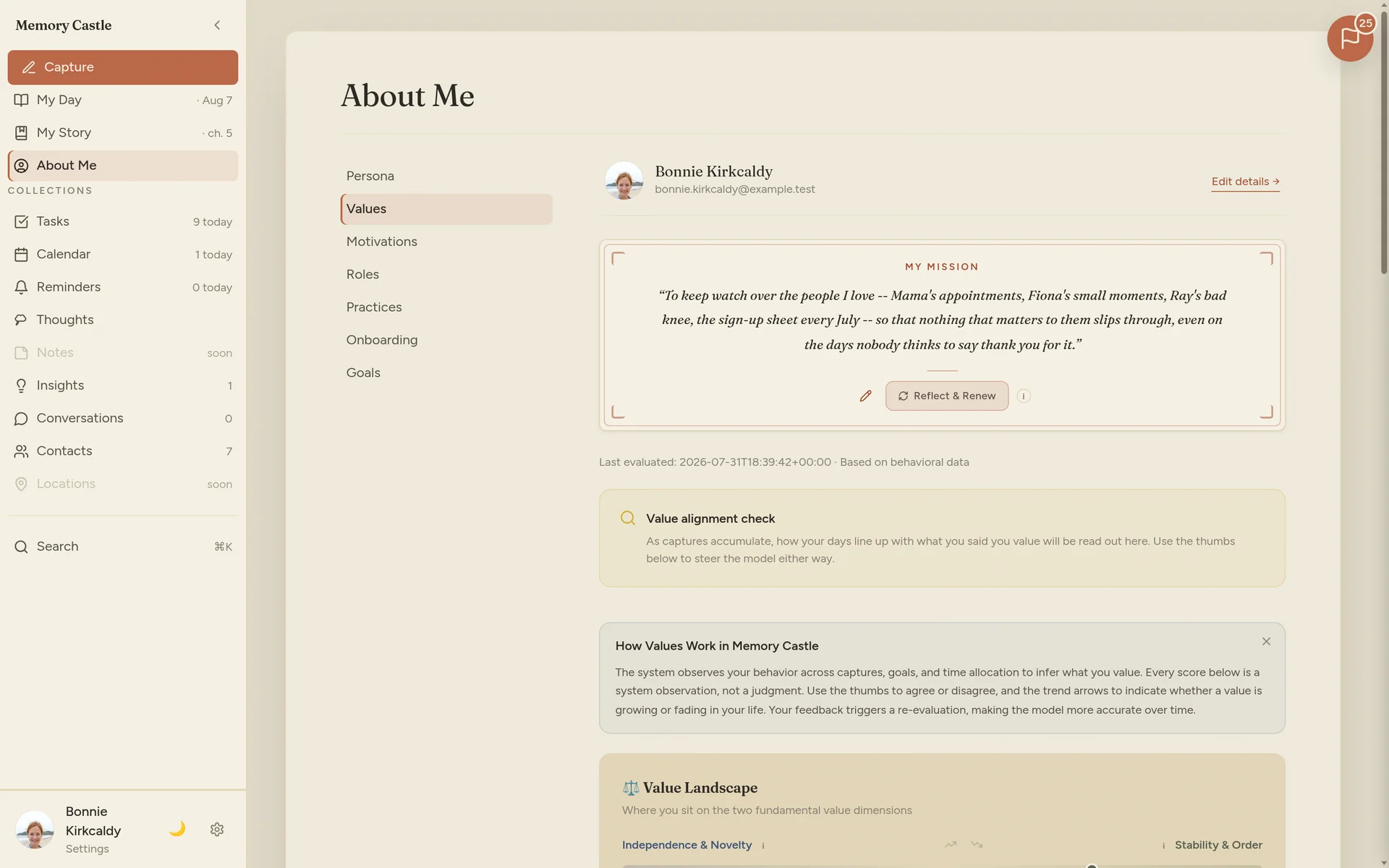
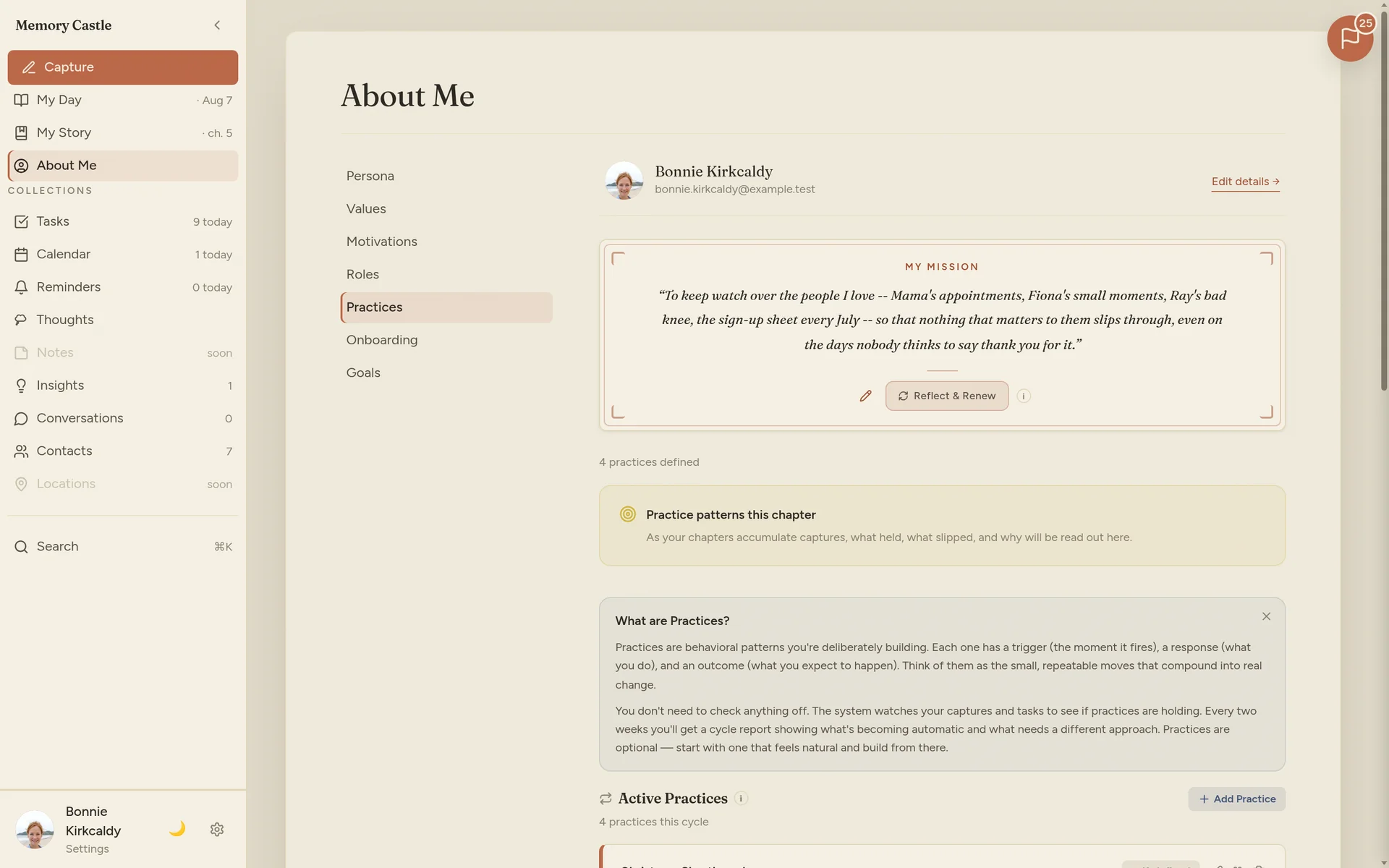
None of the ideas underneath this are new, which is deliberate. The values work is Schwartz. Goals set specifically, with an honest number for how much you want them, is Locke and Latham. Practices are implementation intentions, which is Gollwitzer: when this happens, I do that, expecting this. What keeps a person engaged with a role — some say in it, some competence, somebody who cares — is self-determination theory, from Deci and Ryan.
The one piece that doesn’t come from self-improvement at all is the rule for when to speak. That’s information theory, where something only counts as information if it tells you what you didn’t already know. A system holding a complete record of your life could generate true observations all day, and Shannon’s inequality is what decides which of them is worth interrupting you for.
What happens to your story
Your story is held by Memory Castle, in Thistle Intelligence’s custody, and it is never sold.
The writing happens inside the castle. The model that reads your days and composes your chapters runs there, so your words are not sent to any outside service to be read or written about.
Whatever you export stays yours, in full, whenever you ask for it.
The email address on the waitlist is used for one thing, which is the waitlist.